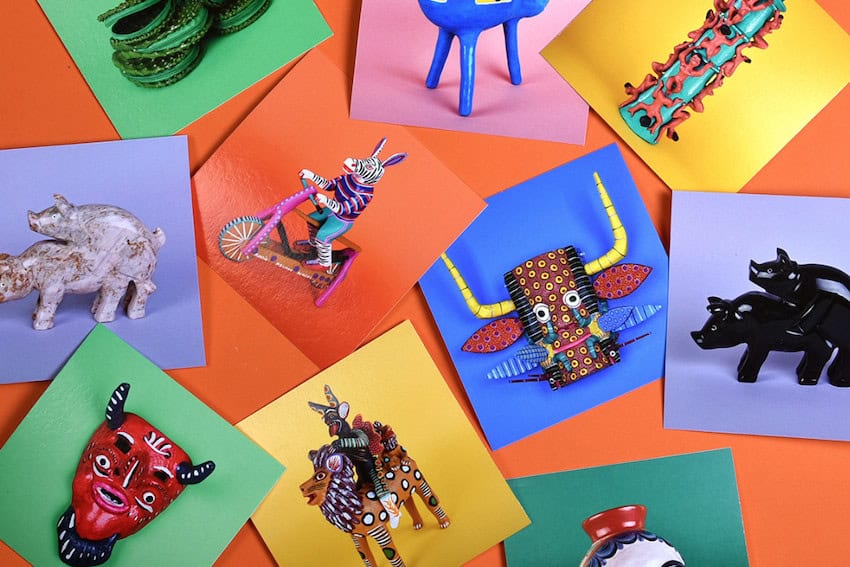
Colorful, chimeric and brimming with tenderness and humor, the folk art collection Pingüino is a universe unto itself. Five years ago, Mexican interior architect Renata Prieto and graphic designer Santiago Fernández joined forces after a moment of revelation in Oaxaca.
In 2013, they discovered an extraordinary artisan piece featuring a penguin wearing a hat in a local market and were amazed by the artisan’s choice to adorn a bird she had never seen.
This moment inspired them to create Pingüino.
Pingüino embodies an aesthetic concept that showcases Mexico’s inherent magical realism. As defined in the 1920s by German art critic Franz Roh, magical realism emerges when the extraordinary intertwines with the everyday — an experience evident in the daily life of Mexico through its art, music, crafts, and vibrant festivities, says Prieto.
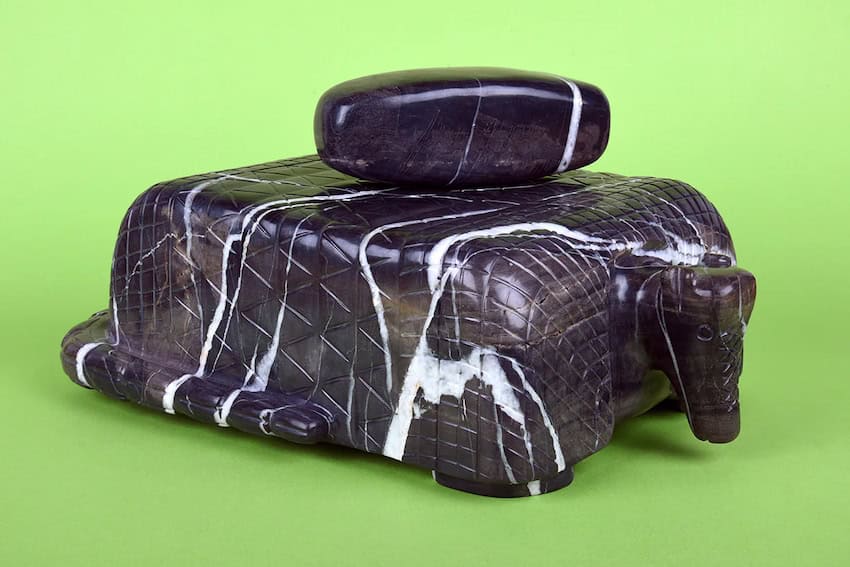
“We Mexicans have a unique way of looking at life. I can’t really explain why, but we tend to create in unexpected ways,” she says. “For instance, we might find a piece of marble, and suddenly someone has transformed it into an improbable marble popsicle. There’s something very spontaneous, natural, naïve and playful about it.”
Fernández shares a complementary perspective: Mexican creativity also stems from necessity, he says.
“It’s about finding solutions, navigating precarious situations and achieving much with little. In folk art, this creativity is related to the possibilities offered by the materials at hand, reflecting our impressive biodiversity,” he reflects.

Pingüino throughout Mexican villages
Five years after founding Pingüino, Prieto and Fernández now collaborate with 100 artisans and workshops in dozens of towns across more than 14 states. They have visited numerous craft fairs and competitions, including Original, which brings together master artisans from across the country.
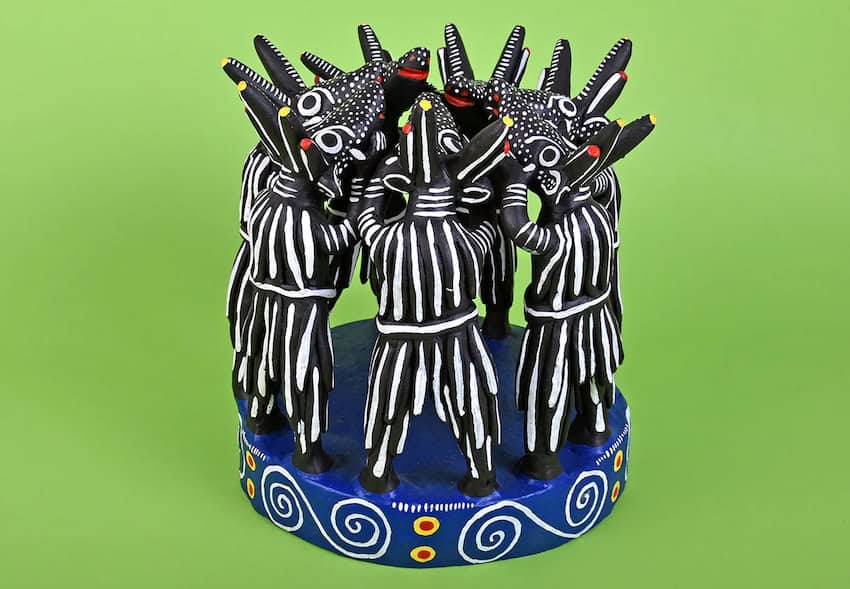
Pingüino’s aesthetic universe is influenced by Mexico’s nature and its people, inspiring a remarkable variety of folk art.
Prieto, for instance, expresses her enchantment with artisan towns in Michoacán.
“For me, this state is a journey from Ocumicho to Cuitzeo. It feels like an unreal territory. Capula also captivates me. I think Michoacán is one of Mexico’s richest folk art regions, featuring metalwork, leatherwork, claywork, feather art, toys, vines, fibers and textiles. I find it fascinating,” she says.
Fernández recalls a memorable place in Guerrero.
“San Agustin Oapan is a beautiful town with exceptionally friendly people, but the journey there can be chaotic, contrasting sharply with the peace and beauty of the town itself.”
Reinvention and preservation of an artisan lifestyle
“There is something mysterious about folk art in this country,” Prieto says, noting an invisible thread connecting the varied expressions of the genre. “I believe Mexico possesses a distinct aesthetic element: From the friezes of Mitla to the textiles of Tzintzuntzan, both share a similar type of abstraction, albeit from different time periods. Many scenes depict everyday life, such as fishing or women working with corn, illustrating the daily realities of countless people that continue even today.”
“In Mexico, there’s an abundance of materials, pigments and colors. There is also a need for innovation, which brings these pieces to life. A figure that a family started working with years ago can evolve into something entirely new, or people can create new forms of folk art inspired by the political or social context,” Fernández adds.
However, despite the vibrancy that exists in Mexico’s folk art, both creators observe that, overall, artisan production in the country is declining, with many younger generations not continuing in the trade. This is why fairs like Original and initiatives like Pingüino — which practice horizontal and fair trade principles — are vital for fostering, honoring and hopefully encouraging appreciation for Mexico’s fabulous ancestral aesthetic universe.
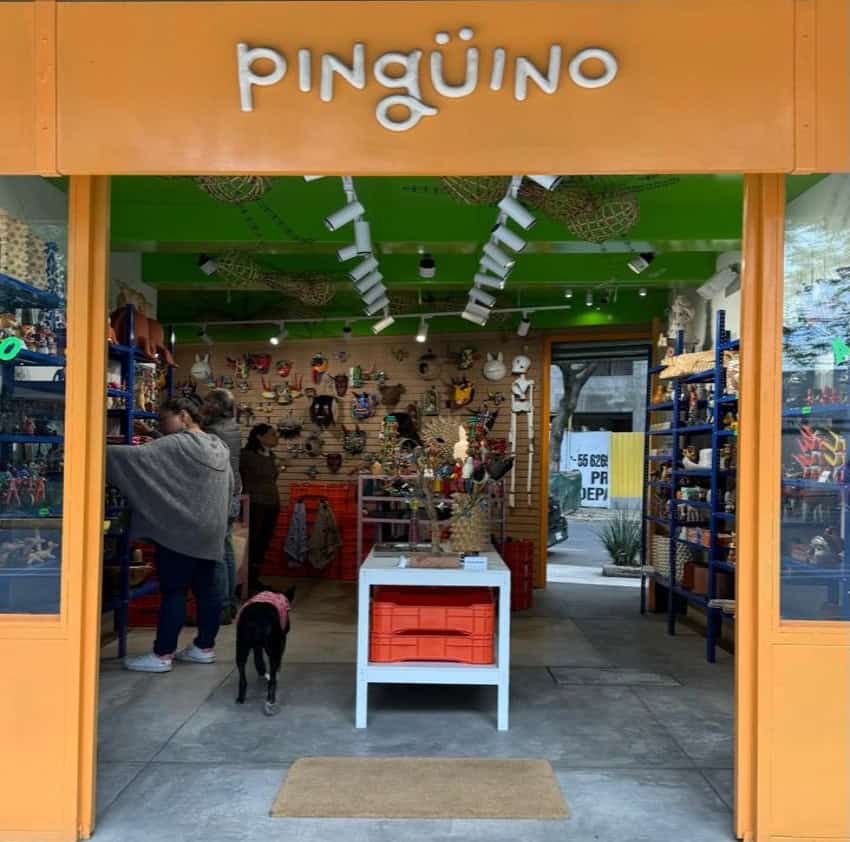
You can find Pinguino’s galleries in three locations in the Juárez, Condesa and Roma Norte neighborhoods, as well as online.
Ana Paula de la Torre is a Mexican journalist and collaborator for various outlets, including Milenio, Animal Político, Vice, Newsweek en Español, Televisa and Mexico News Daily.