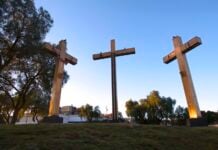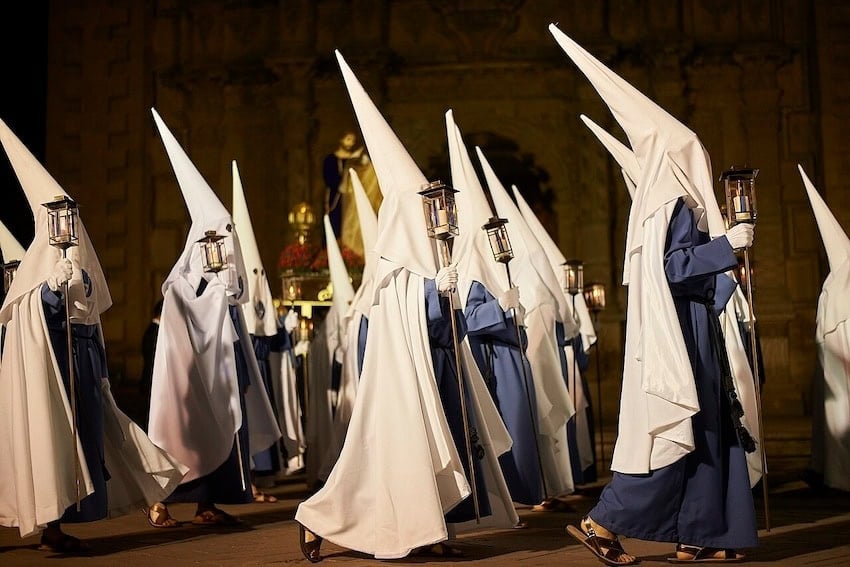
As Holy Week celebrations begin in La Piedad, in the central state of Michoacán, the entire town enters a different, almost funereal, trance. Remembering the biblical passage of Jesus’ death and resurrection, the townspeople adorn the whole city in shades of purple, the preferred color in Catholic tradition for marking farewell rituals.
Pili Ruíz, 26, was born and raised in La Piedad, one of the largest cities in the state. Known primarily for its pork-based products, it has established itself as a “regional engine,” notes the Ministry of Economy, “due to its foreign direct investment, agricultural exports and significant international sales in sectors such as plastics and machinery.” Moreover, Michoacán remains one of the most conservative and Catholic states in the country, second only to Guanajuato.
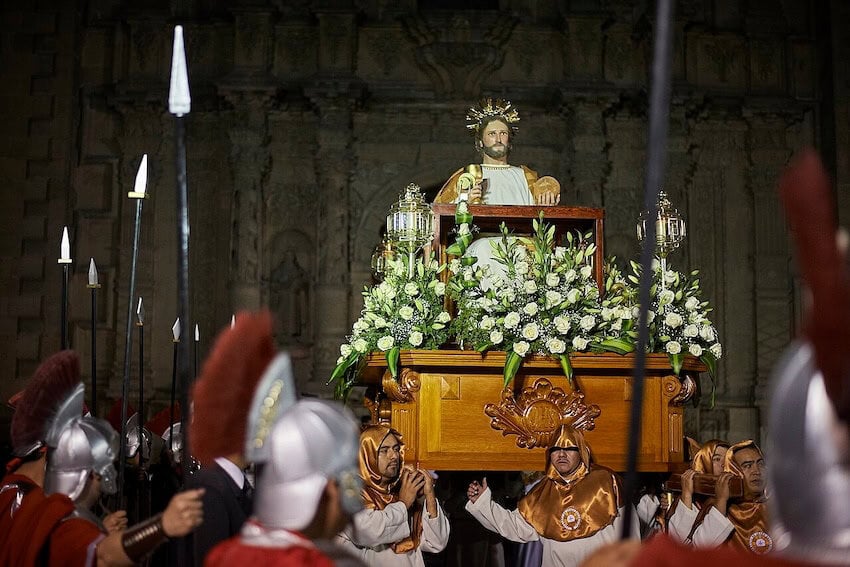
For as long as she can remember, the same ritual has marked her Easter holidays: the Procession of Silence. In an exclusive interview with Mexico News Daily, Ruiz explains the deep community ties that this religious tradition — often harsh in the eyes of foreigners — continues to have in her hometown, as well as throughout the Bajío region of Mexico.
What exactly is the Procesión del Silencio?
“On the day Jesus Christ died, Holy Thursday,” Pili explains, “his body is believed to have remained on the Cross. The Procession of Silence is a reenactment of the transfer of his body to the Holy Sepulchre.” During the reenactment, the woman from La Piedad details, “a statue of Jesus’s body lying down, wrapped in white sheets, is carried.”
“At the front of the procession is a group of hooded figures carrying incense and a drum, which is the only sound made.” Ultimately, this funeral procession should be conducted in complete silence.
These drums are how the townspeople know the Procession of Silence is near and that it is necessary to leave their homes to show due respect to the body of Jesus.
Pili recalls that the Procession of Silence is something that has “existed all (her) life,” for as long as she can remember. On Good Friday, she tells MND, “We would all gather at my aunt’s house and watch from the sidewalk” as the Procession of Silence passed by. Some members of the community would join the procession at the back to accompany the body of Jesus Christ through the city, until they reached the church in the Zócalo.

A syncretic display of faith in Mexico
La Piedad is not the only place in Mexico where this ritual takes place. On the contrary, similar religious practices are found throughout the Bajío region. Specifically in the state of Michoacán, this Catholic practice is thought to date back to the 16th century, following years of spiritual conquest by the Spanish.
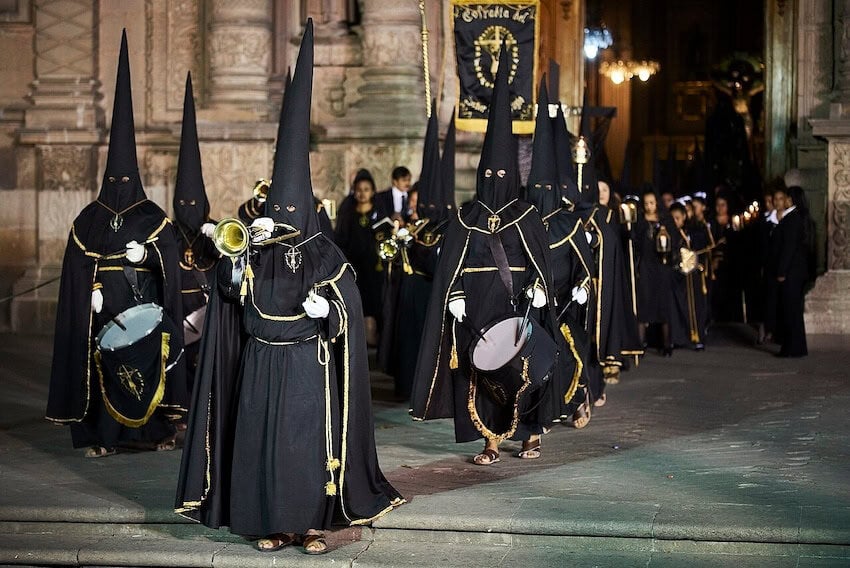
These performances were intentionally somber: they were a way of teaching the new religion to the colonies in Latin America. Through fear and graphic narratives, the spiritual conquest of Latin America produced syncretic celebrations. Many of these traditions also incorporate Indigenous elements, such as the embroidery on the garments of the Virgin Mary and of Jesus himself.
The Procesión del Silencio gained strength in the 19th century, when it spread throughout the country. It is accompanied by antique religious images, most notably the Christ of Sugarcane Paste and Our Lady of Solitude.
Biblical reenactments
This tradition can be traced to Spain, where entire cities halt activities to reenact these biblical passages. Tradition dictates that, before the Procession of Silence, a special mass is held on Holy Thursday, where, Pili says, the Washing of the Feet takes place. This reenactment refers to the moment when, after the Last Supper, Jesus washes the feet of his disciples and friends. Major cities in the Bajío region reenact the Via Crucis, or the path Jesus took to Mount Golgotha, carrying the cross on his back.
After his sacrifice, as per the Catholic tradition in central Mexico, the faithful represent this funerary procession. Some of the most famous performances are in the San Luis Potosí state, north of Michoacán. However, the version in Iztapalapa, Mexico City, has been recognized as intangible cultural heritage by UNESCO.
Besides being an act of respect and mourning for believers, these traditions unite the community under a single rhythm: that of the funeral drum and, sometimes, the cries of the professional mourners. “He died for our sins, he died for our sins, he died for our sins!”
Do people find solace in these impactful expressions of faith?
“For a child,” Ruíz admits, “seeing the figure of a dead person is somewhat frightening.” And it’s no wonder. In many ways, a legacy of the spiritual conquest perpetuated by European invaders, that was the intention of these religious manifestations: to instill fear and anguish among the new faithful. Pili acknowledges that the whole event can be “eerie,” especially during childhood, when kids don’t fully understand what it’s all about. “I feel it’s something very imposing.”
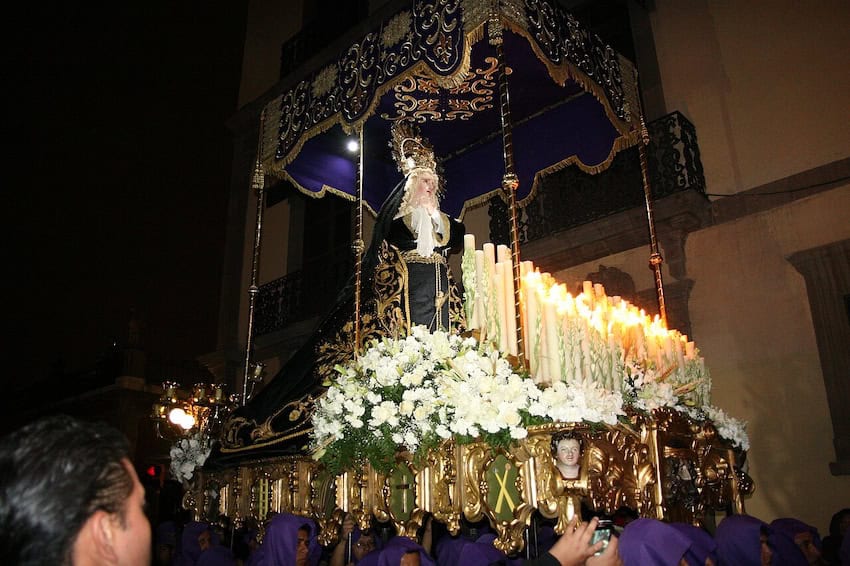
Years after experiencing this as a child, Pili no longer identifies as Catholic. Even so, when she’s in her hometown on specific dates, “there are certain religious traditions that my family is very accustomed to participating in … and I feel I have to be a part of them.” Not only that: Pili considers that, because of the close relationship the people of Piedad have with these traditions, they are an “indispensable” part of community life — particularly those related to Holy Week.
This sense of duty prevails in Mexican Catholic communities, particularly in the Bajío region, where conservatism and the Church remain pillars of the social fabric. The weight of tradition compels people to participate “very actively,” says Pili, in these religious events. “It was as if my grandmother and aunts were at a wake. Like, ‘Híjole, there goes Jesus dead. We have to be silent and respectful.'”
Andrea Fischer contributes to the features desk at Mexico News Daily. She has edited and written for National Geographic en Español and Muy Interesante México, and continues to be an advocate for anything that screams science. Or yoga. Or both.