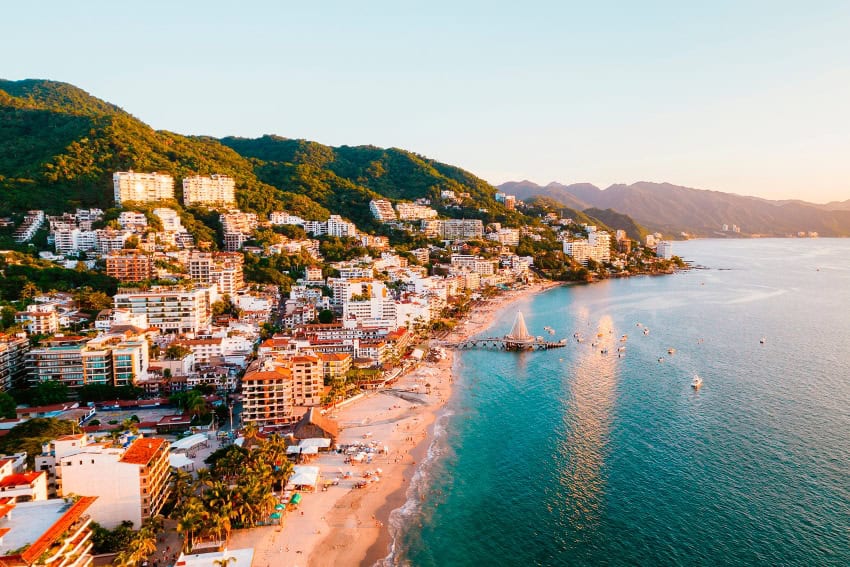
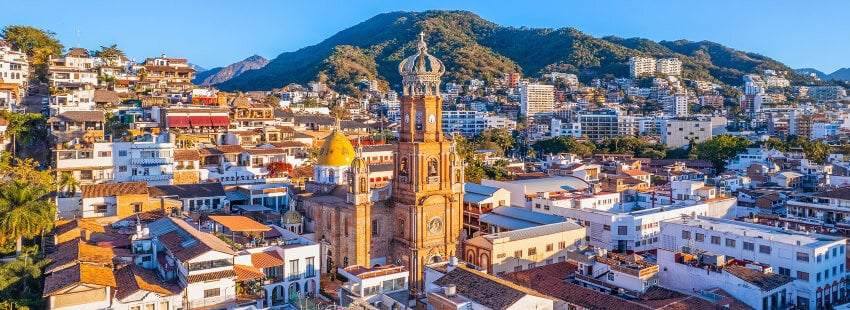
Travelers arriving in Puerto Vallarta on Friday, Jan. 30, were met not by open palm-lined roads and highways but by gridlock, uncertainty and long walks under the sun, as the city became the stage for a protest that tested the fragile balance between social justice and economic life in one of Mexico’s most tourism-dependent, service-oriented destinations.
By midday on Friday, traffic arteries connecting the cruise port, hotel zone and international airport were effectively sealed off. Road blockades erected by demonstrators demanding justice for Clarisa Rodríguez halted movement across key corridors, triggering cascading delays that rippled through the city’s transportation network.
The blockades continued through Saturday.
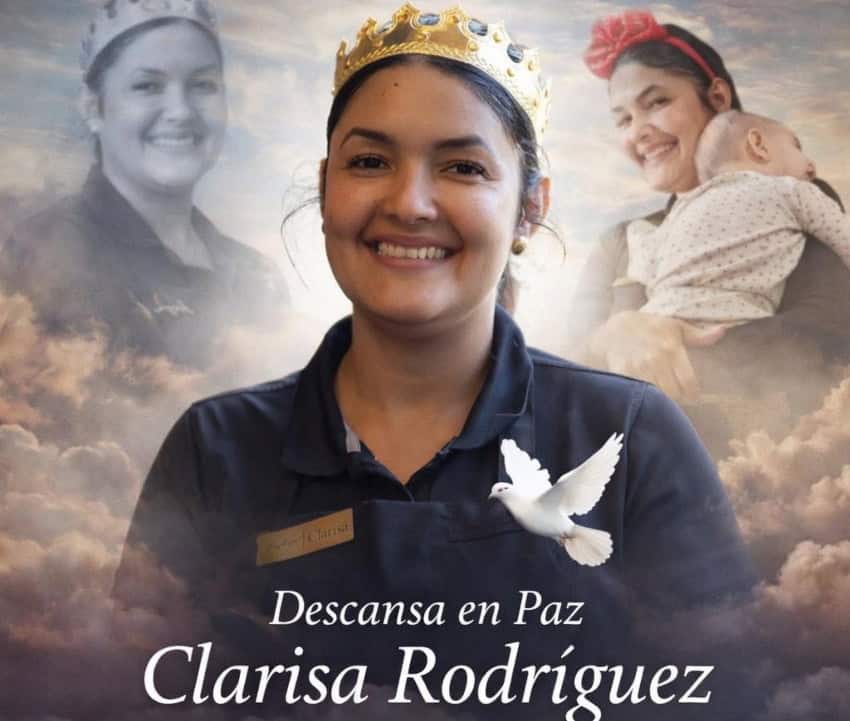
Who was Clarisa Rodríguez?
Rodríguez had been seriously injured in a two-vehicle accident in early January, and protesters said those responsible had not been held accountable, alleging that personal relationships with municipal officials had impeded the investigation.
Rodríguez had succumbed to her injuries earlier that week, igniting public outrage and prompting family members and supporters to allege serious failures in the handling of the case.
As the protest unfolded, it became a rallying point for broader concerns over violence, public safety and perceived impunity in the region.
The consequences were immediate and visible: With vehicles unable to move, locals struggled to reach their workplaces, while travelers dragged suitcases along highways and access roads in an effort to reach hotels or avoid missing outbound flights.

The disruption affected both domestic and international visitors, exposing how quickly Puerto Vallarta’s tourism economy can be destabilized when mobility collapses.
As hours passed with no resolution, tensions escalated on the streets. Stranded motorists confronted protesters, voicing frustration over missed appointments, lost income and mounting delays. Many questioned why the demonstrations were not directed at government offices, arguing that blocking public roadways placed the burden of protest on uninvolved residents and visitors.
For demonstrators, however, disruption was their goal. Protest leaders stated that conventional appeals had failed and that only actions capable of interrupting daily life could compel authorities to address what they described as entrenched impunity in Rodríguez’s case. They framed the protest not as a response to a single death, but as an expression of deeper systemic failures in justice and public safety.
Rodríguez’s husband makes an announcement
Despite expectations that the protest would end Friday evening, demonstrators remained overnight, maintaining a blockade along Francisco Medina Ascencio Boulevard. Organizers requested an overnight meeting with Mayor Luis Ernesto Munguía, who did not appear.
Protest leaders later attended a City Council session on Saturday morning to seek dialogue, while demonstrators continued the blockade as an act of standing for justice.
Late Saturday, Clarisa Rodríguez’s husband issued a public statement thanking supporters and providing an update on the investigation.
The bereaved expressed sincere gratitude to the general public, family and friends for their support during what he described as an extremely painful time, while also apologizing to those who were inconvenienced by the road closures.
The case is reclassified
He confirmed that the case had been reclassified from assault to homicide, that new hearings had been requested, and that he had been notified of a hearing date.
Her husband also stated that evidence continued to be submitted, that the alleged perpetrator had been identified and had already appeared before the prosecutor’s office and that there was sufficient evidence to establish guilt.
He asked for understanding regarding his absence from public actions, citing the depth of his personal grief, and emphasized that none of the progress made would have been possible without public support.
Following confirmation of the hearing date of Feb. 6, Rodríguez’s family later asked that the road blockades be lifted. They acknowledged that the protest had raised broader questions about government and police procedures and expressed understanding that some demonstrators might remain in the area to continue highlighting ongoing concerns.
While the protest succeeded in drawing widespread attention to demands for accountability, it also placed renewed scrutiny on how social movements operate within spaces whose global reputation and economic survival depend on stability and uninterrupted access.
The events of Friday and Saturday underscored an unresolved question for Puerto Vallarta and similar destinations worldwide: how to reconcile the urgency of justice with the realities of a city built on constant movement.
Charlotte Smith is a writer and journalist based in Mexico. Her work focuses on travel, politics and community.