Two volcanoes crown Mexico City: Popocatépetl and its sleeping lover, Iztaccíhuatl. Their loving gaze sometimes makes us forget that they are two terrifying colossi, harboring fire and fury. As Mexicans from the central region of the country, we’re very used to seeing them guarding the capital — when the smog allows it, of course.
None of this would be possible, according to local folk stories, if it were not for the villagers of Santiago Xalitzintla in the central state of Puebla, who were entrusted with keeping Popocatépetl calm. Who are they? And how do they ensure that the volcano won’t erupt in anger?
The volcano’s legendary guardians
Nestled near the volcano’s crater, Santiago Xalitzintla is a town of just over 2,000 inhabitants, according to the most recent INEGI census. Belonging to the municipality of San Nicolás de los Ranchos, in the central state of Puebla.
The inhabitants live at an average altitude of approximately 2,560 to 2,626 meters above sea level (masl), and the Popocatépetl crater is about 12 kilometers away. Mexico City, by contrast, is only at 2,240 masl.
Pronounced “Shalitzintla,” it is historically the village of the guardians who calm the raging colossus. Thanks to the shamans who live there, says the local legend, the volcano remains calm.
These guardians, though legendary, are indeed real people. In Santiago Xalitzintla, volcanologists and civil protection specialists regularly conduct “field visits aimed at documenting daily practices of forest care and response to wildfires,” according to records from the Department of Social Anthropology at the Universidad Iberoamericana in Mexico City.
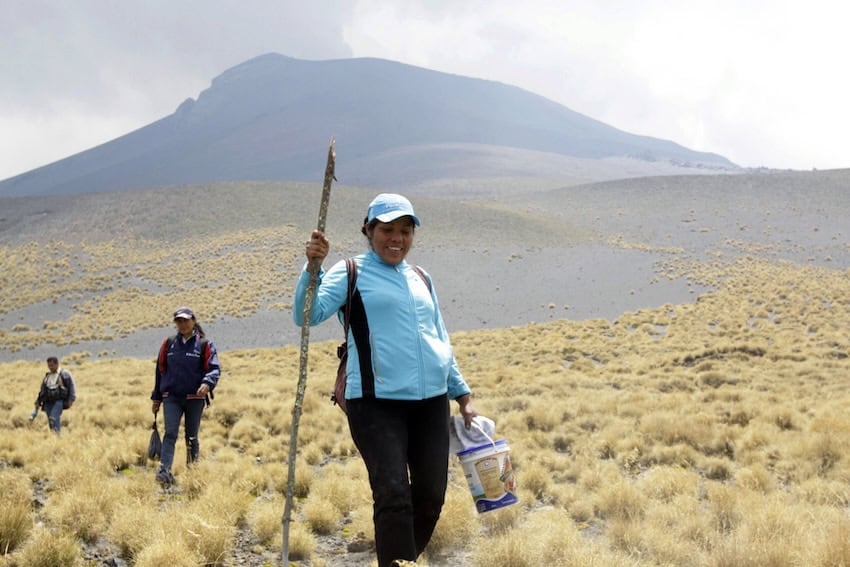
The people of Santiago Xalitzintla are resilient: in addition to facing a semi-cold climate for much of the year — given the altitude — they deal with intense summer rains and the risk of frost in winter. And not only that. Despite the real risks of living in the jaws of the volcano, they have repeatedly refused to abandon the town, even in the face of its furious activity.

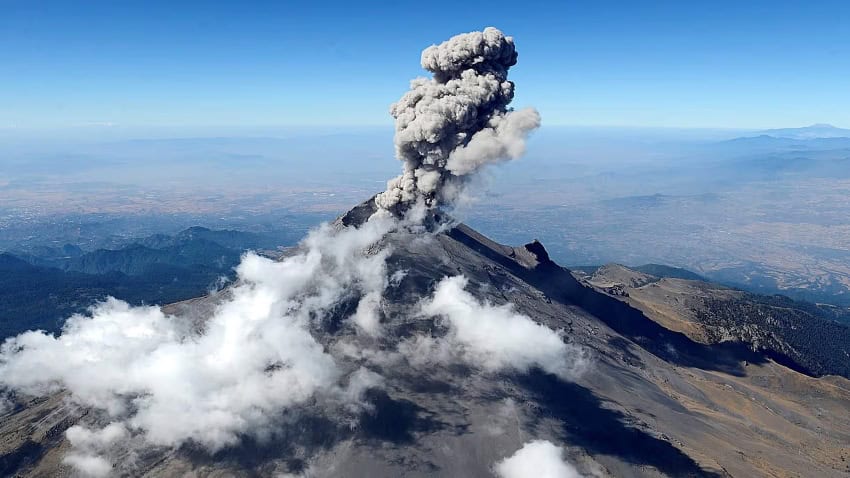
The last serious alert was in May 2023, when “Don Goyo” (as the volcano is affectionately known) began to spew “gas, water vapor, ash and igneous rocks.” Even that, however, wasn’t enough to prompt the residents to leave their hometown.
How dangerous is the Popocatépetl volcano, exactly?
To better understand the morphology, history and hazards of the Popocatépetl volcano, MND spoke to volcanologist Hugo Delgado Granados, from the Institute of Geophysics at UNAM. A specialist in volcanic hazard and risk assessment, he has dedicated years to monitoring volcanic emissions.
Dr. Delgado began his scientific research in 1983. After years of studying the volcano, he knows that its most ancient rocks are 538 million years old. However, he said in an interview, the volcano is older than that: “This volcano is actually a volcanic complex made up of four volcanoes that have been created and destroyed: Tlamacas Volcano, Nexpayantla Volcano, Ventorrillo Volcano, El Fraile Volcano and Popocatépetl itself, which is the current volcano,” the specialist told MND.
Probabilities for violent eruptions
The last violent eruption, according to records from the Institute of Geophysics, happened more than 1,300 years ago, “and a similar eruption could happen again in the future, but not in the near future,” Delgado clarifies.
Regarding how dangerous the volcano still is, Delgado defers to probability: “In the case of Popocatépetl, low-magnitude eruptions are the most likely.” In that sense, the specialist explains, “Yes, it is a dangerous volcano because it is highly likely to develop low-magnitude eruptions.”
He notes, however, that the real risk lies in how great a population could be affected by the volcanic activity. “Volcanoes like Popocatépetl can pose a high risk at any given time, particularly if they affect infrastructure rather than the population.”
The specialist explained how, in the past, fumaroles and other emissions from Popocatépetl have forced authorities to close airports, “resulting in significant costs due to disruptions to air travel”. Which is to say, “Popocatépetl is a hazardous volcano, yes, but with low risk, as long as it remains at its current eruptive magnitude level.”
Meaning, it’s “not necessarily a threat to the safety of the population.”
Those who celebrate the birthday of ‘Don Goyo’
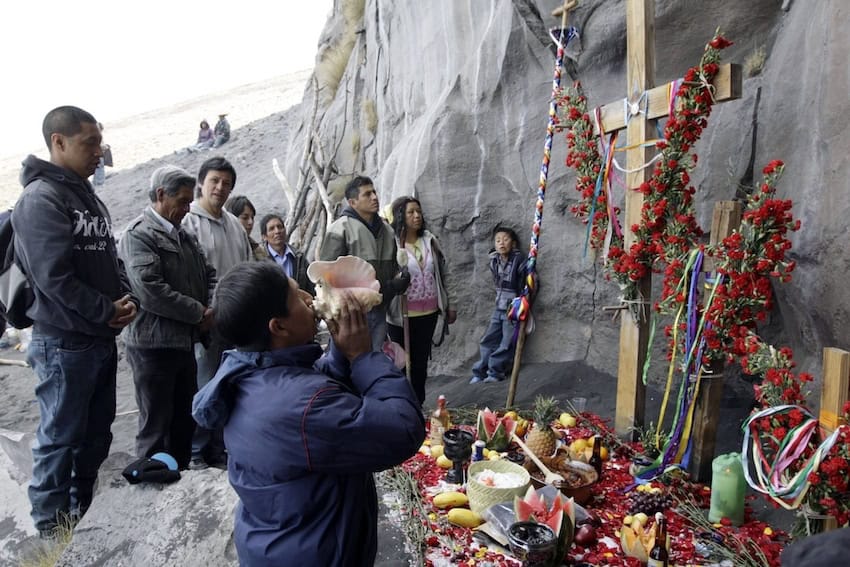
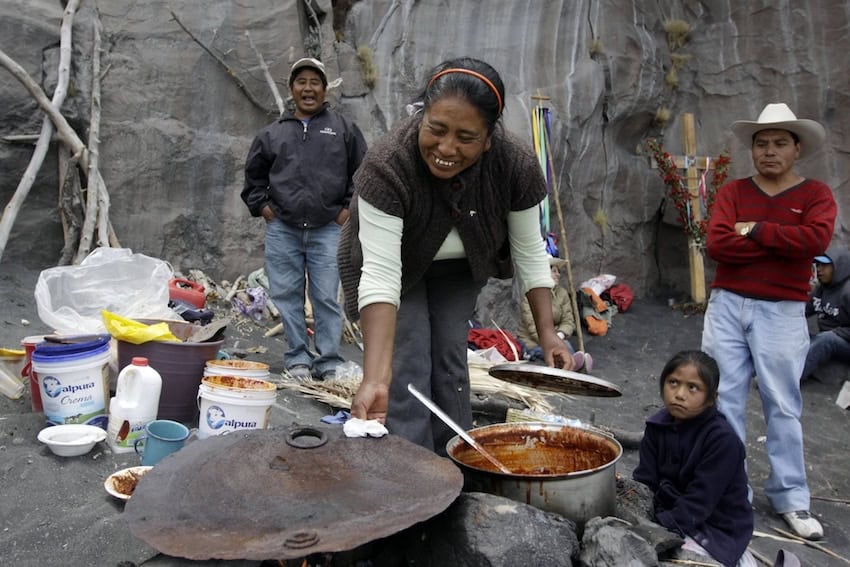
Every year, the townspeople at Santiago Xalitzintla celebrate Popocatépetl’s birthday on March 12. This is a special day for the community, as it coincides with the feast day of Saint Gregory the Great. On this day, the inhabitants climb the volcano with offerings, food and flowers to ask “Don Goyo” for peace and a good harvest.
In addition to the traditional offerings made to the volcano (which blend elements of local Indigenous tradition with Catholic customs), they sing “Las Mañanitas” to the volcano and prepare mole with rice, supposedly Popocatépetl’s favorite dish.
So yes, in addition to the complex monitoring system designed by UNAM and the National Center for the Prevention of Disasters (Cenapred), the residents of Santiago Xalitzintla are keeping a close eye on the volcano. Just as the authorities established 13 monitoring stations that transmit real-time data on events recorded by the sensors to Mexico City, the residents are closely watching the spirit of the volcano, which they refer to as “Gregorio Chino Popocatépetl.”
Birthday festivals and events for the volcano
According to legend, “an elderly man appeared on the slopes of the volcano” who shared the same name. This figure was the personification of the volcano’s spirit, and he manifested himself to warn the inhabitants when Popocatépetl was active.
On March 13 and 14, the town of Santiago Xalitzintla will host a festival featuring music, dance, gastronomy and crafts. The Santiago Xalitzintla auxiliary council, in collaboration with the municipal government, is organizing the event, which “seeks to pay homage to Popocatépetl, a symbol of strength, history and deep-rooted tradition for the surrounding communities,” as described by the local authorities. Only in this way, according to oral tradition in the village, can the spirit of “Don Goyo” be at peace — although sometimes he gets annoyed and exhales powerful plumes of smoke.
Andrea Fischer contributes to the features desk at Mexico News Daily. She has edited and written for National Geographic en Español and Muy Interesante México, and continues to be an advocate for anything that screams science. Or yoga. Or both.