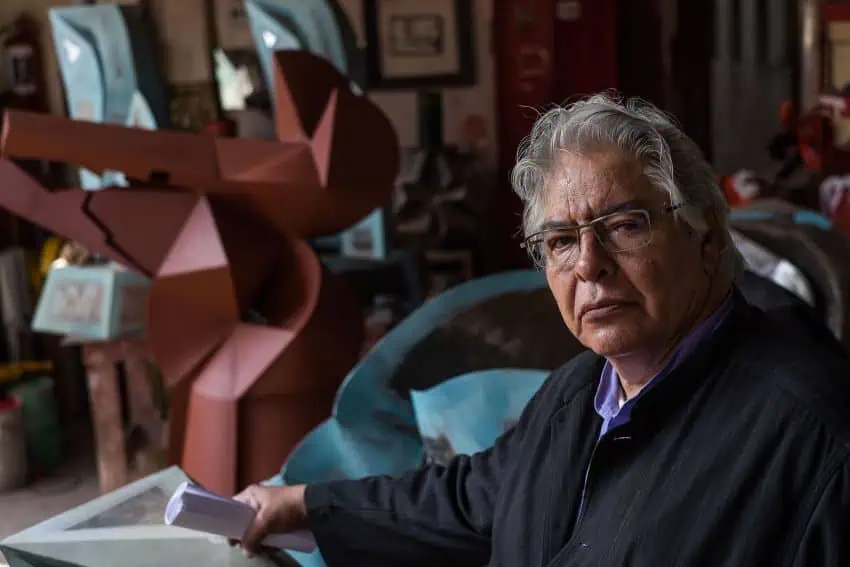
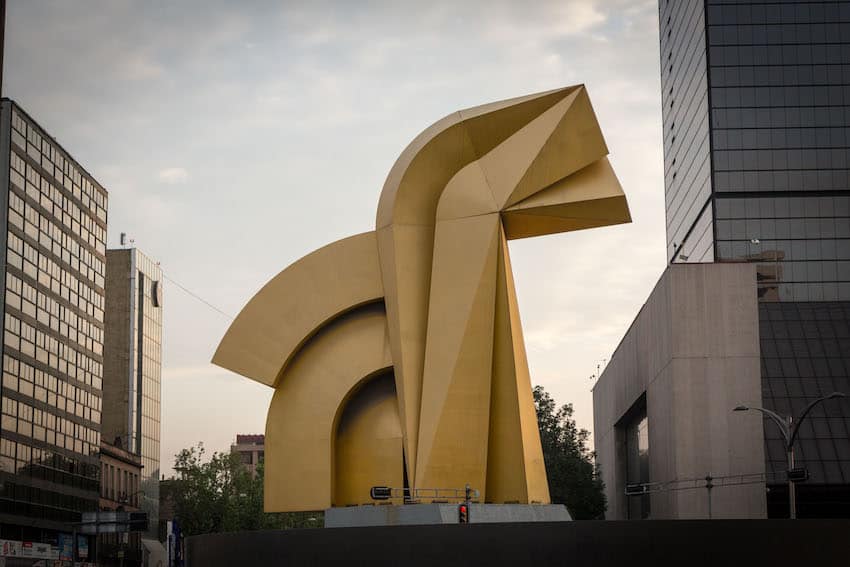
The Mexican sculptor known as Sebastián, famous for his giant yellow horse sculpture “El Caballito” on Mexico City’s Reforma Avenue, has been chosen to design the new Quántica science museum in Mexico’s northern state of Nuevo León.
Nuevo León first announced its plans to open a new science museum in the municipality of Pesquería — adjacent to Monterrey — in February 2024. The museum will be located close to the Monterrey International Airport and is slated to open ahead of the 2026 FIFA World Cup, which will feature games in Monterrey.
Mayor of Pesquería Patricio Lozano said the museum, whose full name is the Centro de Ciencias y Conocimiento Quántica (Center for Science and Quantic Knowledge), seeks to make science and technology more accessible with its interactive design, exhibits and workshops. The museum’s development follows the closure of the Alfa Planetarium in Nuevo León in 2020.
“The present must point to the future, what we are working on is a more prosperous future, we need men and women who allow paradigms to be broken. From Pesquería to all of Mexico, we are going to create a must-see center: Quántica, a window to the future,” the news site Reporte Índigo reported Lozano saying.
In 2024, Lozano said the museum’s development would require a total investment of 213 million pesos (US $10.5 million), with 50% of funding to come from the private sector and 50% from the municipal budget. Construction is expected to begin in 2025 and will be completed in less than one year.
Sebastián’s role in Quántica’s design
Mexican sculptor Enrique Carbajal González, born in Chihuahua in 1947, adopted the pseudonym “Sebastián” after the painting of the martyred Saint Sebastian by Sandro Botticelli.
His steel and concrete sculptures adorn some of Mexico’s greatest landmarks, including the malecón of Manzanillo, the National Autonomous University of Mexico (UNAM) in Mexico City and the Monument to Mexican National Identity in Ciudad Juárez.

Today, Sebastián’s work can be seen all over the world, from Ireland to Italy to Japan and beyond.
“I have a lot of fun. I am a creator of works through which I analyze space: I take mathematical or physical models and convert them into sculptural models,” Sebastián told El Sol de México.
The artist recently exhibited his designs at the Zona Maco art fair in Mexico City in February, including tableware, vases, fruit bowls and containers. His collection was a collaboration with the century-old Mexican ceramic studio Ánfora.
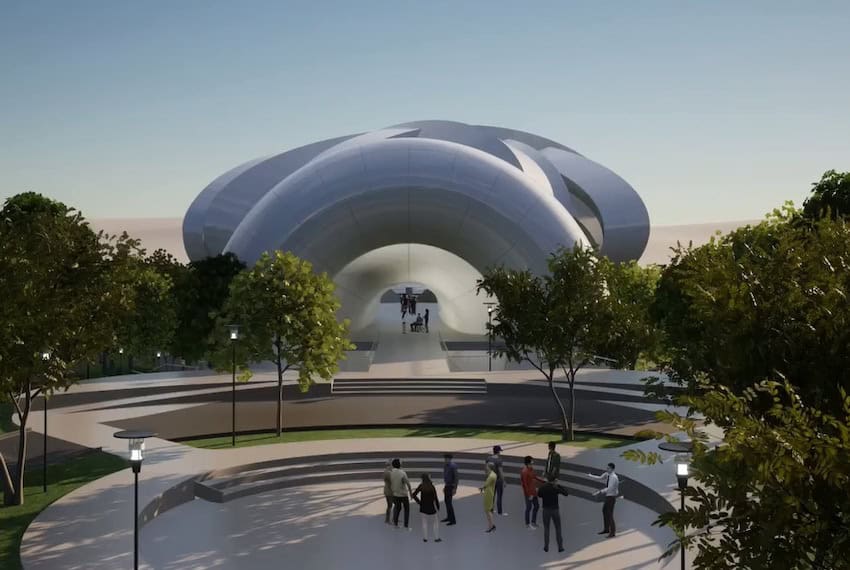
Sebastián’s design for the science museum is based on research he carried out on physics and quantum mechanics, for which he sought advice from scientists working at the Hadron Collider in Switzerland.
“The museum was designed to have quantic proportions, which you will soon be able to see finished,” said the sculptor.
With reports from El Sol de México, Identidad NL and Reporte Indigo