This is the third installment of our Mexico Well Read series. To catch up on the first two entries, click here and here.
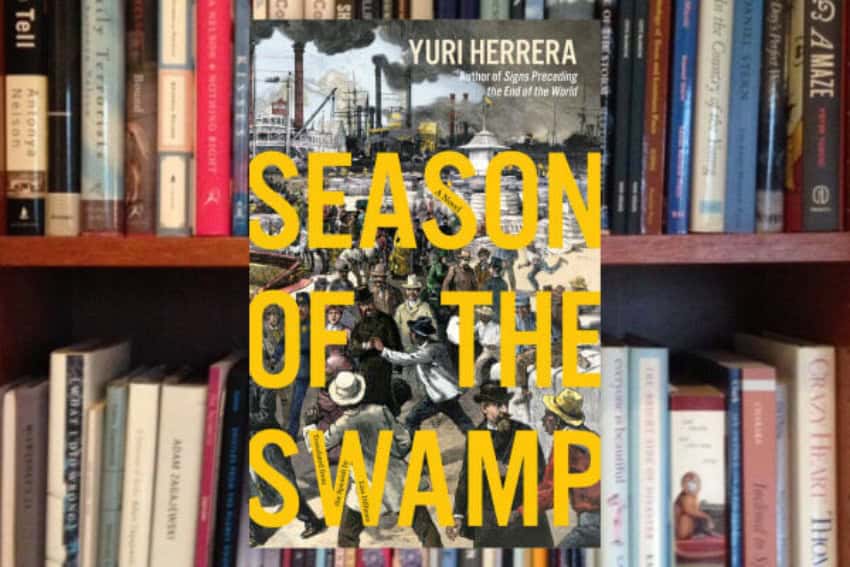
In “Season of the Swamp,” Yuri Herrera, one of contemporary Mexican literature’s most distinctive voices, explores a tantalizing silence in the historical record: the 18 months that future president Benito Juárez spent in exile in New Orleans in the early 1850s. For a figure whose life has been so thoroughly memorialized, this gap is striking. Juárez himself barely mentions the episode in his autobiography. Herrera seizes on that absence not to reconstruct it with documentary certainty but to imagine it, treating the historical void as a creative opening to consider the impact this fascinating but cruel city may have had upon Juárez.
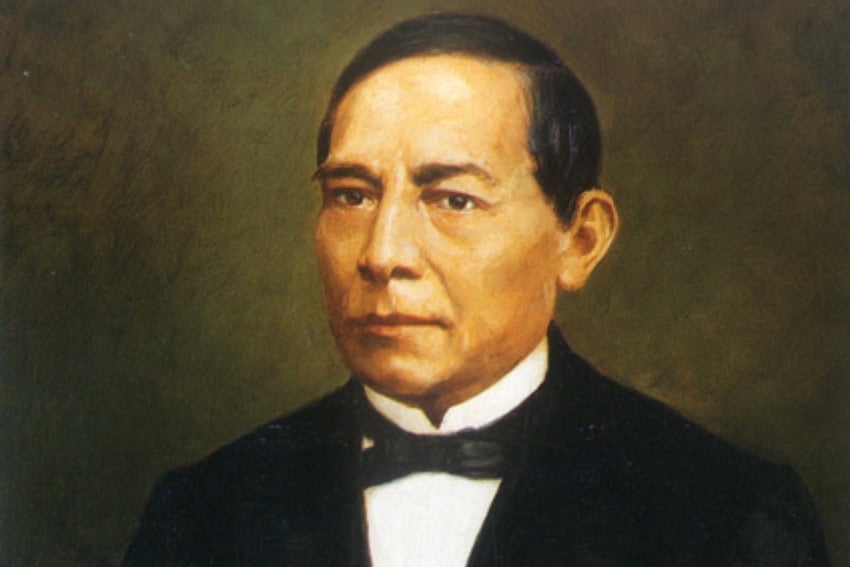
The premise of “Season of the Swamp” (Translated by Lisa Dillman, Graywolf Press, English edition: 2024) is historically plausible. In 1853, Juárez, a prominent liberal from Oaxaca who had served as governor and judge, was forced into exile during the dictatorship of Antonio López de Santa Anna, who moved swiftly against his liberal enemies after his return to power. Juárez eventually made his way to New Orleans, where, amid fellow Mexican exiles and conspirators, he awaited the political moment that would allow the liberals to return and challenge Santa Anna’s rule. Herrera’s novel imagines this interlude not as a mere pause in Juárez’s political life but as a formative crucible.
Before he was Mexico’s most impactful president, Benito Juárez was at loose ends in New Orleans
Herrera’s protagonist is not yet the man known to history as the architect of the liberal reforms that separated church and state, curtailed ecclesiastical privilege and asserted the sovereignty of the republic. He is merely a political exile wandering a foreign city, trying to earn money, learn the language and understand the strange republic in which he has temporarily landed. The narrative frequently withholds even his name, referring to him simply as “he,” a stylistic decision that underscores both his invisibility and the provisional quality of his identity during this period. Herrera’s prose, well translated to English by Lisa Dillman, is characteristically spare.
To be in exile is, in part, to be in suspension, and the novel’s rhythms honor that. One could see Mexico itself as suspended during these years — Santa Anna’s dictatorship stalled the country in a political holding pattern before the cataclysm of the Reform War, the Intervention and the long liberal reconstruction that Juárez would eventually lead.
Opressive heat and relentless spectacle
Yet Herrera is careful not to allow the historical hindsight available to his readers to inflate the figure of his protagonist beyond what the moment can bear. For example, the Juárez of “Season of the Swamp” does not speak in the aphorisms that will later be attributed to him; the famous formulation that “between individuals, as between nations, respect for the rights of others is peace” belongs to a later version of the man. Here he is more tentative, floating through an alien world.
Herrera’s New Orleans is vividly rendered as a place of oppressive heat and relentless spectacle: opera houses and brothels, exuberant parades and coffeehouse debates, and newspapers filled with reports of crime and politics, equally lurid. Herrera delights in the sensory density of the setting: the smell of sewage and jasmine, the rhythms of street music, and the babel of Spanish, English, French, and Creole that surround the bewildered exile. “Season of the Swamp,” said Rien Fertel of The Times-Picayune, “is an impressive tribute to a man, a city and their shared history. I can’t think of a recent New Orleans-set historical novel that better captures the city’s vibe.”

How exposure to the brutality of slavery may have shaped this reformer
Among the book’s most powerful passages are those in which Herrera imagines Juárez confronting, with growing horror, the vast machinery of the American slave economy. Mexico had abolished slavery decades earlier. Herrera portrays the commerce in human beings with unflinching clarity: traders hawking enslaved women as reproductive investments, crowds treating auctions as entertainment, and a printer paid to run ads for escaped slaves rationalizing his role in the system. These observations are rendered without melodrama, which only makes them land harder. Herrera trusts his readers, as well as his protagonist, to understand what they are seeing without editorial amplification.
In Herrera’s telling, these scenes precipitate a moral revelation for Juárez. They place the Mexican liberal project within a broader hemispheric struggle for liberty. The novel does not claim that Juárez’s later reforms, such as the Ley Juárez and the Ley Lerdo, emerged directly from this encounter with American slavery, as that would be historically simplistic. But Herrera does suggest that witnessing the brutality of the slave system clarified something essential about power for Juárez: how institutions normalize cruelty, and how law can either legitimize oppression or dismantle it.

Juárez comes to know a Black woman named Thisbee, who, while selling coffee, secretly aids enslaved people seeking freedom. In Herrera’s fictional universe, she is an important moral counterpoint: a figure of resistance who embodies the possibility of action within a corrupt system.
Lingering in the space where history has not yet hardened into inevitability
Herrera, author of the acclaimed “Signs Preceding the End of the World,” is known for a distinctive prose style: compressed, lyrical and full of linguistic experimentation. “Season of the Swamp” continues that tradition. The sentences often carry a dreamlike quality, and feverish episodes punctuate the narrative, reflecting both the literal threat of yellow fever and the psychological disorientation of the exiles.
The novel’s episodic structure can feel rather fragmentary, and the digressions occasionally blur the central thread of Juárez’s development. Juárez’s interior life remains somewhat elusive; the man who will later guide Mexico through civil war and foreign invasion appears here as a quiet observer.
Yet this restraint is deliberate. Herrera seems less interested in providing a definitive psychological portrait than in capturing a moment of transition. Herrera’s Juárez does not undergo a single epiphany that transforms him into a liberal hero. Instead, he accumulates impressions: the brutality of slavery, the chaotic pluralism of New Orleans, the precariousness of political exile. These experiences, Herrera implies, contribute to the moral imagination that will later sustain Juárez through tumultuous decades of resistance and reform.
Moments of uncertainty in a strange land
Herrera reminds us that even the most iconic figures once inhabited moments of uncertainty. Before the statues and textbooks, before the title of “Benemérito de las Américas,” there was a man far from home, walking the humid streets of a foreign port. “Season of the Swamp” lingers in that liminal space where history has not yet hardened into inevitability.
Herrera has written a novel about waiting that does not feel static, a story about a foreign city that provides much more than atmosphere, and a work about a great man that does not read as hagiography. “Season of the Swamp” is a small book but a sizable achievement.
Ann Marie Jackson is a book editor and the award-winning author of “The Broken Hummingbird.” She lives in San Miguel de Allende and can be reached through her website: annmariejacksonauthor.com.