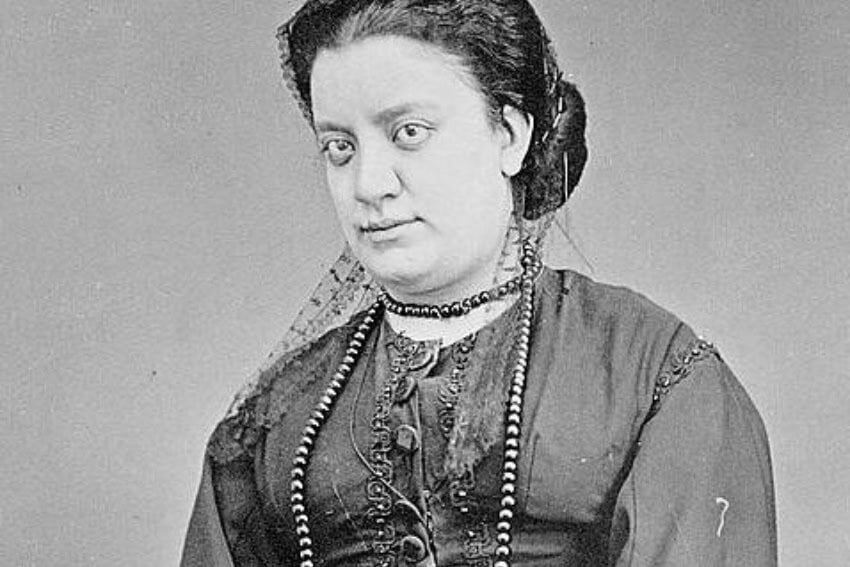
In August 1883, fresh off a stunning performance in the title role of the opera “Maria di Rohan” in La Paz, Ángela Peralta, the opera singer known as the “Mexican Nightingale,” arrived in Mazatlán to a reception fit for a queen. Crowds of admirers holding flowers and handkerchiefs overhead thronged the pier where her ship had docked, as the celebrated soprano was greeted by the city council and serenaded by a band playing the national anthem.
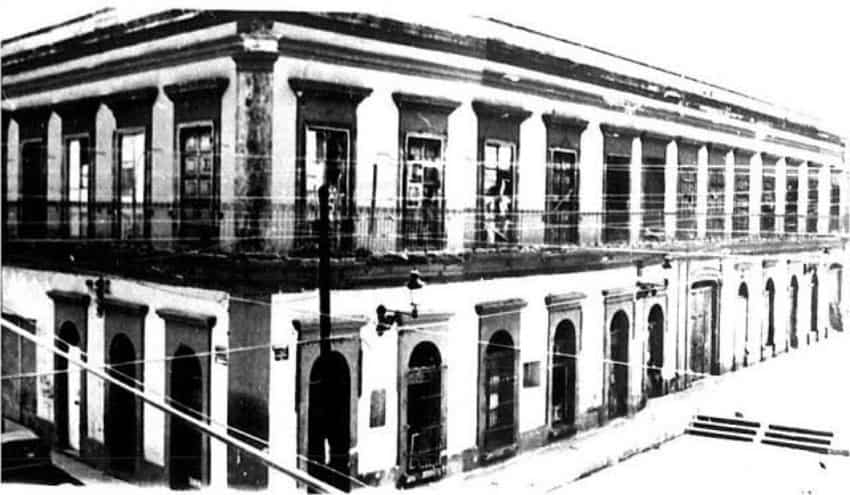
Peralta, according to popular legend, was wearing a dark coat and a small hat and sang a brief rendition of “La Paloma.” When she made her way down to the carriage assigned to her, her most passionate admirers unyoked the horses so that they might convey her in the carriage aloft, followed by the rest of the crowd, to her arranged lodgings at the Hotel Iturbide, next door to the Teatro Rubio, where she was scheduled to perform in the coming days.
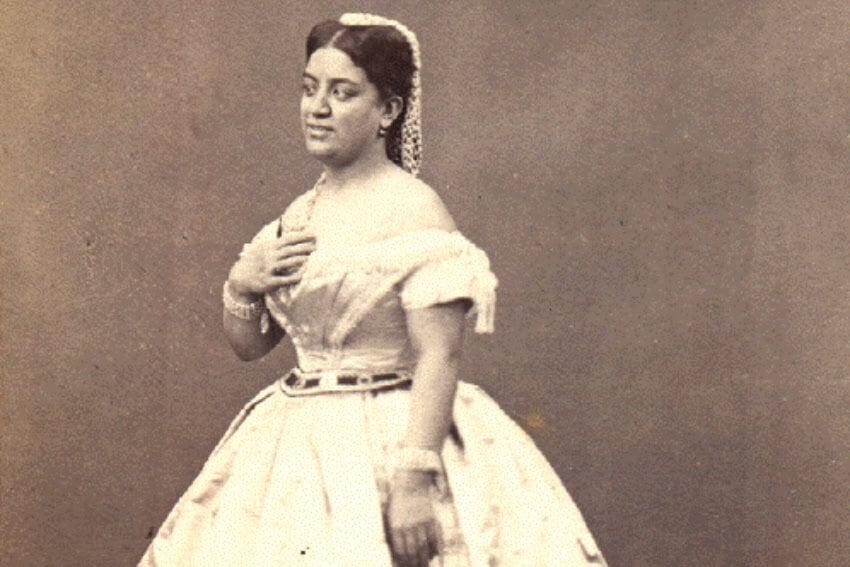
Little did the Nightingale know, as her carriage was carried on broad shoulders through the streets of Mazatlán, that eight days later she would be married for the second time, and that eight days later she would be dead at the age of 38.
The yellow plague
Before virologist Max Theiler discovered a vaccine for yellow fever while working at the Rockefeller Foundation laboratories in New York City during the 1930s — an achievement for which he would later receive a Nobel Prize — the infectious viral disease had likely killed millions. It still kills tens of thousands of the unvaccinated each year, mainly in Africa and South America.
No, it’s not contagious. Like malaria or dengue, yellow fever is transmitted into the bloodstream via a mosquito bite. But unlike the other two, it can be particularly devastating due to its ability to cause rapid organ failure and death. In the 19th century, yellow fever was rightly feared, not only for its potentially fatal consequences but also for the extremely painful symptoms that accompanied the disease.
There are three phases: incubation, acute and toxic. During the initial “silent” phase of yellow fever, lasting three to six days, there is often no obvious sign of infection, as the virus spreads in the bloodstream, causing headaches and body aches that can be mistaken for the flu. However, once the acute phase sets in, so too does a high fever, along with symptoms such as dizziness and confusion. Worse yet is the so-called “coup de barre,” an excruciating pain in the back and legs that feels as if the afflicted is being beaten with a stick.
Only 15% of those infected are destined for the severe version. But they are first deceived by a brief period of remission before the tragic reality sinks in. Then, a week to 10 days after being bitten, yellow fever’s most famous symptoms arrive. These are jaundice, a yellowing of the skin and eyes, and “black vomit” as acids from the eroding stomach lining turn blood from red to black.

The outbreak that would ensue in 1883, killing not only Peralta but 2,500 people — an astonishing 16% of Mazatlán’s residents at the time — was already present when she and her company arrived aboard the steamship Newbern from Baja California Sur. According to local reports, yellow fever was brought from Panama aboard two ships, the San Juan and the San Blas, which were allowed to dock without being quarantined. These ships already had dozens of infected passengers aboard, who were then bitten by Aedes aegypti mosquitoes in Mazatlán, which passed the virus on to the local population.
Early days in Mazatlán
Peralta and her company had arrived at the worst possible time. Although there had been several outbreaks of yellow fever in Mexico during the 19th century in the cities of at Altamira, Tampico, Tuxpan and Veracruz, none had occurred on the Pacific coast. This was the first, and the conditions then present in Mazatlán were ripe for it. The rainy season, which had just ended, had left pools of stagnant water, and this, combined with the heat and humidity of August, fueled the mosquito population that would spread the disease.
By the time Peralta and her company arrived on Aug. 22, dozens of deaths had already been reported in Mazatlán. It’s quite possible many of the company were bitten by infected mosquitoes before they even arrived at the Hotel Iturbide — perhaps even before they disembarked from the ship. When the first rehearsal was held two days later, Friday, Aug. 24, at the Teatro Rubio, the company’s musical director, Pedro Chávez Aparicio, was already feeling ill. So Peralta stepped in to direct the rehearsal, singing several arias to get a feel for the acoustics of the venue.
Over the weekend, she would begin to feel the first symptoms. By the following Monday, Chávez had died, and Peralta was confined to her hotel room at the hotel, in the throes of the disease that would eventually kill her.
The flight of ‘La Ruiseñora Mexicana’
Despite Peralta’s rather florid name, María de los Ángeles Manuela Tranquilina Cirila Efrena Peralta, she had been born into a Mexico City family of modest means. Her talents, however, were soon apparent. By the age of eight, she had already been enrolled in the National Conservatory of Music. That same year, she met internationally renowned opera singer Henrietta Sontag, who was then visiting Mexico. Peralta was able to imitate her so perfectly that Sontag predicted that with European training, she would become one of the world’s best opera singers.
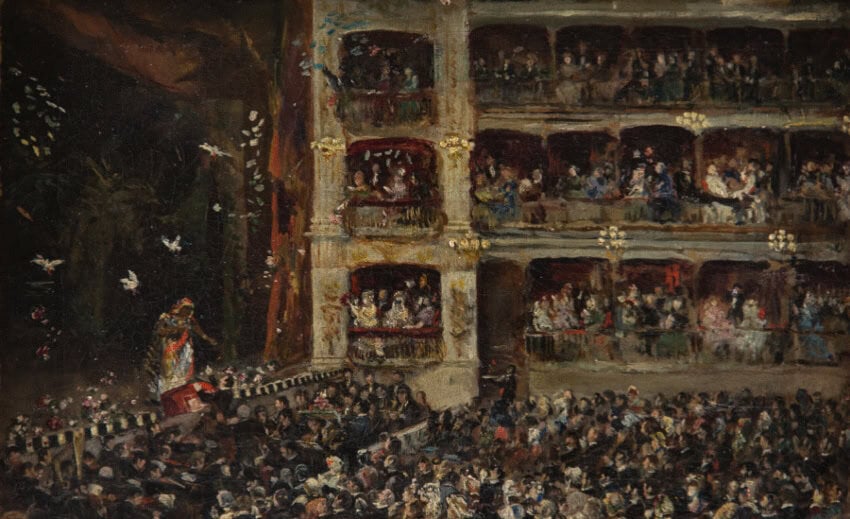
Her voice, heard for the first time publicly when she performed at the Gran Teatro Nacional at age 15 in the role of Leonora in Verdi’s “Il Trovatore,” was a rare soprano absoluta. With this versatile instrument, she was able to perform coloratura roles that required vocal acrobatics like trills and arpeggios while sustaining very high notes with flawless technical skill. But Peralta could also sing with immense power. Comparisons to songbirds, from goldfinches to nightingales, soon followed.
At 17, she performed the lead in Donizetti’s “Lucia di Lammermoor” at La Scala opera house in Milan, bringing down the house and receiving 23 curtain calls. One of Donizetti’s sons, in attendance, lamented that his father had not lived to see her perform. Francesco Lamperti, with whom she studied in Milan, declared her “angelic by voice and by name.” She went on to appear in all the other great opera houses in Europe, from Naples and Rome in Italy and Barcelona and Madrid in Spain, to Paris and St. Petersburg. She conquered the U.S., too, performing in New York City.
But already, the “black star” that Peralta felt was following her had begun to show itself. Her first husband — first cousin Eugenio Castera, whom she married in Madrid — had already begun to show signs of mental illness during the first year of their marriage. By 1876, he had been committed to an institution in Paris, where he died the same year.
Peralta returned to Mexico, where a decade earlier she had performed for Emperor Maximilian and Carlota. This visit promised to be every bit the same success when she opened to acclaim, performing “Aida” at the Gran Teatro Nacional in 1877. But when it became common knowledge that she was now in an unmarried relationship with her lawyer and manager, Julián Montiel y Duarte, the capital’s public, electrified by the gossip, turned against her. Her opera performances were increasingly met with hecklers, and by the end of the 1870s, she had vowed never again to perform in Mexico City.
This was the reason for her tours of the “provinces” of Mexico, like the fateful one that brought her to Mazatlán in 1883.
Final days in Mazatlán
On the morning of Aug. 30, eight days after she’d arrived in Mazatlán, by which point she was on her deathbed, Peralta legalized her relationship to Julián Montiel y Duarte by marrying him in room 10 of the Hotel Iturbide. Her signature does not appear on the marriage certificate, though, and it is speculated that she was dead before her vows had been uttered, and that her head had to be manipulated so that she could nod her “I do.”
The Nightingale would sing no more. So devastated was Mazatlán by the yellow fever outbreak that claimed Peralta’s life that only a few members from the company went to the cemetery to see her buried, and not a single note was sung at her gravesite. Of the 38 people who had accompanied her to Mazatlán, 34 fell ill, and at least 14 died. Montiel y Duarte survived, but spent the last 19 years of his life disputing claims that he had married Peralta for whatever was left of her estate.
Her legacy would prove more enduring. In 1937 — the same year Theiler discovered the cure for yellow fever — Peralta’s remains were disinterred from Mazatlán and removed to the Rotonda de las Personas Ilustres in the Panteón de Dolores in Mexico City. She was the first woman ever to receive this honor. The Teatro Rubio in Mazatlán, meanwhile, built in 1874 and where Peralta had rehearsed before her death, was renamed for her and received a significant restoration in 1992. Today, it remains a magnificent showplace for the next generation of talented Mexican singers and performers.
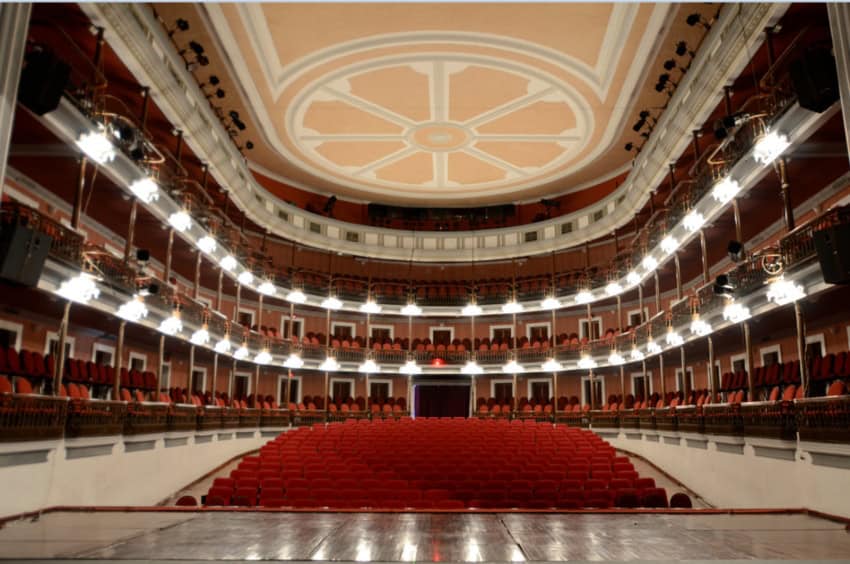
Of course, there will never be another “Mexican Nightingale.”
Chris Sands is the former Cabo San Lucas local expert for the USA Today travel website 10 Best and writer of Fodor’s Los Cabos travel guidebook. He’s also a contributor to numerous websites and publications, including Tasting Table, Marriott Bonvoy Traveler, Forbes Travel Guide, Porthole Cruise, Cabo Living and Mexico News Daily.