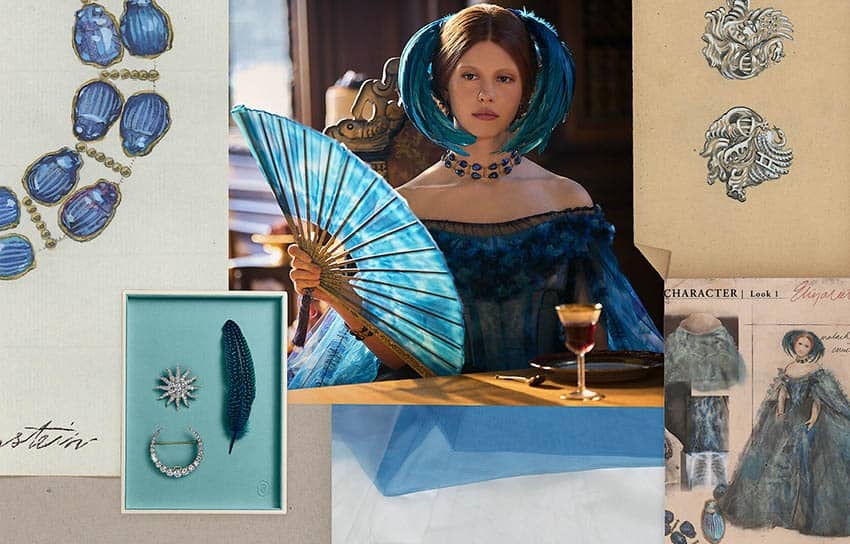
Tiffany & Co. has become the first luxury jeweler to partner with a Netflix production, joining forces with Mexican filmmaker Guillermo del Toro for his recently released adaptation of the sci-fi classic Frankenstein.
This historic collaboration marks the first time in nearly two centuries that the New York jewelry house has opened up its archives to bring a cinematic story to life. Through this partnership, del Toro’s singular aesthetic, often fusing Gothic opulence with Mexican craftsmanship, has found a new artistic expression on filmmaking.

“When you think about beauty and elegance, we said ‘Let’s approach Tiffany,’” del Toro said in a short behind-the-scenes video, praising the harmony of the jewelry with the film’s distinctive vision.
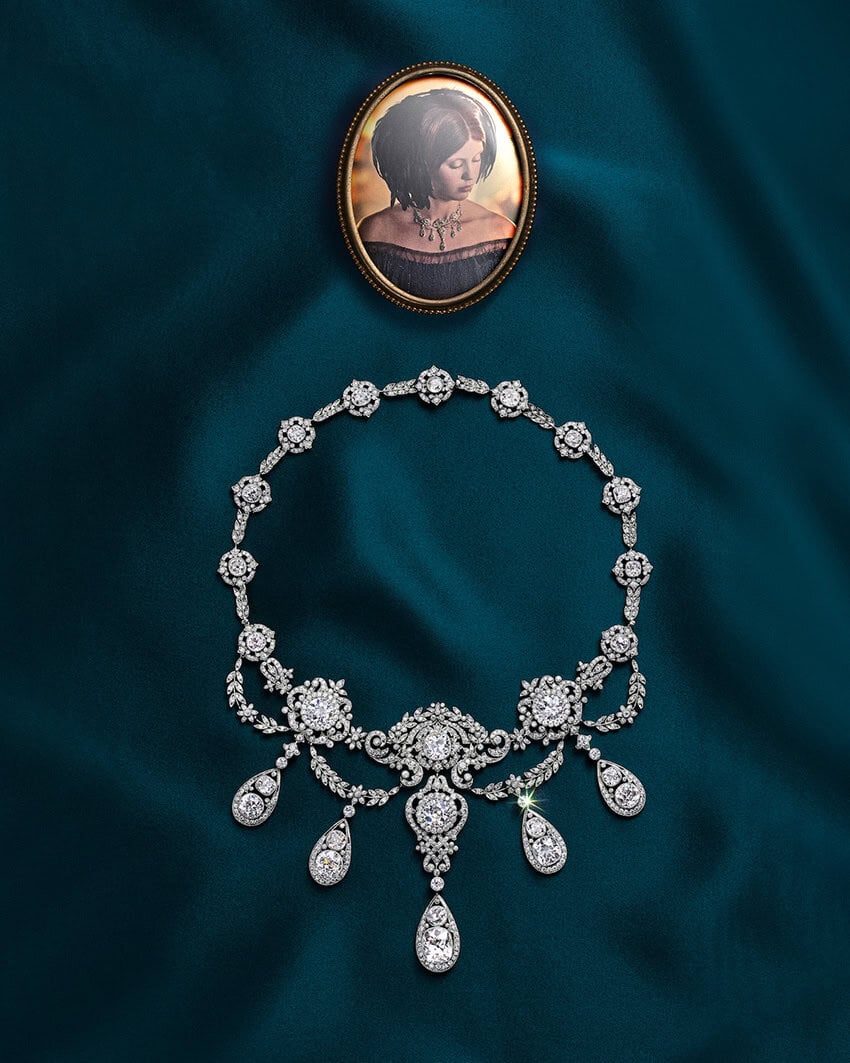
The film features 27 pieces of jewelry and sterling silver objects from Tiffany & Co., including necklaces, rings, bracelets, brooches, earrings, charms, silverware and a pocket watch. Of these items, ten are historical pieces from the Tiffany archives, six are vintage silverware, another six are contemporary creations, and five were designed specifically for del Toro’s film production.
Born in Guadalajara, Jalisco, in 1964, del Toro has gained international recognition for his unique approach to fantasy, horror and fairy tales, which has been highly influenced by his Mexican upbringing.
Indeed, when asked in a press conference how he balances human nature, fantasy and terror, he simply replied: “Because I’m Mexican,” amid laughter and applause from the audience.

“You know, in a sense, no one loves life more than we [Mexicans] do, because we are very aware of death,” del Toro explained.
“The beauty of life lives in close proximity to the only place we’re all going: Everyone on this planet is on a train whose final destination is death. So, along the way, we will live: We will experience beauty, love, and freedom. I believe that when you suppress one side of the equation — darkness or light — it becomes a pamphlet. When you take darkness into account to tell the story of light, that’s reality,” he noted.
This duality between life and death, between beauty and decay, has long defined del Toro’s filmmaking career. And Frankenstein, which explores new life emerging from the remains of the old ones, mirrors this duality.
That sensibility also echoes in the film’s visual world, where, “a young woman’s fascination with the beautiful creatures that crawl through the darkest corners of the world is reflected in her wasp-waisted dresses and in her elaborately crafted jewelry,” Netflix wrote in a press release.
“I think the relationship they [Tiffany] were able to form with us, and the wardrobe, and their pieces not being out of balance with that, and the wisdom of their suggestions, they enhance the character of Mia, and they enhance the value and the beauty of the picture so much,” del Toro said.
Mexico News Daily