Moctezuma II was a sensitive ruler. He followed the line of succession to the throne of Tenochtitlán established by his grandfather, Moctezuma I “Ilhuicamina,” and his Mexica subjects knew him as Xoyocotzin, “the venerable youth.”
During his reign (1502—1520), he was also known as “the angry one,” or “the one who frowns,” per Arqueología Mexicana, due to numerous rumors of his declining mental health. Historical records also suggest that he may have had ominous premonitions before the Spanish invasion of his empire’s capital. Sometimes these premonitions appeared as dreams; other times, almost as hallucinations.
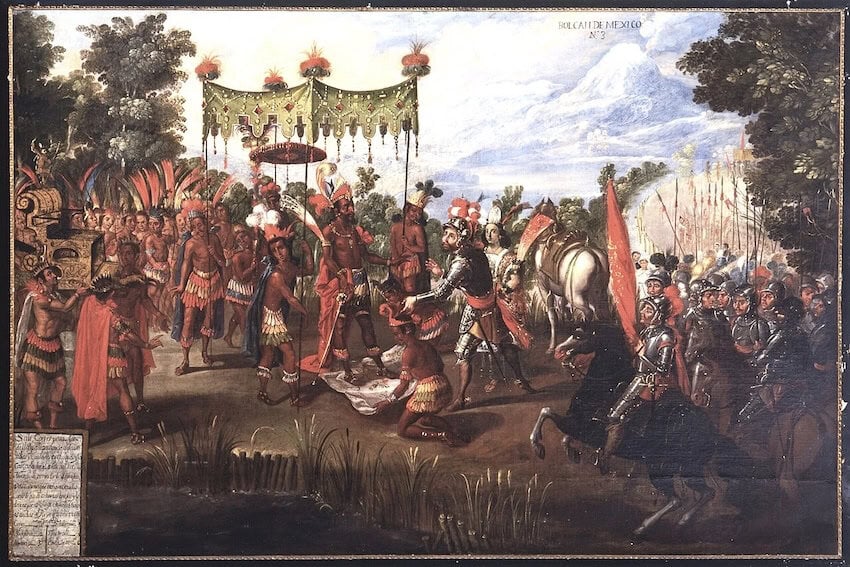
Despite his difficult character, it seems that Moctezuma Xocoyotzin had a particular affinity for nature. In fact, according to ENAH (National School of Anthropology and History) archaeologist Israel Elizalde Méndez, he founded the first zoo in Mexico. As to where it was and why it has never been found, the reasons have to do with its great antiquity and the fact that Tenochtitlán is now buried under modern Mexico City.
Moctezuma Xocoyotzin’s private zoo
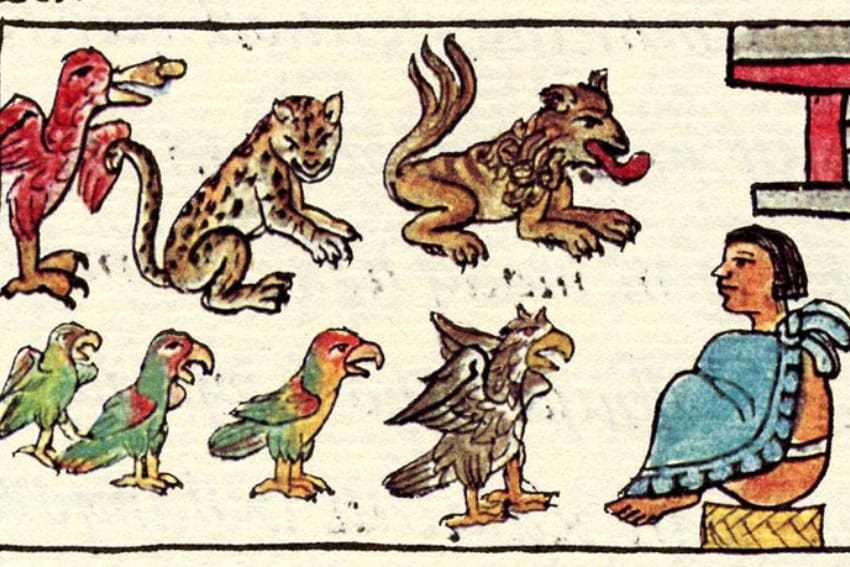
Historically, Moctezuma’s zoo is known as a “vivarium”: an enclosure where the ancient tlatoani, or emperor, kept specimens of magnificent species from across his empire. In Náhuatl, it was better known as a Totocalli: a house of birds. Considering that the Mexica Empire at its peak expanded from the Mexican Central Plateau (including the present-day states of Guerrero, Morelos, Puebla and Veracruz) to parts of Oaxaca, the animal collection was likely as diverse and impressive as the territory itself.
Unfortunately, as Elizalde Méndez points out, most of the accounts that have survived to the present day are “the narratives of the Spanish conquerors.”
Hernán Cortés was impressed by the great diversity of birds that Moctezuma kept in captivity, and he was amazed at how this enclosure imitated the natural conditions in which each species thrived:
“He had all the kinds of water birds found in these parts, which are many and diverse, all domesticated; and for the birds that live in the sea, there were saltwater ponds, and for those that live in rivers, freshwater lagoons, which they emptied from time to time for cleaning, and then refilled through their channels,” the conquistador recounted in his letters to the Spanish Crown.

The animals in the zoo
For decades, the zoo was assumed to be a legend. However, animal remains discovered in 2018 suggest that not only did it exist, but it was located near the current archaeological site of the Templo Mayor. Like contemporary zoos, Moctezuma’s vivarium was responsible for breeding, caring for and maintaining diverse animal species, explains Elizalde Méndez.
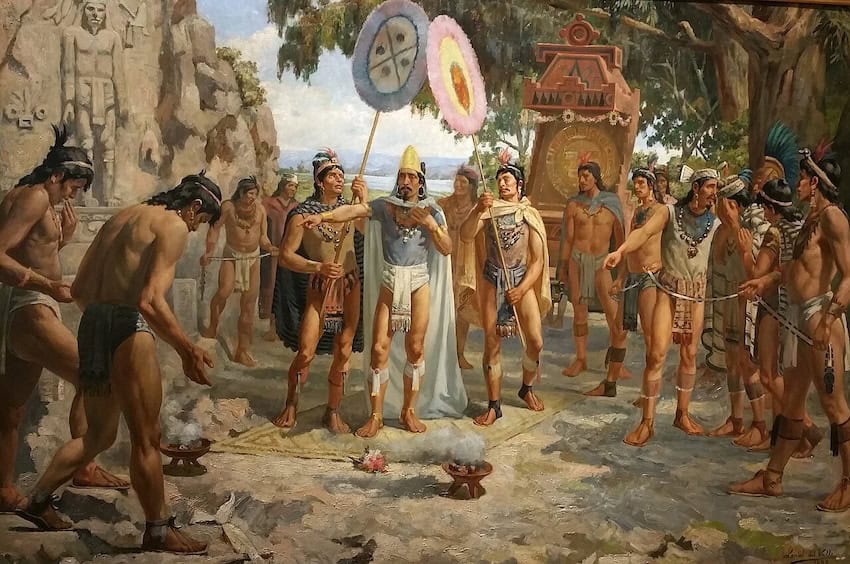
What animals were there in Moctezuma’s zoo? As many as the ancient inhabitants of Mexico-Tenochtitlán could have imagined! Elizalde Méndez told the BBC that “there were even enormous cages with birds that are not native to the area around Mexico City.” It is thought that there were golden and harpy eagles, macaws and quetzals, which “were transported from other parts of the empire.” It is also known that there were small amphibians (frogs and toads) and varieties of reptiles, such as snakes.
Furthermore, not just anyone could access this space of captivity. On the contrary, it formed “part of the architectural structures where the elites lived.” Many of the animals that lived there were collected as tribute from subjugated peoples, or arrived as gifts from other political leaders as a gesture of goodwill toward the tlatoani.
Information about the zoo is still scarce
Considering that Moctezuma II was the leader of the most impressive empire Mesoamerica ever saw, it was not surprising that he indulged in eccentric tastes — such as keeping wild animals in captivity. In addition to artificial salt lakes, chroniclers reported gigantic cages and large boulevards for touring the grounds.
Besides serving as a source of enjoyment for the Mexica royalty, says Elizalde Méndez, it appears that the fauna collected by Moctezuma formed part of “a very important network for supplying objects for ritual use.” In other words, master artisans obtained “feathers, hides and bones” from these animals to create prestige goods. According to the archaeological remains found, it seems that some specimens were used as offerings inside the Templo Mayor.
Although historical records and accounts of this site are numerous, archaeologists and historians are cautious about which animals were actually there — and especially about the exact location where Moctezuma’s zoo was built. Elizalde Méndez acknowledges that “the information we have is scarce.”
Andrea Fischer contributes to the features desk at Mexico News Daily. She has edited and written for National Geographic en Español and Muy Interesante México, and continues to be an advocate for anything that screams science. Or yoga. Or both.