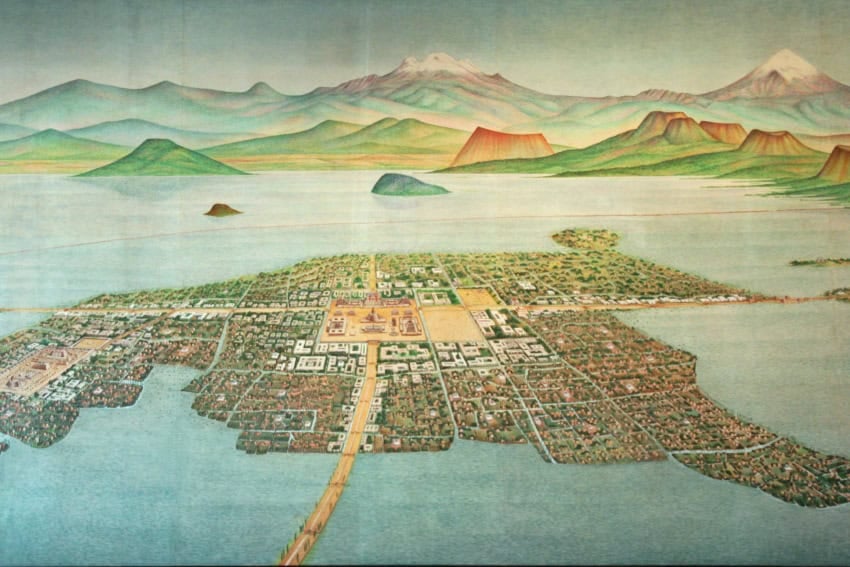
When you think of the ancient peoples of Tenochtitlán, the great imperial capital of present-day Mexico City, the first term that comes to mind is possibly Aztec. It is not uncommon for people to refer to this civilization as such, and at times, even use the term as a synonym for Mexica.
Worry not, dear foreign folk and friends! It’s a common mistake that even contemporary Mexicans make in pop culture. It’s no coincidence that the current Estadio Banorte was formerly called Estadio Azteca (and honestly, it was a better name). This, however, does not mean that the terms Aztec and Mexica can be used indistinctly. In fact, according to Dr. Patrick Johansson, a specialist in the Náhuatl language and the Alfonso Reyes International Prize laureate, the terms refer to completely distinct cultures, each with its own deities and temporal space in the history of pre-Hispanic Mexico. Here’s the difference.
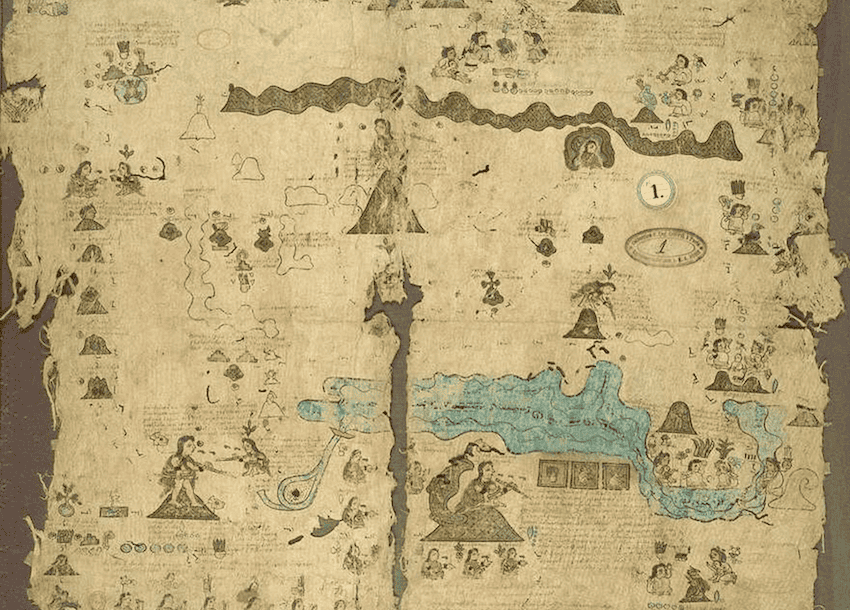
The peoples of Aztlán
Aztec is the demonym for Aztlán, an ancient altépetl (or city-state) on the outskirts of Mesoamerica. No one knows where Aztlán is, when it existed or how many people lived there. From ancient Náhuatl, it translates as “the place of the herons,” but it has also been translated as “the place of whiteness.” Some authors even consider it more of a mythical place, since no archaeological remains have been preserved — or found — to support its geographical location.
Some authors think of Aztlán as more of a mythical city, serving as part of the founding myth of the magnificent Mexico-Tenochtitlán. Although the mythical city has not yet been found, archaeologists and historians alike agree that the Aztecs migrated from “the periphery of Mesoamerica,” per the National Institute of Indigenous Peoples (INPI), in what we now geographically locate as Aridoamerica, meaning the northernmost part of Mexico.
It is believed that Aztlán was “an island situated in a lagoon,” which eventually became their city-state. Due to demanding tax burdens, explains the INPI, a group of Aztecs decided to “abandon Aztlan and go in search of another land that … had been promised to them” by divine inspiration.
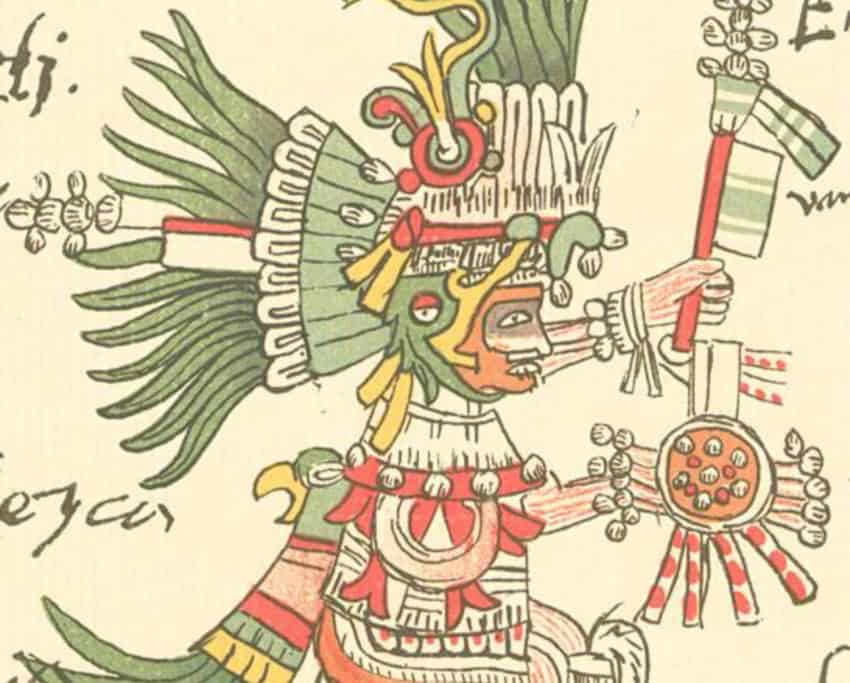
Who promised them this new beginning, which would mark a turning point in Mesoamerica? None other than Huitzilopochtli, the powerful god of war, would guide them on a long journey to what would become their new imperial capital.
Huitzilopochtli’s chosen ones
According to the founding myth, Huitzilopochtli — son of the mother goddess Coyolxauhqui — chose a select group of Aztecs to leave the Place of Whiteness. These chosen ones he anointed as Mexica: those who trusted in his leadership toward the new promised land.

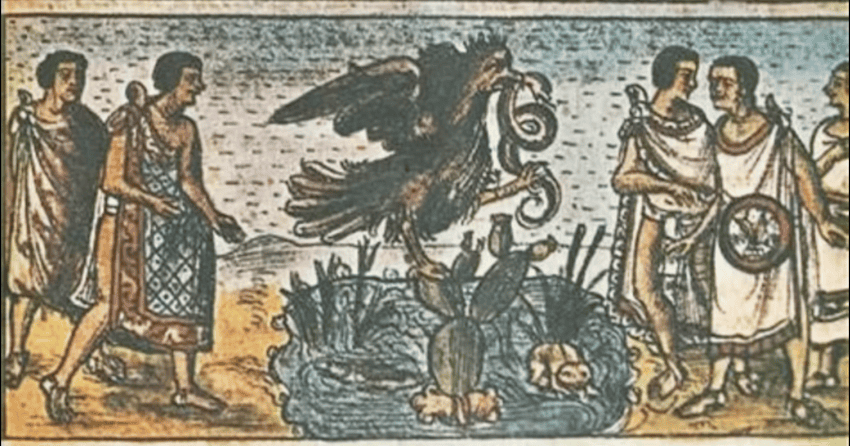
How would they know they had reached the promised land? According to the myth, Huitzilopochtli would signal it to them with the sign of an eagle perched on a prickly pear cactus. “In the beginning was the prickly pear cactus,” writes Dr. Johansson in his book “From Aztlán to Tenochtitlan,” in which he describes this sacred pilgrimage that may have lasted for centuries. According to records from the Templo Mayor Museum, this sacred migration is estimated to have taken place between 1115 and 1325 AD.
“The Mexica’s encounter with the prickly pear cactus … was foundational,” writes Johansson, since “it was the axis of the Mexica’s sedentary settlement.” After nearly 200 years of migration, they had finally found the land promised by the god of war, who became their patron — and would mark the military regime of the new Mexica Empire.
The size of the Mexica’s city-state
During its height, between 1325 and 1521, it is estimated to have encompassed a territory of approximately 14 square kilometers. This corresponds to much of central and southern Mexico, “dominating diverse geographical regions ranging from the Gulf Coast to the Pacific and parts of the south.”
Due to its theocratic, tributary and military power, the imperial city of Mexico-Tenochtitlán, which dominated numerous other peoples at the time of the Spanish Conquest, was thought to have a population of nearly 100,000.
So, now you know: Aztec and Mexica are not synonyms
So no, as we’ve seen, Aztec and Mexica are not synonymous. Generally speaking, we can say that the Aztecs were the inhabitants of the mythical Aztlán, while the Mexica were the chosen ones of Huitzilopochtli who founded the most powerful and extensive empire in Mesoamerica.
However, these two distinct civilizations do share historical, cultural and religious origins. In a nutshell, once the Aztecs — guided by the god of war — left Aztlán, they became the Mexica.
At this point, it is crucial to note that much of what we know today about these myths, culture and sacred pantheon of both cultures is filtered through a colonial lens. This is primarily because centuries of written records were lost after the European invasion of the Americas: the Catholic Spaniards destroyed these records in the name of the spiritual conquest of the New World.
After the Spanish conquest, this grand narrative reached the hands of the chroniclers and historians of the Indies, who were responsible for compiling or reconstructing much of the ancient Mexica past that was beginning to be forgotten during the first decades of evangelization.
Andrea Fischer contributes to the features desk at Mexico News Daily. She has edited and written for National Geographic en Español and Muy Interesante México, and continues to be an advocate for anything that screams science. Or yoga. Or both.