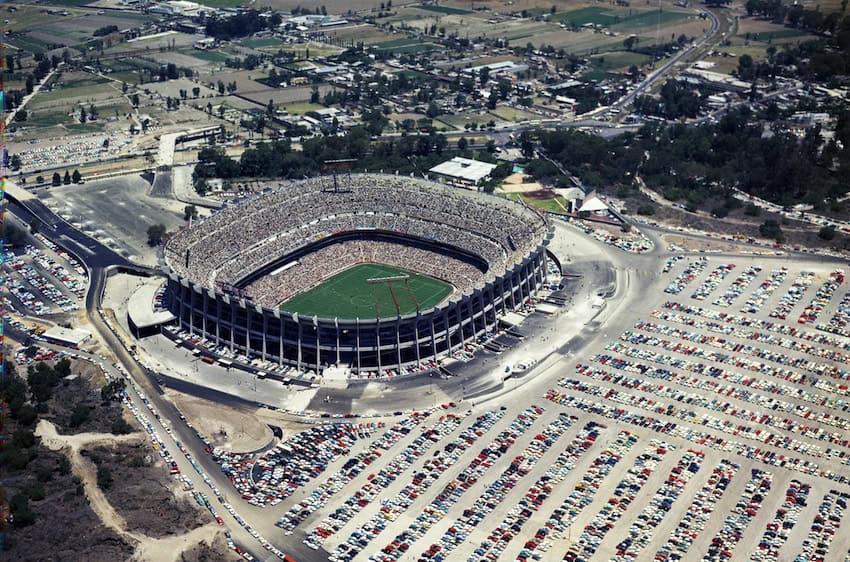
Google and the historical archive ICA Foundation have launched an interactive project through the Google Earth platform that invites users to digitally explore Mexico’s legendary Estadio Azteca (now Banorte) from the 1960s to today.
The virtual tour allows you to explore the stands and other parts of the iconic stadium, also known as Mexico City Stadium for the duration of the 2026 FIFA Men’s World Cup.
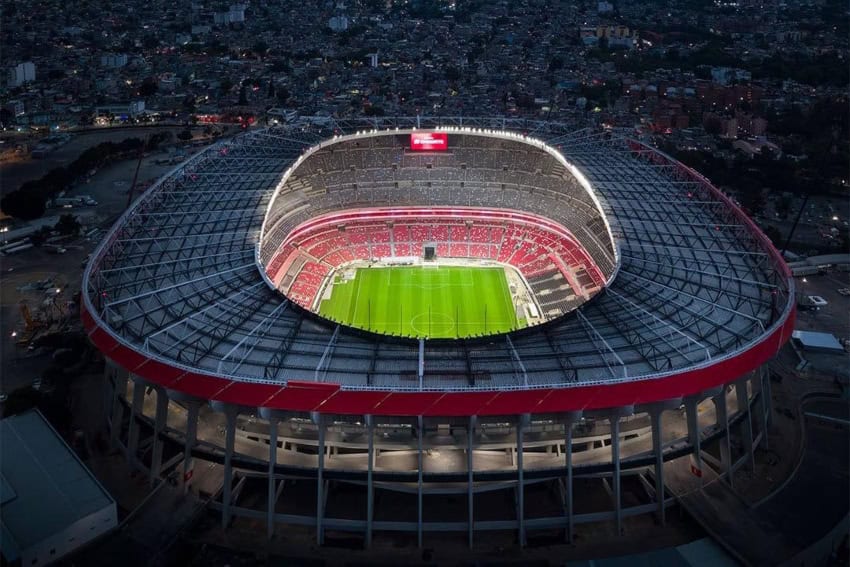
It also includes information about the stadium’s construction, initial engineering challenges and its appearance throughout renovation works in the lead-up to the 2026 FIFA World Cup, where it became the first stadium in the world to host matches in three World Cup tournaments: 1970, 1986 and 2026.
“Mexico didn’t want to just put on a World Cup — we wanted to put on the best World Cup the world had ever seen,” Guillermo Canedo said upon his 1960 appointment as Mexican Football Federation president. “And for that we needed the best stadium the world had ever seen.”
Canedo broke ground in 1961 on the iconic 100,000-plus-seat stadium, budgeted at 95 million pesos (approximately US $7.6 million in 1961, or roughly $86 million in today’s economy). That figure eventually snowballed to over 200 million pesos due to a range of unforeseen challenges.
Due to the presence of extremely hard volcanic rock at the work site, the architect, Pedro Ramírez Vázquez, had to gather a group of 10 architects, 17 technicians, 35 engineers and 800 laborers to establish a surface on which the stadium could be built.
The team had to remove 180 million kg of rock from 64,000 square meters of land, which took almost one year and required a lot of dynamite.

Much of this is documented on the new Google platform alongside several defining moments in world sport’s history, including:
- The “Game of the Century:” the legendary 1970 World Cup semifinal between Italy and West Germany.
- The famous match between Mexico and Denmark at the unofficial 1971 Women’s World Cup, which attracted a record 110,000 spectators.
- Argentine player Diego Maradona’s iconic “Hand of God” goal in the 1986 World Cup final against England.
“There’s just something very special about the Azteca,” Brazilian soccer legend Edson Arantes do Nascimento, better known as Pele, once said. “You need to be inside it, to feel it to understand. It’s unique.”
And now you can do just that, albeit on a virtual level.
With reports from López Dóriga Digital and EL PAÍS English