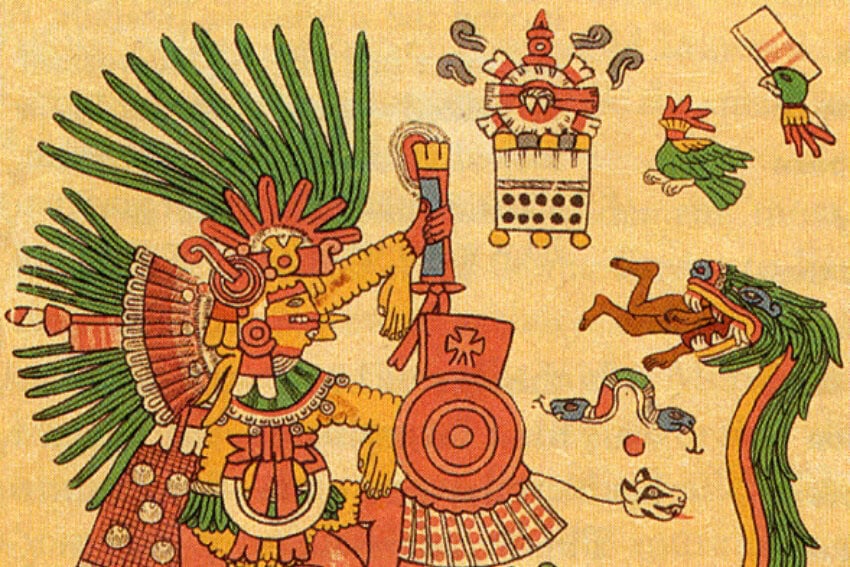
Yay! The spring equinox is just around the corner, and the blue, hazy winterdays are over. If you’re living in Mexico, you’ve probably seen a myriad of cacao ceremonies and other weird, pseudo-ancient events flourishing on social media — all themed to welcome the 2026 springtime. However mythical and New-Agey these experiences might seem, this was definitely not how the ancient Mexica celebrated the coming of spring every year.
As the equinox approached, the Mexica underwent a deep spiritual journey. It was not related to cacao, though. In reality, they were celebrating the “rebirth of life” — as spring has been interpreted across various cultures around the world — with a much more literal approach. Enter Tlacaxipehualiztli, the sacred festival of agricultural renewal and fertility that the Mexica celebrated every March.
All hail Xipe Tótec, the bringer of spring!
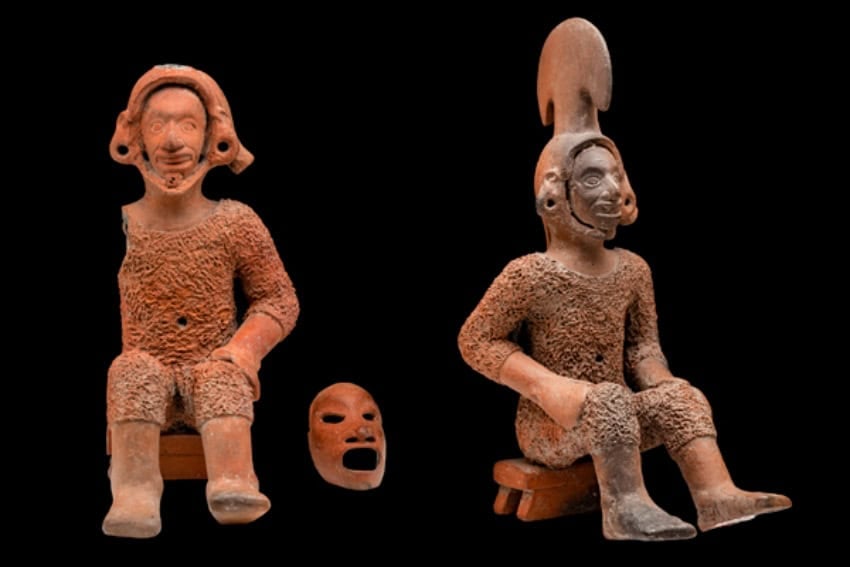
Tlacaxipehualiztli translates from Nahuatl as “to put on the skin of the flayed man,” per the National Museum of Anthropology (MNA). This sacred festival was held annually to honor the god Xipe Tótec, the Fleshless Lord.
Associated with “fertility, regeneration and renewal,” according to INAH’s records, his cult was spread in various forms throughout the Mesoamerican region. According to the myth, this deity flayed himself to feed humankind. For this reason, he was also associated with the arrival of spring and the rebirth of crops. Specifically, regarding the growth of corn: “Just like the god,” explain INAH specialists, “when the ear of corn matures, it dries, and the husk peels off to reveal the kernels that will give rise to new plants.”
As one of the most important festivals in ancient Mexico, Tlacaxipehualiztli lasted over 20 days, a fundamental number in the Mexica worldview that represented the basis of their numbering system, as explained by historians at the National Institute of Indigenous Peoples (INPI). As the center of the vigesimal system, it was the center of religious, spiritual and daily life in ancient Mexico-Tenochtitlan.
Now, referring to Xipe Tótec, the central figure of this festival, as “our Flayed Lord” is a mistake, as archaeologist Claude-François Baudez wrote for Arqueología Mexicana magazine. According to his iconographic studies for the INAH, “images of the god show him not as flayed, but as wearing the skin of another.”
This implies that the god had a more active personality, flaying the old to make space for the new. In fact, Xipe Tótec is often portrayed with red skin, representing the fresh flesh and blood of his victims.

Tlacaxipehualiztli, the great (and gory) welcoming of the Mexica spring
The Tlacaxipehualiztli annual festival represented the transformation of dry land into fertile soil. In the main celebration, a prisoner of war faced the fearsome jaguar and eagle. It’s worth mentioning that this prisoner was bound hand and foot and gagged — yes, the Mexica didn’t know much about fair play, being the imperial forces in Mesoamerica.
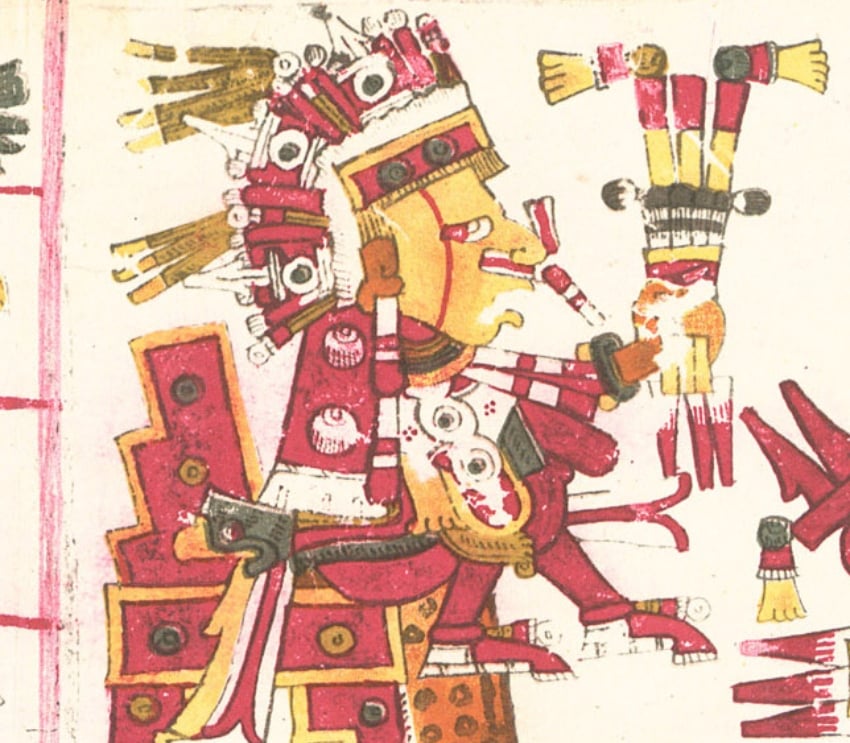
Besides celebrating the arrival of spring, Tlacaxipehualiztli commemorated the creation of the Fifth Sun, a pivotal event in Mexica mythology. In this ceremony, all the gods of the sacred pantheon threw themselves onto a sacrificial pyre to usher in a new era.
This sacred destruction had no warlike connotation for the Mexica. On the contrary, it was understood as the ultimate representation of the regeneration of life. Therefore, during Tlacaxipehualiztli, corn was not consumed — a rather strict fast, as documented by archaeologist Carlos Javier González, since even then it was the staple food of Mexico-Tenochtitlan.
The eating of ‘pure’ corn
Specifically, the ancient inhabitants of the Valley of Mexico could not consume foods that had undergone nixtamalization. That is, corn prepared in water with lime. During the sacred festivals, only “pure” corn was permitted, requiring the husks to be removed from the ears so the kernels could be eaten directly. It was literally like peeling the skin off the corn to eat it, just as the god did. This fast was broken once the sacrifices in honor of Xipe Tótec were finished.
So yes, in a way only the Mexica could understand, the celebrations around Xipe Tótec were supposed to bring an auspicious crop and bountiful harvest seasons throughout the year. Across the centuries, this symbolic act of rebirth somehow translated to the flaying of both corn and war prisoners. So, happy Tlacaxipehualiztli, everyone!
Andrea Fischer contributes to the features desk at Mexico News Daily. She has edited and written for National Geographic en Español and Muy Interesante México, and continues to be an advocate for anything that screams science. Or yoga. Or both.