There’s nothing quite like taking it slow while on a road trip through unseen parts of Mexico. In fact, sometimes you have no choice: The roads can be old or poorly paved, the lanes narrow and at times risky, and depending on where you are, you might not have internet reception to navigate your way as efficiently as you might otherwise.
And yet, in taking the less traveled route, you’ll often see some of the most gorgeous scenery that if you had flown by plane or stuck to a paid highway, you’d completely miss out on.
Veracruz’s coffee road
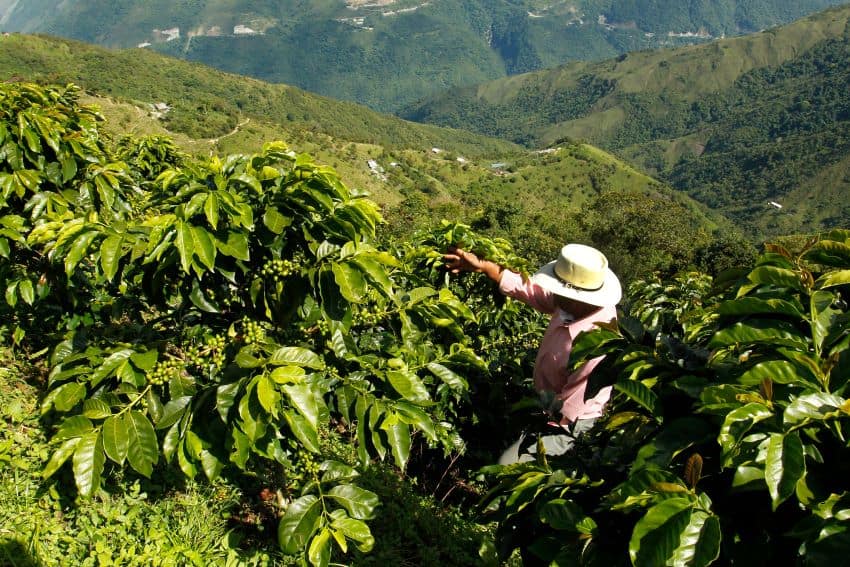
This backroad secrecy is best exemplified in Mexico’s oldest coffee trail, which curls and rises along the Sierra Madre Oriental mountain range throughout eastern Veracruz, separating the Gulf Coast state from Puebla to the west. It’s here — on these rugged, extensively windy country roads — that adventurers will find one of the nation’s most underappreciated histories along a passage that spans roughly three hours and 127 kilometers from Coatepec to Cordoba.
This series of Pueblo Mágicos is renowned for its role in growing and exporting coffee to the rest of Mexico.
Coatepec: A robust cafe scene
Begin in Coatepec, two hours inland from the port city of Veracruz. The small town is part of a volcanic region in eastern Mexico where coffee once originated in the continental Americas. Despite its minuscule size, Coatepec is historically significant for being the site of the earliest mass cultivation of Arab coffee trees in the mainland Americas, brought over from the Caribbean islands by Spanish conquistadors and French smugglers. They would be grown at La Orduña beginning in the early 1800s.
Initially, the region was prominent for its sugar cane plantations, but those properties would later evolve into coffee haciendas on the route to Mexico City, helping to establish the thriving Mexican capital as a romantic epicenter of world-class cafes.
In Coatepec — an aesthetically quaint and well-maintained town in which the government has designated at least 370 buildings as “historically significant” — you’ll find a robust cafe scene that mixes traditional fincas with modern, trendy hotspots, where both locals and out-of-towners gather along tree-lined avenues and lively plazas.

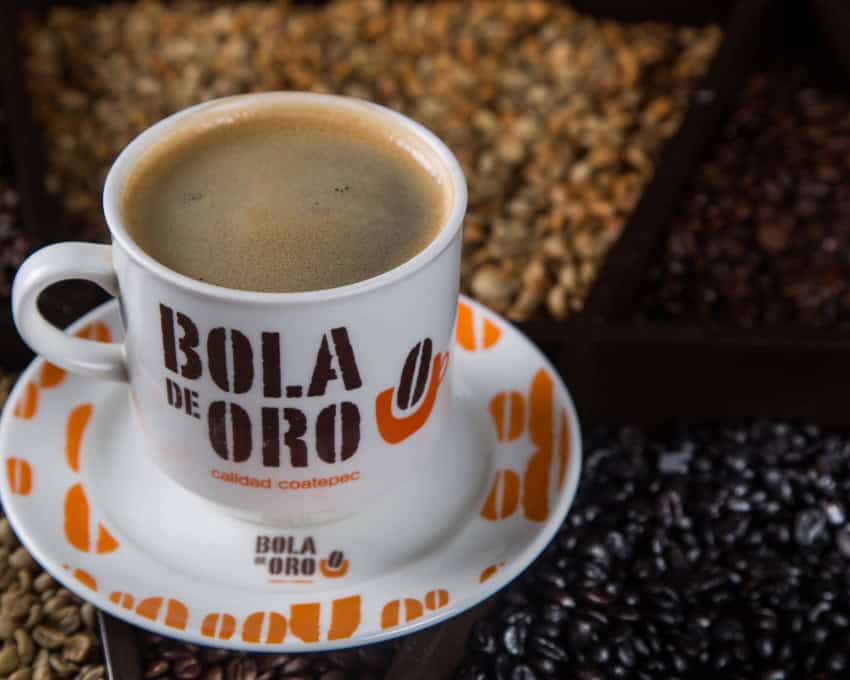
Assuming you’re in town to partake in the abundantly delicious coffee offerings, the region’s three top coffee-producer cafe chains — Bola de Oro, Don Justo and La Parroquia de Veracruz — are a traditional starting point, which are all conveniently located right across from Parque Hidalgo, the main square, and neighbor one another.
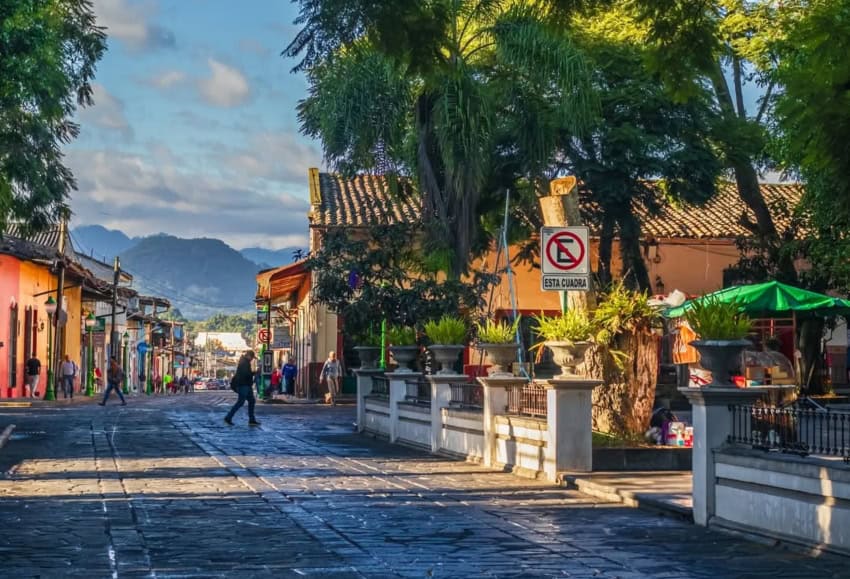
For the uninitiated, these three commercial suppliers dominate the area, with multiple branches in every surrounding town and city. Bola de Oro dates back to 1910 and originated in nearby Xalapa, while in Coatepec, Don Justo goes back even further, to 1891. But the literal grandfather of them all is La Parroquia, from the port city of Veracruz. It started as Gran Café de la Parroquia in 1808, making it the oldest still-operating cafe in Mexico.
Try them all: Ask for an espresso at each and compare the three legacy cafes before pivoting to the younger, modern renditions of local coffee traditions at Ofelia Pan Y Cafe (includes an incredible pastry selection and a spacious outdoor patio), Chipi Chipi Cafebreria (a bookstore and cafe whose namesake, “chipi chipi,” is a local word for the mountainously cold and drizzly weather) or Ensambles (a notably cool eatery and cafe with a range of locally grown and fermented beverages and coffee options to go with a delicious brunch menu).
If you’re feeling particularly ambitious, you can also swing by the Museo del Café Coatepec in the center of town for a sampling of the region’s many coffee variations. Or drive a bit further out to Museo Bola de Oro Finca Roma, a massive estate where you can observe and interact with the coffee-growing process from start to finish in an all-ages experience.
Huatusco
Once you’ve filled up your cup in Coatepec — in which it is worth spending a night or two — the road trip truly begins: a breathtaking escape through an old, jungle-dense thoroughfare that is less traveled than the newer and busier highways that most local drivers prefer, even though they offer a far less scenic and peaceful experience.
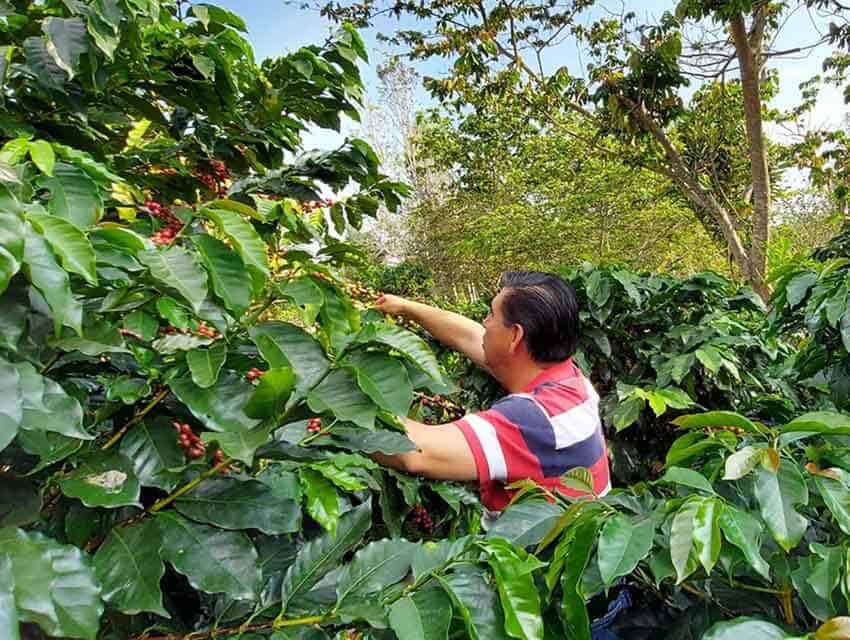
Twist your way over and around rivers and endless greenery for just under two hours until you hit your first major stop in Huatusco — a city that isn’t as quaint or well-maintained as the others on this trip, but has its charms. With roots that can be traced to the 15th century, the city was once temporarily named the capital of Veracruz in 1847 during the Mexican-American War, and is an ideal afternoon pit stop for — you guessed it — more coffee.
The standout on this part of the trip is Finca Cañada Fría, a coffee bar offering tastings that — unlike some competitors in the area — focus not only on Huastusco-grown beans but also on ones from other coffee-producing states like Chiapas, Puebla and Oaxaca.
While you’re there, it’s also worth strolling a few blocks into downtown to the Mercado Benito Juárez, a three-level labyrinth of a market where you can acquire tlatonile (a regionally-specific pumpkin-seed mole that my Mexican relatives have sent me on missions to pick up and bring back whenever I’m in that part of the state).
Huatusco isn’t as outwardly endearing or attractive as other parts of the state, but it was once an important locale that still offers a glimpse into unfiltered Mexican life.
Cosco
Once you’re back on the mountain path, keep heading south for an additional half hour. Your next destination is highly worthy of another night or two: Coscomatepec de Bravo (or Cosco). This majestic Magical Town is ensconced in the cloudy heights of surrounding mountains and features fresh air, cobblestoned roads and a lively, yet miniature, feel.
First things first: coffee. As with everywhere along this journey, you can order a cup of joe on a whim and you won’t be disappointed — though a recommendation is Cafe 88, which has two locations in town and a funkier, updated vibe. Then there’s the local dishes: There’s chilatole de frijol (bean stew), esquimole (a local spin on chicken and chile seco), and white barbacoa (maguey-wrapped lamb with herbs), to name only a few.
Besides that, a stay at La Mansión de las Flores is an absolute must. The family mansion-turned-bed and breakfast is among the most luxuriously dreamy stays you’ll find anywhere in the state. Aside from including a hidden spa — replete with access to a sauna and a masseuse — there’s a garden, multiple library nooks, an area for outdoor yoga, full access to a large kitchen, and a sweet woman tending the premises named Socorro, who might surprise you with fresh tortillas and homemade tea using flowers from the patio.
A short walk from downtown, the stay at this bed-and-breakfast is not to be missed and will elevate an already memorable, caffeine-laced road trip through a naturally surreal and relatively unnoticed part of the country into a top-tier experience.
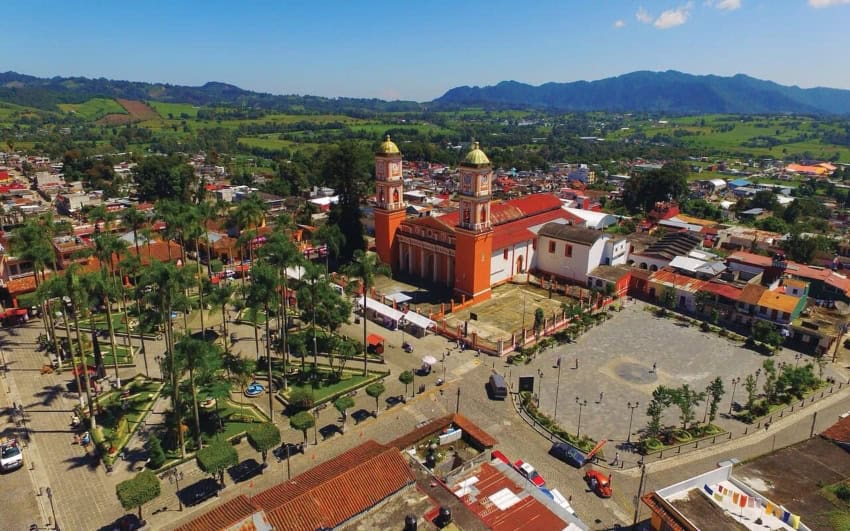
Round out your trip to Cosco with a visit to La Fama Panaderia — which opened in 1924 and is celebrated as the best bakery for miles — and Cervecería Artesanal Sabario, a craft beer lover’s paradise hidden inside Parque Recreativo Cosco, a sprawling outdoor area that’s perfect for families with kids. Every Monday, there is a large tianguis (open-air flea market) that takes over the small town, so you may want to avoid that day as many of the few streets that exist in Cosco get shut down on this day.
Córdoba
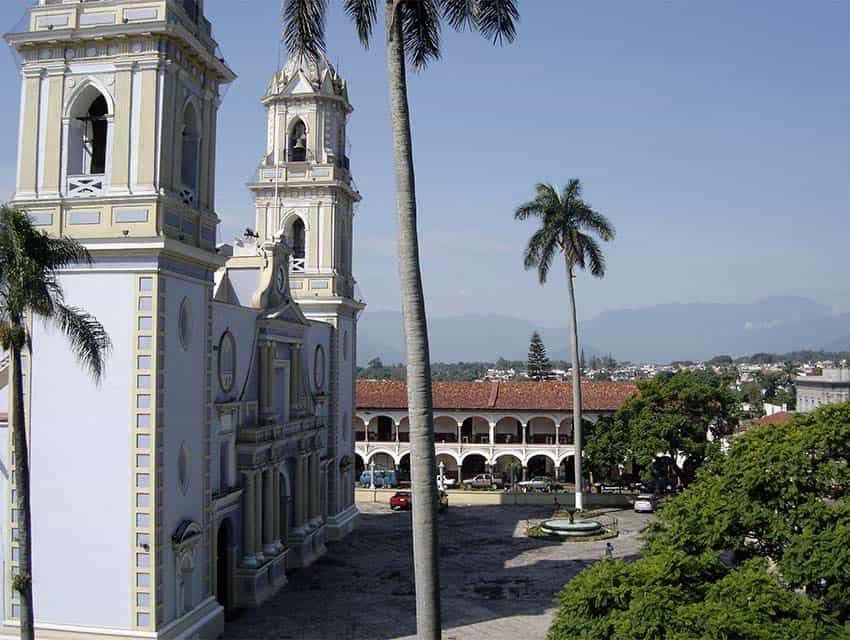
Your mountain-trekking on wheels will come to an end in Córdoba, another Pueblo Mágico and historic city with fascinating lore. Besides being the place where Mexico’s treaty of independence was signed in 1821, it’s also — similar to Coatepec — considered a cradle of continental America’s earliest coffee-growing efforts: Hacienda de Guadalupe was founded around the mid-1700s, making it the oldest known coffee plantation in the entire Americas.
Like Coatepec to the north, here visitors can tour nearby coffee farms and museums and take formal coffee routes with a tour guide to get a real sense of the coffee production, process and history here.
At the city’s center — which is actually fairly sized, despite being governmentally deemed a Pueblo Mágico — Museo del Café Córdoba awaits with educational espresso tastings and a variety of music and cultural events.
Important cafe institutions in Córdoba include Calufe, Hêrmann Thômas Coffee Masters, and the coffee museum itself. Just outside of the central square, Isabel Specialty Córdoba specializes in European pastries — as well as the largest cinnamon rolls you’ll ever encounter — which pair nicely with an espresso or Americano made from fresh beans sourced from nearby farms.
An epicurean mecca
The city isn’t overly glamorous, but its coffee history — both past and present — has turned it into an epicurean mecca of coffee-related attractions.
If you enjoy soul-awakening coffee, rich culinary traditions, unique Mexican histories, peaceful towns, and vast mountain roads, there’s arguably no better road trip than this one. The next time you’re getting around Veracruz, ditch the coastal highway and take the swerving backroads. They’re free of tolls — and freeing in every sense — with an inescapably thick coffee aroma that will follow you from start to finish.
Alan Chazaro is the author of “These Spaceships Weren’t Built For Us” (Tia Chucha Press, 2026), “Notes from the Eastern Span of the Bay Bridge” (Ghost City Press, 2021), “Piñata Theory” (Black Lawrence Press, 2020), and “This Is Not a Frank Ocean Cover Album” (Black Lawrence Press, 2019). He is a graduate of June Jordan’s Poetry for the People program at UC Berkeley and was selected as a Lawrence Ferlinghetti Poetry Fellow at the University of San Francisco. His work can be found in NPR, The Guardian, SLAM, GQ, L.A. Times, and more. He is currently based in Veracruz.