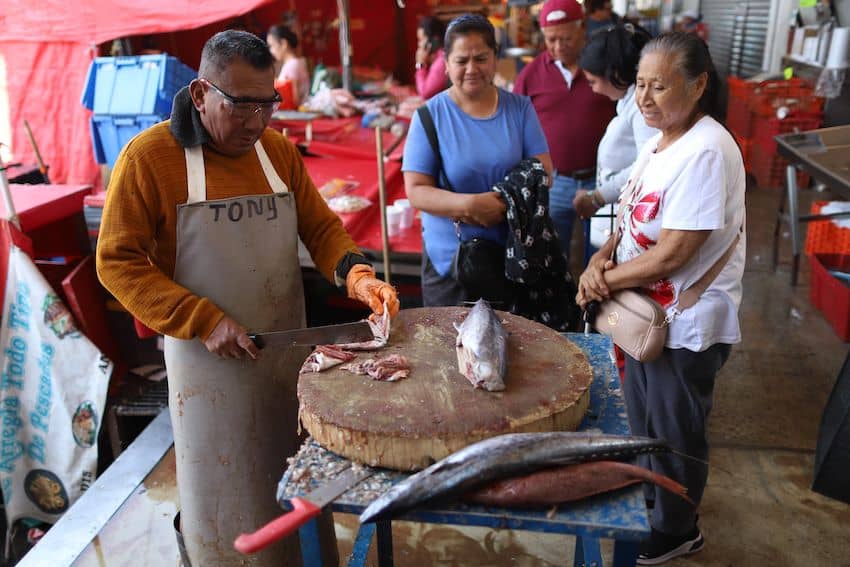
According to a new study, seafood lovers in Mexico face some of the world’s highest rates of retail fraud, with more than one-third of fish sold in markets and restaurants turning out to be a different species than advertised.
A new report by the globally respected ocean conservation group Oceana found that 38% of 1,262 fish and seafood samples collected in restaurants and markets in the 10 largest Mexican cities were mislabeled or sold fraudulently — nearly double the roughly 20% global average cited by the Food and Agriculture Organization of the United Nations (FAO).
That means in about four out of every 10 purchases at these locations in Mexico, consumers get a different species than the one on the menu or label, often of lower value.
Written in Spanish, the 15-page report is titled “Gato X Liebre: engaño vigente, solución pendiente,” which translates roughly to “Bait and Switch: fraud persists, solution pending.” “Gato por liebre” (Cat for hare) is from a Spanish idiom meaning to cheat someone by passing off something inferior as something better.
The study notes that in Culiacán, capital of the Pacific Coast state of Sinaloa, substitution reaches an astounding 53%.
Mazatlán, another key Pacific port, has a 36% rate, while Los Cabos in Baja California Sur tops 60%, according to the report.
Some of the most replaced species include sailfish (pez vela in Spanish) at 100% substitution, marlin (marlín) at 91%, sea bass (lobina) 89% and red snapper (huachinango) 54%, Oceana’s analysis found.

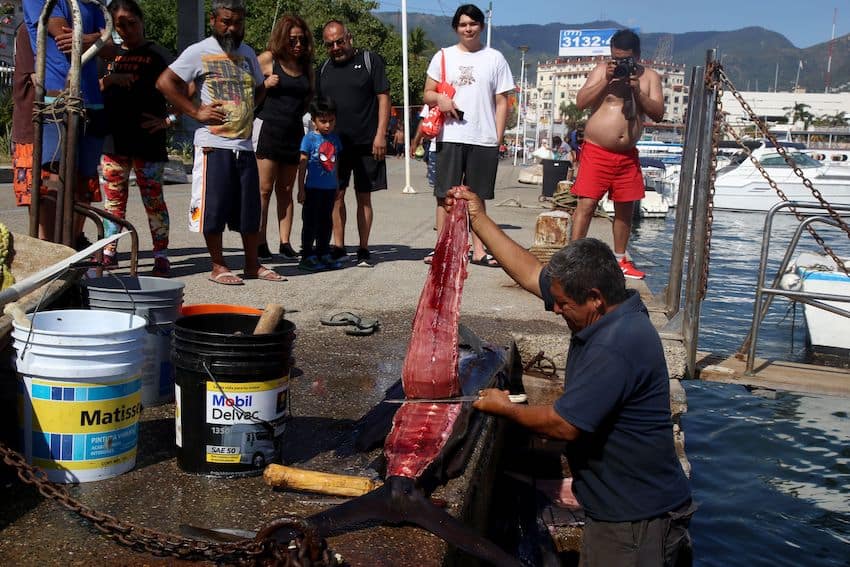
That means that in this particular study, everything purchased as sailfish turned out to be a different species — which is a bit of a flip, because in some coastal towns such as Zihuatanejo, Guerrero, diners say sailfish is routinely served as a cheaper stand‑in for dishes like mahi mahi (dorado) or swordfish (pez espada).
The study noted that vendors and restaurants are overcharging for things like red snapper, grouper (mero) and marlin, replacing them with cheaper species such as tilapia or catfish (bagre).
In some cases, red snapper was replaced with up to 16 different species, while marlin was swapped for shark species listed as at risk.
Oceana warns that the practice hits consumer wallets, undercuts law‑abiding fishing communities and threatens marine biodiversity.
“There are no measures that give us complete information about the journey of fish products from boat to plate,” pointed out Esteban García‑Peña, coordinator of Research and Public Policy at Oceana.
The group argues that a national seafood traceability standard — tracking each product from catch to final sale — is needed to curb fraud, protect coastal economies and keep endangered species off dinner plates.
With reports from López Dóriga Digital, El Debate and El Heraldo de San Luis Potosí