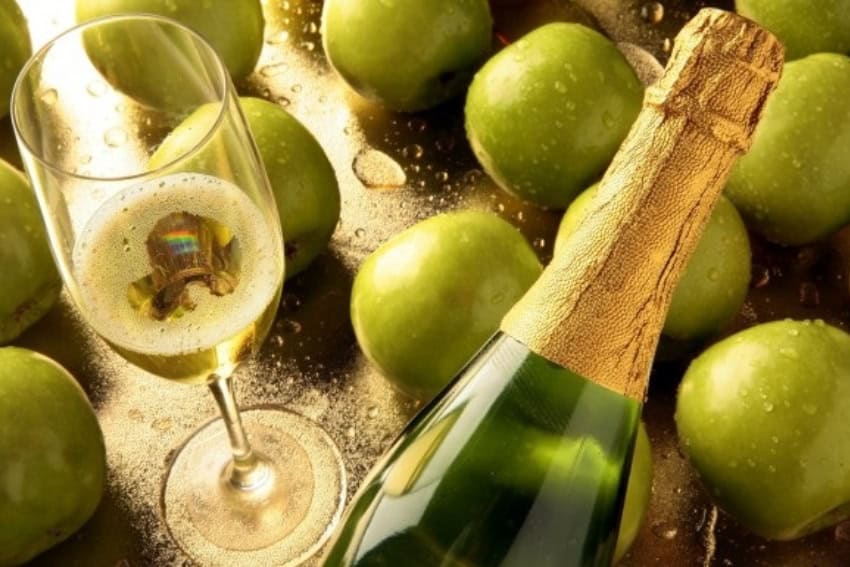
Cider is an ancient beverage. Its origin is uncertain, but there are records dating back more than 3,000 years that speak of a similar beverage made in Asia, where apples are endemic. Fermenting is as old as man himself. The earliest fermented drinks were made with fruit or cereals and complemented with the addition of spices or honey. Little by little, humans selected the handful of raw materials that would lead to the invention of beer, wine and fermented beverages.
In the case of cider, there is evidence of ancient production methods that included apples and other fruits. The closest historical reference, already distinguishing the almost exclusive use of apples, comes from the Romans, who called it sikera, which became sidra in Spanish, and spread throughout Europe during the campaigns of the Roman Empire.
How cider arrived in Mexico
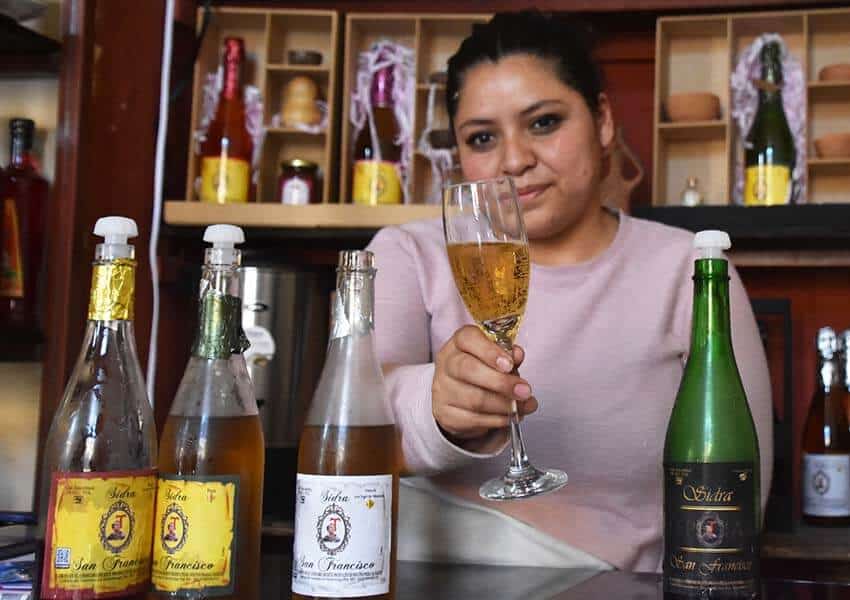
Cider was particularly important in the Celtic regions of western Europe. However, it was the Asturian and Basque peoples who became among the most famous producers on the content, although British production and consumption remains higher. To this day, Northern Spain is considered one of the best cider-producing regions in Europe, and several very important regional festivals, such as the one in Nava in July and the one in Gijón in August, celebrate the annual cider production with competitions and public tastings.
Cider arrived in Mexico with the Spanish. The first ships to arrive in the Americas already had drinks such as cider, brandy and wine on board. Once apples started to be cultivated in the Americas, local production began on the continent.
The drink was first consumed solely by Europeans, but soon became popular with locals as well. There are substantial differences between European cider and Mexican cider, starting with the type of apples used. There are currently more than 70 types used in production. Production and serving methods vary. In Spain, it is common to pour cider from a bottle placed high above your glass. Carbonated or sparkling cider, first produced during the 19th century, is now the most popular in Mexico.
Where cider is made in Mexico
Little by little, cider became a staple on Mexican tables, mainly for festive events. It is customary for cider to be present during the end-of-the-year holidays, during the Christmas period, especially on Christmas Eve and New Year’s Eve, for the traditional midnight toast. There are other drinks, which are more representative in other parts of the world, such as Champagne or other sparkling wines, but in Mexico, cider is a must.
Production is concentrated in three states — Tlaxcala, Hidalgo and Puebla — with the latter playing the leading role in terms of quantity and quality.

The Zacatlán municipality in Puebla is renowned for its high production levels and is even called Zacatlán de las manzanas (Zacatlán of the Apples), but it is a smaller municipality, Huejotzingo, that has attracted attention in recent years.
Its volcanic soil produces exceptional fruit, its production is the largest in the state, and its uniqueness has earned it a Geographical Indication (GI) designation.
A few months ago, the Mexican Institute of Intellectual Property (IMPI), the body that grants these designations in Mexico, awarded the category of Geographical Indication (GI) to the cider produced in Huejotzingo, Puebla.
Making cider in Puebla
This has been very well received by local producers. Apples here are mainly grown in the Iztla-Popo region, which gives them special characteristics, as this type of soil provides minerality to the crops grown there.
Four hundred families are involved in the production of cider and will benefit from this recognition. Their production represents 85% of the national annual production.
Geographical Indications or Designations of Origin are a way of safeguarding the quality and tradition of unique regional products. Whether in terms of the product itself, the traditional methods used, or the location where they originate. In Mexico, the Made in Mexico label, Designations of Origin, and Geographical Indications are becoming increasingly common as a way of recognizing and safeguarding the making and location of unique products.
Other cider-producing locales in Mexico
It should be noted that there are projects that are beginning to produce more artisanal ciders, such as Altos Norte, a winery from Jalisco that has quickly made a name for itself in the market thanks to the quality of its wines. Today, they are adding a cider to their portfolio. The apples are sourced from Puebla, and the cider is produced at their winery located in the Altos de Jalisco region. I recommend you don’t miss the following article, where we have a pleasant conversation with the owners and winemakers.
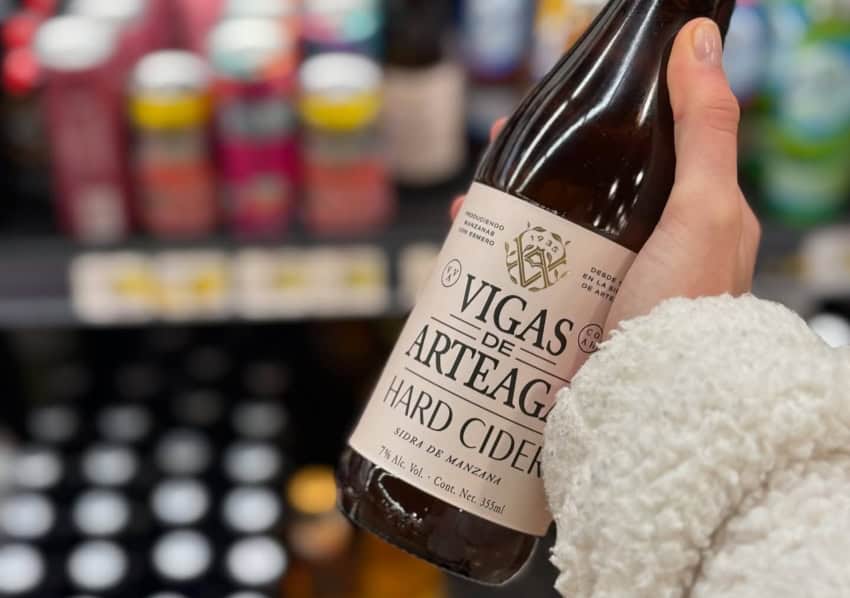
And to conclude my recommendation, a cider from another state in the north of the country, Coahuila, Casa Vigas de Arteaga, has been producing high-quality cider since 1935, packaged in a practical 355 milliliter size with a screw cap so you can open and enjoy it at any time.
Markets and occasions
Today, cider has become common around the world. By definition, it must be made mainly from apples, although in some places, such as France, it may contain a smaller percentage of pears. It is available year-round and can be enjoyed as an aperitif or with desserts. It has antioxidant and digestive properties, and its alcohol content ranges from 4% to 12%, making it an easy drink to consume.
Global consumption has been on the rise, with Argentina and Mexico leading in production and consumption in the Americas. In a few years, we will surely see it on many more occasions than just New Year’s Eve parties. Globally, France is the largest producer and the United Kingdom the largest consumer, although Asia is a market that has also grown significantly in recent years.
Diana Serratos studied at Universidad Nacional Autónoma de México (UNAM) and UNCUYO in Mendoza, Argentina, where she lived for over 15 years. She specializes in wines and beverages, teaching aspiring sommeliers at several universities. She conducts courses, tastings and specialized training.