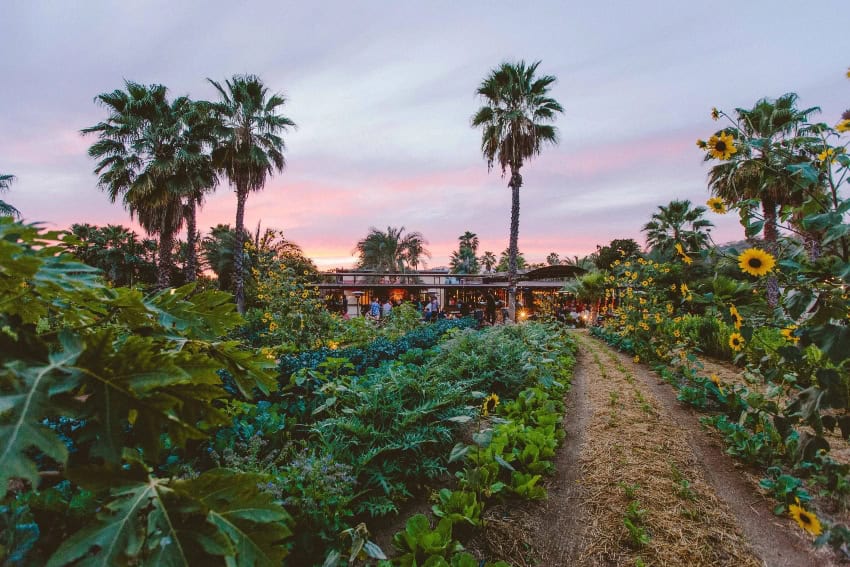
On the sunny southeastern edge of Baja California Sur, where luxury ocean resorts dominate, a different kind of business thrives. Flora Farms is a 25-acre farm-to-table ecosystem featuring a working farm, restaurant, artisanal shops, spa, luxury cottages and immersive experiences, including cooking classes and herbalist-guided walks.
Building a green oasis in the desert
In 1992, Gloria and Patrick Greene, an adventurous Californian couple and lovers of the Baja region, purchased a secluded, sandy plot behind a small village — a choice that surprised locals.
“People were just going, ‘Why are you buying this piece of property?’” recalls Sonja Skarstol, who has been working at the farm for nearly 12 years and coordinates many of its community programs.
The property offered two crucial advantages that attracted the couple: a well for reliable water and a valley filled with mango trees.
Gloria’s background in agriculture and Patrick’s expertise in construction and landscape architecture enabled them to start a family experiment in sustainable living. They started small — a Mongolian yurt, a family vegetable garden and patient soil restoration using composting and organic methods.
“It was a tiny family garden at first,” Skarstol says. “Just fresh food for family, friends and maybe a little extra.”
Organic growth, literally and figuratively
“There was never a master plan,” says Skarstol. “It was one thing leading to another, and slowly, everything kind of worked.”

The family garden grew, and Gloria began sharing produce with the public. In 2003, she opened Flora Café in town and started a small farmers’ market on the property — pioneering initiatives in a region dominated by conventional agriculture.
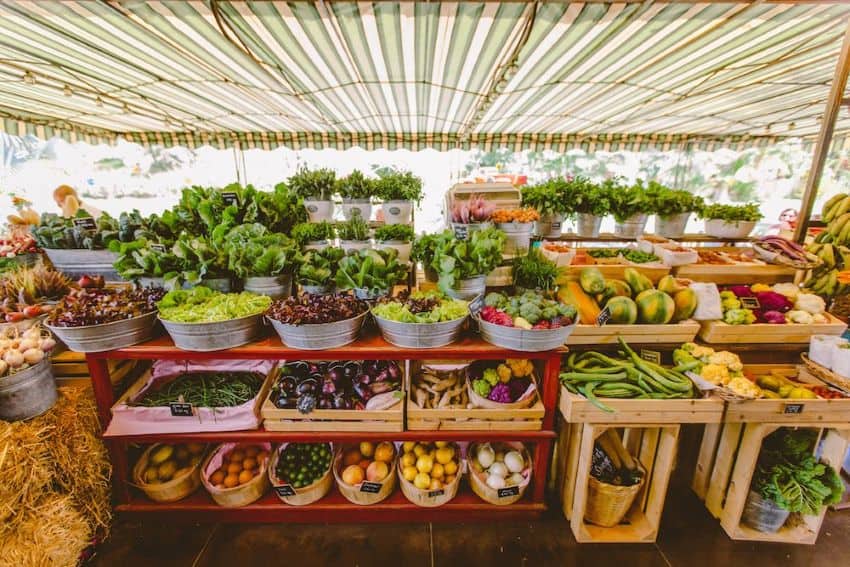
Visitors marvelled at the lush, chemical-free produce thriving in the desert.
“I remember walking in for the first time, just going, ‘Oh my God. Where are they getting this stuff?’” says Skarstol.
The market’s rapid popularity eventually led to its relocation off-site, where it became a fixture in San José del Cabo, helping to foster a local, sustainability-conscious community.
From farm to table: Opening the restaurant
After several years away and after questioning whether to sell the increasingly valuable property, the Greenes returned with a bold vision: a farm-to-table restaurant on-site.
Drawing inspiration from sustainable-construction methods observed during travels in the United States and Europe, they opened Flora’s Field Kitchen in 2010.
“They just wanted a fresh, farm-to-table, family-style restaurant with big wooden tables, garden food and fresh meats, but worried no one would drive over the mountain to eat in a remote valley,” Skarstol recalls.
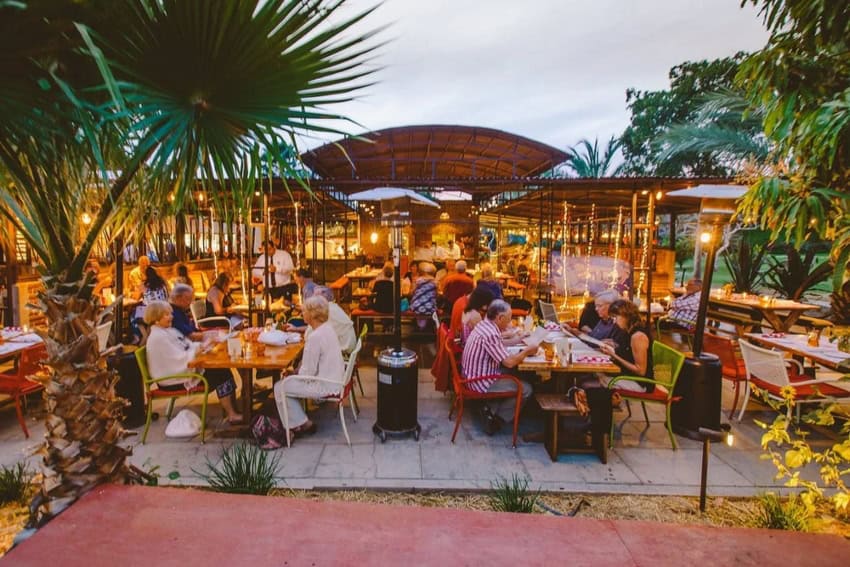
But the restaurant exceeded expectations. “As soon as they open the doors, people started coming because it was something different,” said Ana Gadsden Fernández, Flora Farms’ Marketing and Public Relations Director.
Chefs grill meats and roast vegetables in an open-air kitchen featuring a field rotisserie.
Seasonality dictates the menu: Morning-harvested produce shapes the daily offerings.
During mango season, for example, diners enjoy mango salads, mango chutneys for pork and mango-infused cocktails. The culinary team constantly experiments in the test kitchen, with the Greene family tasting and approving dishes before they are included on the menu.
Today, Flora’s Field Kitchen serves up to 800 diners on peak nights, offering a unique connection to the land and its produce.
A complete farm experience
Flora Farms has expanded beyond dining. On-site amenities include:
- A nature-based spa surrounded by gardens
- Artisan shops featuring local fashion, jewellery, and body care products
- Luxury straw-bale cottages offering immersive stays with unlimited access to organic produce, private beach clubs, pools, hot tubs and the spa.
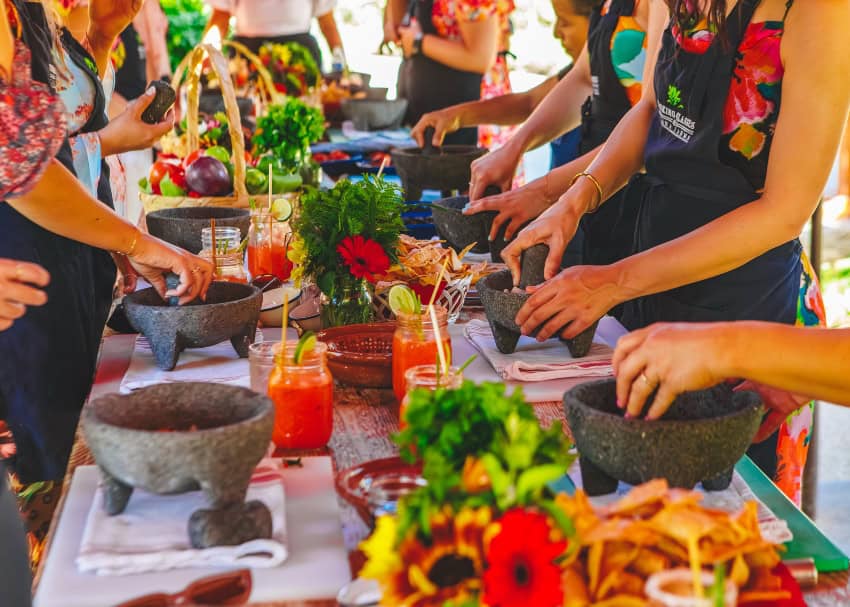
Year-round activities include cooking classes, painting workshops, herbalist-guided walks, sunset yoga and movie nights. Animal welfare events, dog adoptions and charitable initiatives — such as weekly produce donations to an orphanage and to a seniors’ lodge — reflect the farm’s community-first philosophy.
The operation employs 650 staff members, mostly local, providing daily meals, skill development and career opportunities.
“We’re a place that nurtures the land, but we are also a place that nurtures the community,” Gadsden reflects.
The agricultural foundation
Flora Farms operates on the original 25-acre site and a 125-acre ranch, managed by dedicated teams. A group of 15–20 farmers tend to the fruit trees, bushes and grass, while a group of about 12 workers manages the gardens and 16-20 employees work the ranch crops and livestock.
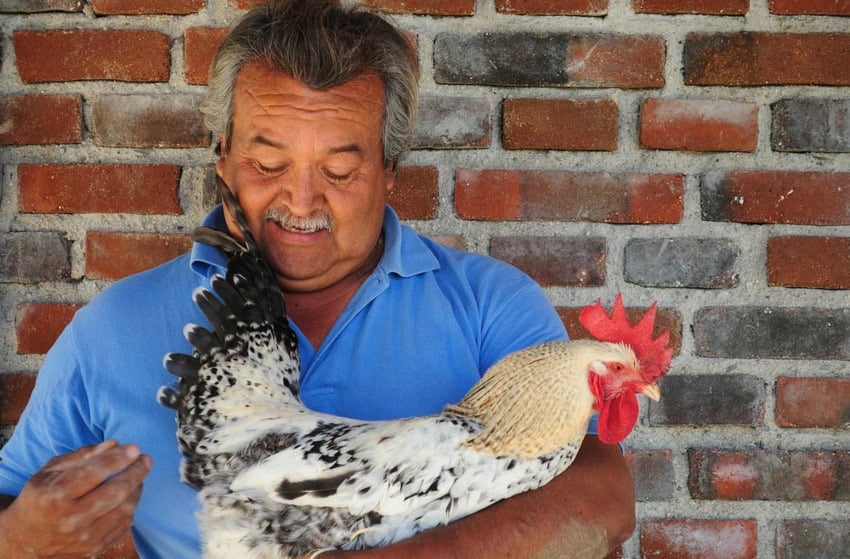
The ranch, overseen by 70-year-old Don Lupe, raises Heritage breed pigs, chickens and dairy cows — all free-range and hormone- and antibiotic-free. The farm also operates a butcher shop.
Flora Farms grows 75–150 crop varieties seasonally, including fruits, vegetables, herbs and flowers. Tomatoes alone feature 10 varieties, while eggplants include five cultivars each for a different culinary use. The lead farmer, Sochi, along with Paulo, the in-house herbalist and agronomist, ensure everything stays on track.
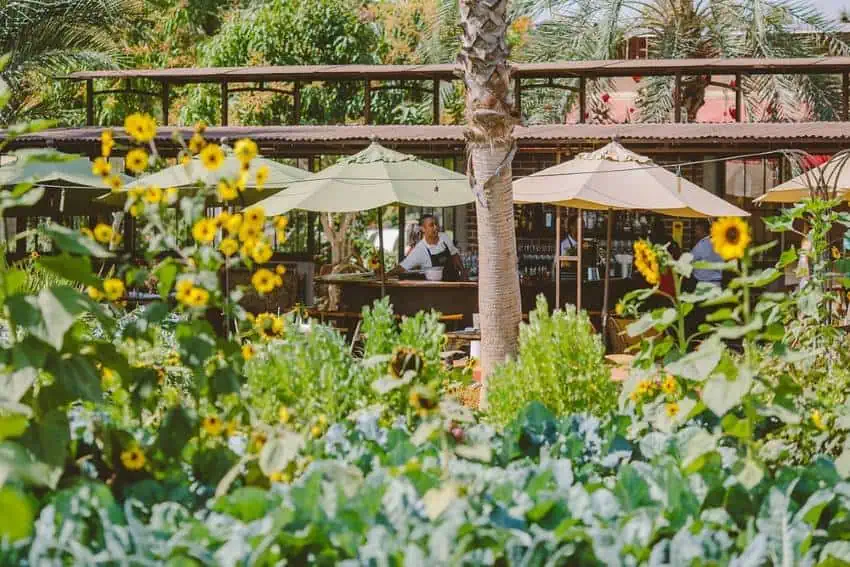
A seed bank, established four years ago, collects 70% of all seeds, ensuring local adaptation and minimising external inputs.
Sustainable practices and zero-waste
Flora Farms prioritizes the local ecosystem. Produce serves the restaurant, on-site grocery, staff and cottage owners first daily, then orphanages, seniors’ lodges and food banks weekly. Leftovers feed livestock or become compost.
“We don’t export,” says Skarstol. “Everything serves our community.”
The farm operates an in-house carpentry and print shop to supply wooden furniture, tableware and menus, creating a circular, near-zero-waste system where nearly everything guests experience is made on-site.
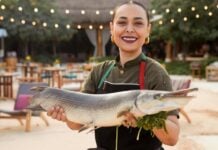
Fish is one of the few external inputs; however, the farm partners with local fishermen to maintain ethical sourcing.
The operation is fully organic — no chemicals or pesticides — relying on companion planting, crop rotation, interplanting, and organic composting. The majority of workers are local and come from long lineages of farmers, bringing traditional knowledge of hand-planting, hand-weeding and compost mixing.
Ancestral crop rotation principles are employed, such as rotating corn — a heavy nitrogen feeder that depletes the soil — with beans or squash to replenish nitrogen, a system that Indigenous peoples perfected over millennia.
Solutions to challenges are born from observation rather than chemical intervention. When butterflies began laying eggs in the arugula fields, Don Lupe filled a large bucket with water and positioned a gasoline lamp on top, drawing butterflies to the light instead of the crops.
Skarstol recalls one year when the ranch dramatically overproduced tomatoes:
“I think we had enough tomatoes to feed all of Los Cabos,” she laughs.
Don Lupe responded by building a dehydrator, and the culinary team developed multiple new tomato sauces.
“I wouldn’t call them problems because they are things that happen and help us to innovate,” Gadsden reflects.
Pollinator program and bee rescue
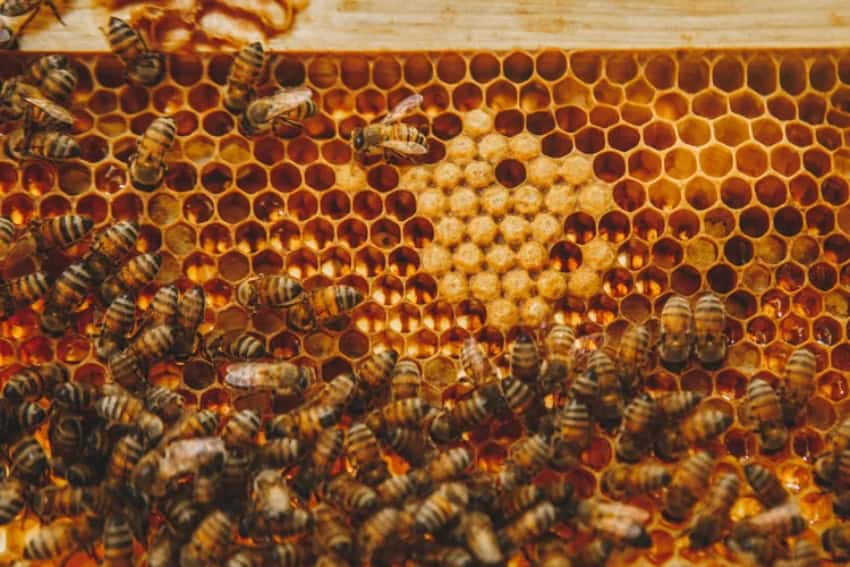
The farm maintains 38 beehives, producing all the honey used in the restaurant. But their bee care extends beyond their own production. Six years ago, the farm started a bee rescue service for the community.
“Before, when people got a swarm on their property, they’d call the fire department and the bees would be exterminated,” says Skarstol. “Now, the community calls us.”
A specialized team responds, rescues the unwanted bees and relocates them to the farm’s hives, practicing pollinator conservation while expanding the farm’s own pollination capacity.
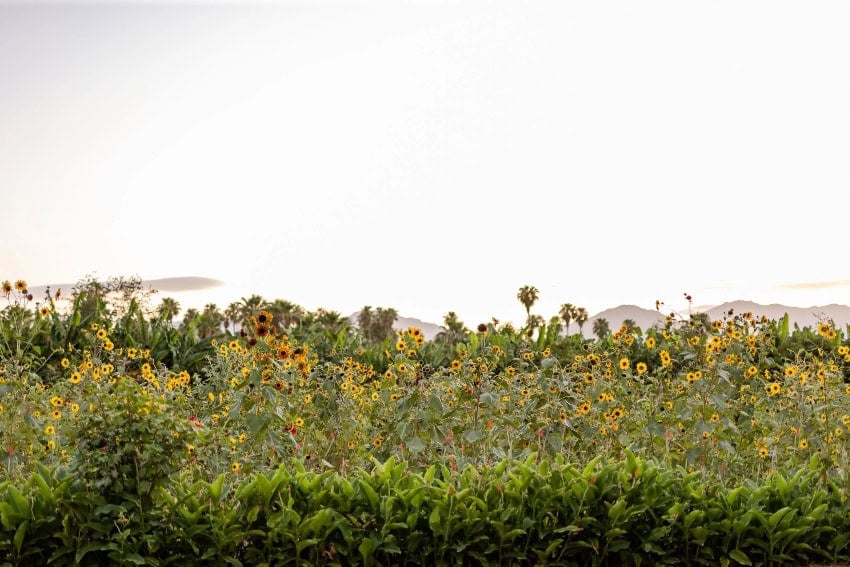
To support the hives, the farm strategically plants flowers and allows specific quantities of crops — such as cilantro — to bloom, providing forage for the pollinators while becoming too bitter for culinary use.
Climate adaptation and resilience
If there’s one cloud on Flora Farms’ horizon, it’s the same challenge confronting farmers worldwide: climate disruption. A decade ago, the dry seasons and rainy seasons were more predictable, but that is no longer the case.
Two summers ago, a heatwave caused water shortages, insect pressures and fungal outbreaks. The farm adapted by planting sorghum to shade its heat-sensitive crops, such as lettuce and arugula, thereby creating microclimates for them.
This year, an unexpected storm destroyed young plants fresh from the greenhouse, setting production back six weeks. Farmers now plant early-season crops on higher ground, which is less susceptible to flooding.
Some crop varieties have been phased out in favor of those that are resilient to increasingly unpredictable conditions.
Crisis management and community care
Flora Farms’ resilience has been tested on multiple occasions: In 2014, Hurricane Odile devastated the Los Cabos region.
“The farm was decimated,” Skarstol says. The Flooding wiped out nearly everything.
The farm responded by opening a soup kitchen, feeding over 100 employees who were otherwise without work or income. In exchange for meals and a small salary, workers helped clean up and rebuild the farm.
“While many businesses remained closed for a year or more, we were open again in six weeks. It was incredible. The employees were so grateful because they and their families got fed,” Skarstol recalls.
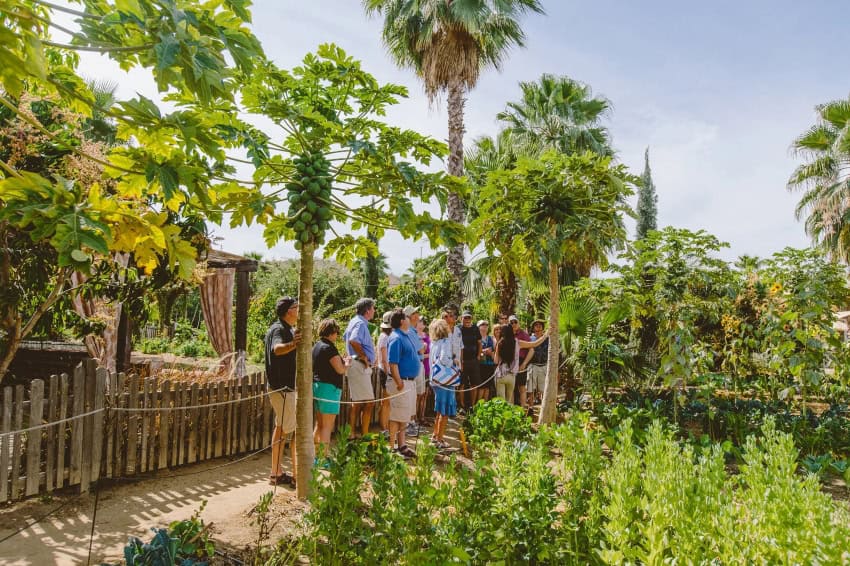
During the COVID-19 pandemic, the restaurant had to close, and the gardens were bursting. Rather than letting it rot, a small crew continued harvesting and distributed produce to the community and established a drive-through market.
“They always find a creative way to take care of people,” says Gadsden. “It’s truly part of the DNA here.”
Irena Vélez is a journalist at Wikifarmer, based in Seville, Spain. She holds a Bachelor’s degree in Journalism (Honours) from Carleton University in Ottawa, Canada, and reports on a range of topics, including agriculture, sustainability, and agribusiness.
To learn more about the agriculture sector, Wikifarmer empowers farmers, agribusiness professionals, and industry observers through four key pillars: the Wikifarmer Marketplace, connecting producers with buyers around the world; the Wikifarmer Library, a free, open-access knowledge hub with thousands of expert-authored articles; the Wikifarmer Academy, offering online courses with certifications to enhance agricultural skills; and Wikifarmer Price Insights, providing real-time market intelligence on key commodities.