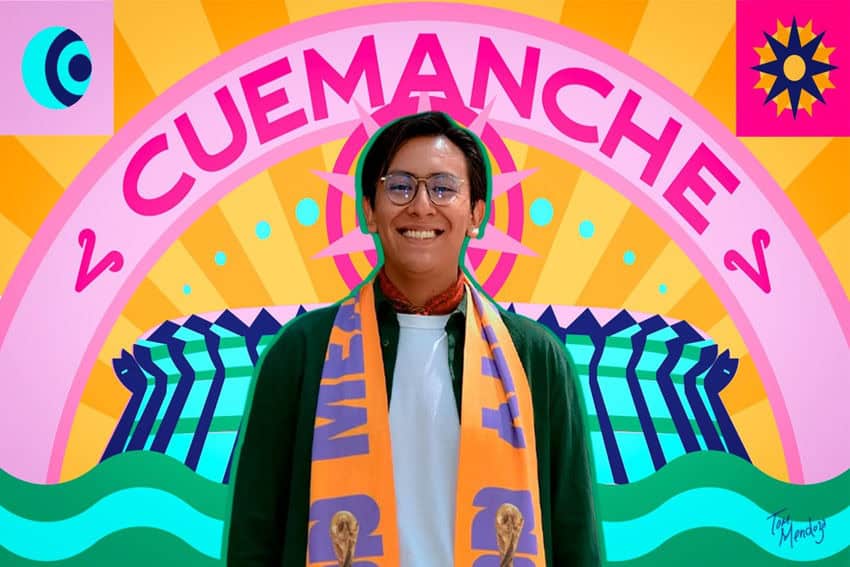
In April, soccer’s FIFA unveiled its official host city posters for the upcoming 2026 FIFA World Cup, set to take place in Mexico, the United States and Canada. The posters for the three Mexican host cities — Mexico City, Guadalajara and Monterrey — were created by Mexican designer Mario Cortés, 30, also known by his artistic name, Cuemanche.
Now available for sale, the posters have been well received by both football fans and international media. The New York Times, which recently ranked all host city posters based on how well they captured the essence of each city, ranked the Mexican designs in its highest tier.
Las 3 sedes mexicanas nos unimos en esta iniciativa para representar que somos todo un país listo para recibir a la Copa Mundial de la FIFA 26™️
Somos Monterrey, Somos Guadalajara, Somos Ciudad de México y TODOS SOMOS #MÉXICO#FIFAWorldCup26 #Somos26 pic.twitter.com/5svw3xyyOv— MexicoCity26 (@MexicoCity26) April 14, 2025
A look at the posters for all three host cities: Mexico City, Guadalajara and Monterey.
“I feel so proud knowing my posters had that kind of reception in an international media outlet,” Cortés said. “One day you’re chilling, and suddenly it hits you: ‘Oh, wow, I’m in the New York Times!'”
Unlike FIFA’s decision in the U.S. and Canada, where different artists were commissioned for each city, the Mexican host city posters were all Cortés designs, giving the posters a cohesive visual identity that reflects the country’s cultural wealth and its passion for football.

Yet, being from Mexico City and naturally biased toward his hometown, one of Cortés’s biggest challenges was illustrating each city equally.
“I didn’t want to make one city stand out more than the other, because all three cities are equally important,” he said. “It was essential to address them with the same level of respect and depth, as they all have so much to offer.”
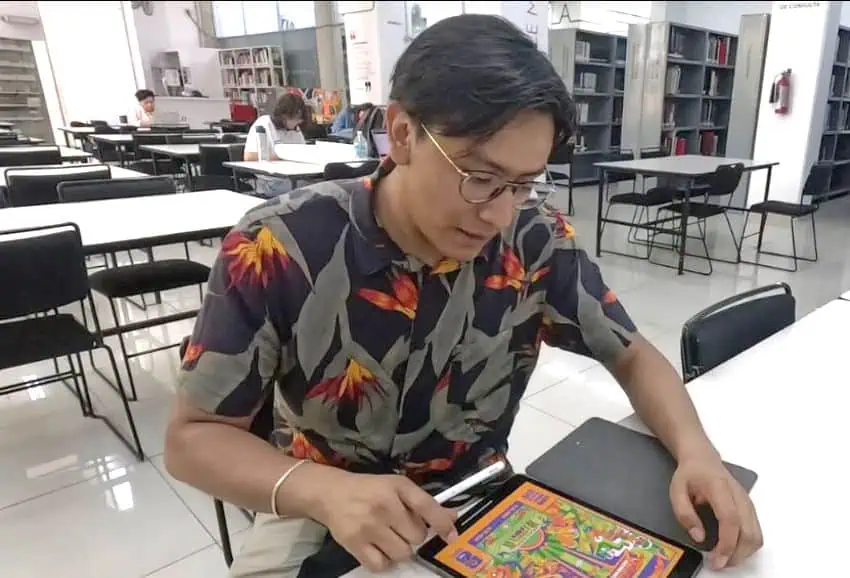
Cortés had previously visited Monterrey while collaborating with FIFA in the Juego de Leyendas project — a soccer event that brought together former international and Mexican soccer players in a friendly match in Monterrey last year, as part of the preparations for the 2026 World Cup — but had never been to Guadalajara. Not having physically visited one of the host cities made the challenge even more complex.
“So I said to myself, ‘Well, I’m going to approach the city I know and that represents me the most, which is Mexico City, and build a structure that would allow me to address the same narrative elements in each of the other cities.”
And it worked.
All three posters tell a unified narrative story, using similar elements and graphics without being repetitive and without highlighting one city more than the other.
With a colorful design that represents the festive essence of Mexico, the color palettes Cortés chose reinforces the visual personality of each host city: Guadalajara with festive pink and yellow. Monterrey with industrial metallic blues. Mexico City with a warm, multicolored mix.
“As Mexicans, we have a vast visual richness,” he said. “One element that I wanted to highlight, and that gradually took shape in the design of the posters, was that we are a very, very colorful country. I mean, just walking into a market, you find colors everywhere — piñatas, colorful fruits, vegetables. All that explosion of color was an element I was very interested in capturing, and that also gives personality to a poster,” he said.
Cortés also incorporated cultural landmarks.
“Some might ask, ‘What does a mariachi have to do with football? Or a carne asada?’ Well, these elements precisely accompany and give personality to the passion of inhabiting a city and being a fan of their local team,” he said.
For Cortés, these posters are a “welcome letter to the world” and a way to show Mexico’s diverse and rich culture, which he says deeply inspired his creative process.
“We’re not a simple culture,” he said. “Our culture has an immense complexity that I also wanted to capture.”
Among the many artistic influences that shaped Cortés’ work were iconic Mexican artists like Juan O’Gorman and Jorge González Camarena, both part of Mexico’s muralism period. Art Deco was another major influence.
“I would find myself walking in Mexico City’s Juárez [neighborhood], for example, and I would look at the house structures and think, ‘Well, the poster is here, isn’t it?’,” he recalled.
“I would look at the Art Deco friezes and see how they would integrate a human figure, flowers or fruits in a very small square,” he said. “And I would look at that and think, ‘Yes, the poster is here. I just need to think about how to portray it.’”
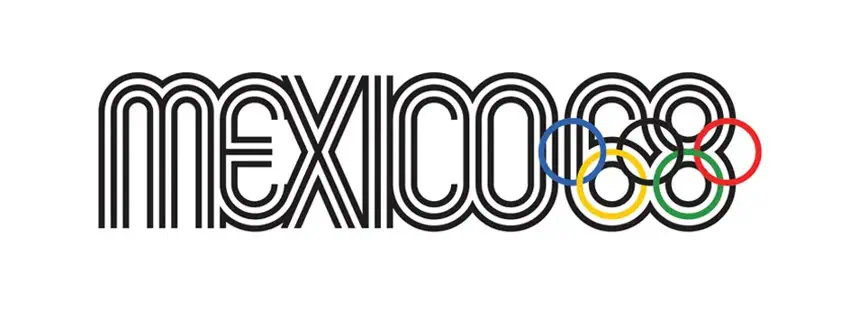
Mexico’s 1968 Olympics logo, which has had a lasting impact on graphic design and is probably one of the most iconic Olympic Games logos ever, also influenced Cortés’ work. Designed by Mexican architect Pedro Ramírez Vázquez and designer Lance Wyman, Cortés said it’s impossible to escape the influence of such a logo.
“It is basically embedded in the DNA of any Mexican designer,” Cortés jokes.
Cortés’ design process took around three months. For him, designing official World Cup posters is the opportunity of a lifetime.
“Designing the posters for a World Cup, well, it’s a gigantic, enormous thing. Something that will probably never be repeated in my life,” he said. “But I’m seeking new challenges that I want to approach with professionalism, with a lot of creativity and with a lot of intention. And I’m very open to whatever comes next.”
Gabriela Solis is a Mexican lawyer turned full-time writer. She was born and raised in Guadalajara and covers business, culture, lifestyle and travel for Mexico News Daily. You can follow her lifestyle blog Dunas y Palmeras.