



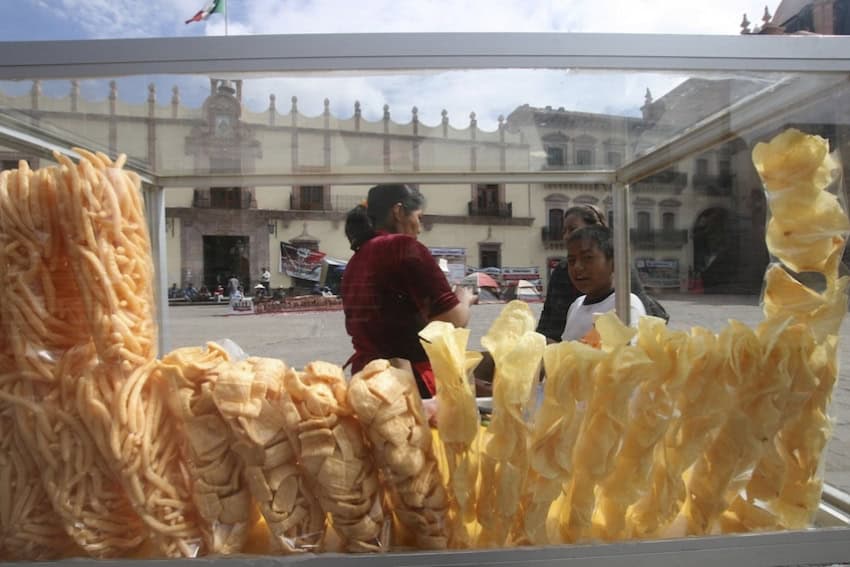
It’s a cloudy day, and sales have been very slow.
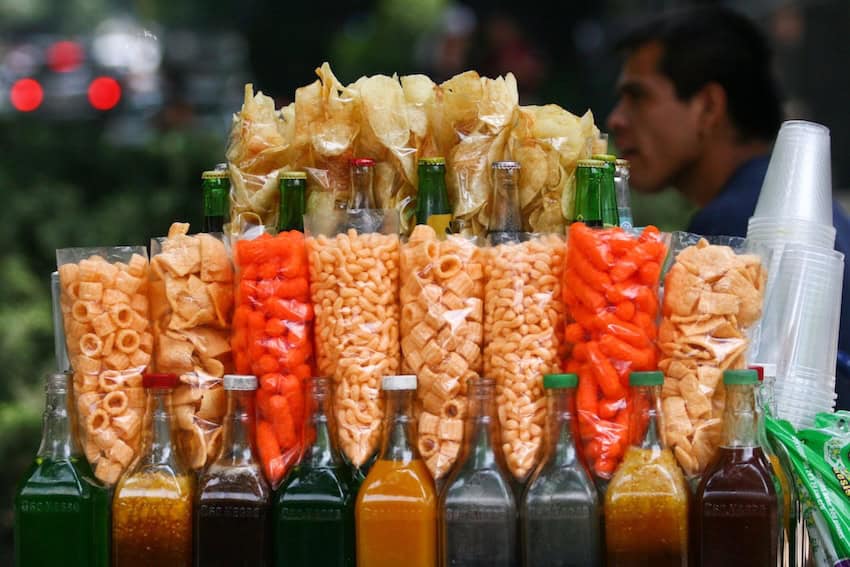
Elvia knows that with weather like this, it will be difficult to end her shift on a high note. At 32, she’s spent the last three years selling potato chips from a pushcart, a classic Mexico City street treat.
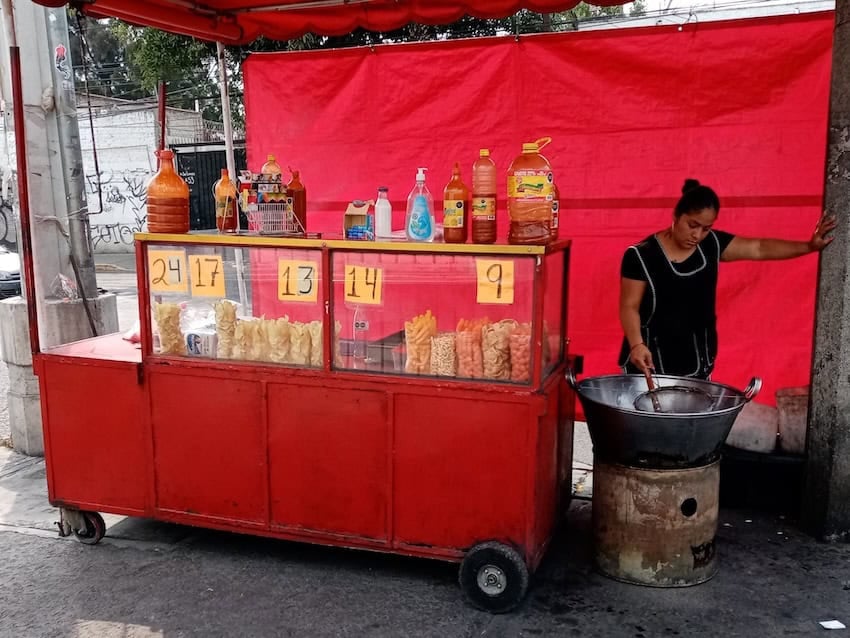
Although her stall sits on a bustling sidewalk along Parque México, in the heart of the capital’s affluent Condesa neighborhood, there hasn’t been much activity since lunchtime.
Competition is tough, particularly in tourist areas, where artisans, ice cream sellers, musicians and other street vendors all vie for relatively meager wages.
“It’s not like this in the summer,” Elvia says. “When it’s hot, people seem more inclined to buy potato chips.”
Elvia comes from a family of potato-chip street vendors — a trade that gained popularity in Mexico City during the 1940s and ’50s, and has since spread to the rest of the country.
An affordable indulgence
A “Mexicanized” take on U.S.-style French fries, this version consists of deep-fried julienned potatoes topped with a variety of hot sauces, chamoy, a sort of pickled pork skin known as cueritos and — for a more refined palate — bone marrow.

Three potato types are commonly used: Alpha, Atlantic and Fianna. Varieties like Atlantic and Fianna contain higher starch and less water, allowing them to crisp and brown properly when fried.
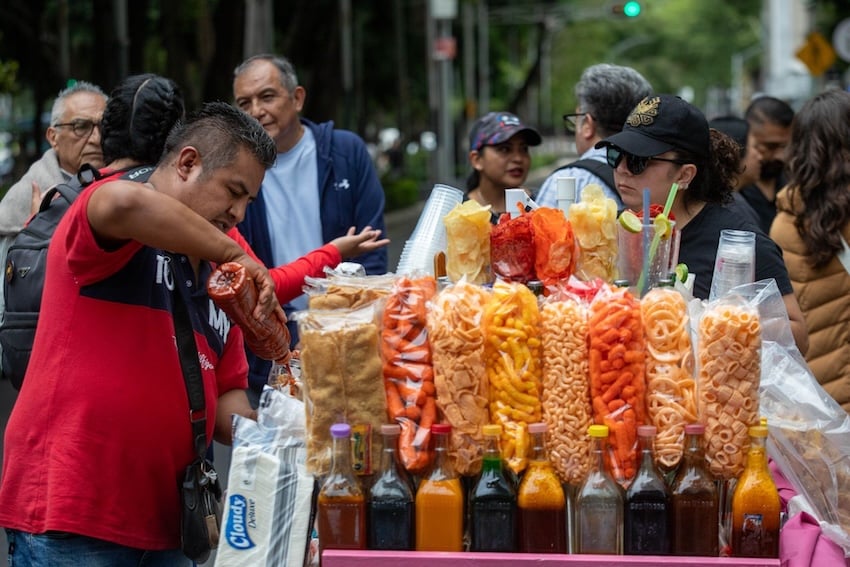
The potatoes are prepared using a double-frying method, which makes them crunchy on the outside and soft on the inside. As a result, they don’t taste like your average, mass-produced potato chips.
In addition to the traditional salt flavor, potato chips are also commonly found marinated, jalapeño-flavored or in mixed assortments. Generally, people order them with hot sauce, lime and salt.
Since street-cart potato chips and other classic fried snacks are so readily available, they punctuate many people’s childhood memories. You can easily find them outside subway stations, hospitals, parks, schools and government offices — essentially, anywhere with a high volume of foot traffic.
A complicated arrangement
At Mexico City’s Central de Abasto — where both small- and large-scale merchants purchase supplies for many businesses in Mexico City’s informal economy — potatoes start at just 12 pesos per kilogram, according to the Central de Abasto Price Monitor, which fluctuates daily.
On average, 1 kilogram yields 12 medium-sized bags. In Mexico City, small bags generally cost between 10 and 20 pesos, while large ones can go up to 50 pesos.
Taken at face value, owning a cart that sells potato chips (or other classic fried snacks found in Mexico City) can be a great business.
Organilleros: Is Mexico City’s centennial profession at risk of disappearing?
The profit, however, does not go to vendors like Elvia.
“The cart isn’t mine,” Elvia tells me. “It belongs to the man I work for.”
Unlike other vendors, she doesn’t have to purchase the supplies from Central de Abasto. They come with the cart, which Elvia rents and retrieves from a storage area every day.
This arrangement means vendors have to pay a percentage of sales to their employers. In Elvia’s case, she only keeps 25% of what she makes during an eight-hour workday.
When her shift ends, she’s not allowed to continue working. She must return the cart to the storage area until the next day, when she’ll retrieve it once again and bring it to the new location assigned to her.
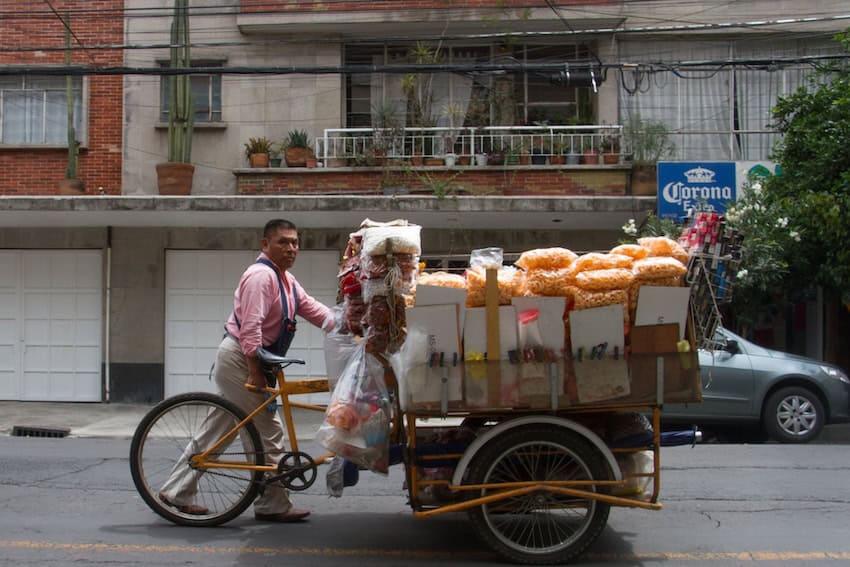
In addition to the rental and supply fees, many street vendors face the daily burden of paying “piso,” “protection money” police officers and others demand in exchange for being allowed to work.
Elvia is one of the lucky ones. She hasn’t had to pay piso to operate. But given its nature, other potato vendors understandably did not want to grant us an interview.
One woman simply dismissed me, saying, “I’d rather not — customers keep coming, and we have to attend to them.” A logical explanation, of course. But her tone betrayed something more guarded, an impulse to protect herself.
A profession with a long tradition (and little legal protection)
When asked if she has an official permit, Elvia shrugged: “My boss handles that.”
In reality, street vendors in Mexico City are required to obtain a “Permit to Engage in Commerce on Public Thoroughfares” from the relevant borough authority.
The Mexico City government promoted these permits to regulate the industry and protect its employees, who are rarely covered by the law or supported by their employers.
However, vendors like Elvia don’t deal with the paperwork. That’s left to the person who assigns them the spots where they will operate for the day.
Elvia is not the only one facing this lack of state protection. Street vendors — selling fruit, aguas frescas, tamales and bread from baskets — work every day with few safeguards. Similarly, the capital’s other endemic trades contend with few labor protections, and some have even organized to demand greater protections from the state.
Elvia, however, has little faith that an advocacy group will organize on her behalf.
Since there is no union for street vendors in Mexico, “I can only rely on my family,” Elvia says. “My nieces and cousins also do this kind of work.”
For now, she’ll simply have to continue renting her cart, doling out the majority of her profits and hoping she’s never required to pay piso.
“It’s the only thing we have left,” Elvia says. “This is the only way we earn a living.”
Andrea Fischer contributes to the features desk at Mexico News Daily. She has edited and written for National Geographic en Español and Muy Interesante México, and continues to be an advocate for anything that screams science. Or yoga. Or both.