Long ago, European fish fanciers fell in love with a family of small fish found in central Mexico, and soon, hundreds of them, all around the world, had to have what are popularly called Mexican splitfins or livebearers in their aquariums.
Those Mexican fish are among the most beautiful members of the Goodeid family (named after ichthyologist George Brown Goode), certain of which are wonderfully efficient at keeping an aquarium clean because they love to eat algae. On top of that, most Goodeids don’t lay eggs, but bear their young alive, using some rather sophisticated adaptations all their own.
Squeezed out by tilapia
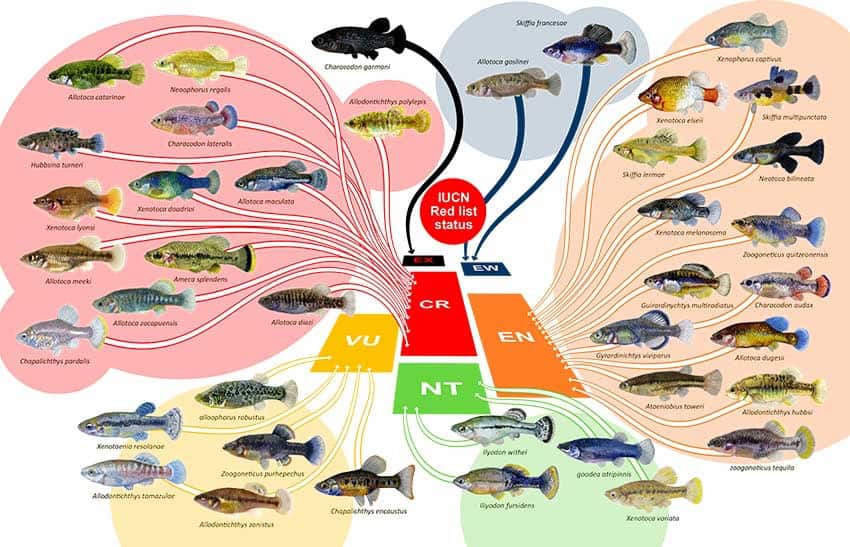
Most of Mexico’s Goodeids are found in the states of Jalisco, Michoacán and Guanajuato. They are quite small, perhaps only four to eight centimeters long, but if you went looking for them today, what you would probably find instead are tilapia, which, over the years, have been introduced into just about every creek, pond, river and lake of central Mexico.
Tasty and nutritious as they may be, tilapia — which are of African origin — are very aggressive and their numbers steadily grow as the populations of splitfins dwindle.
Graceful butterfly wings
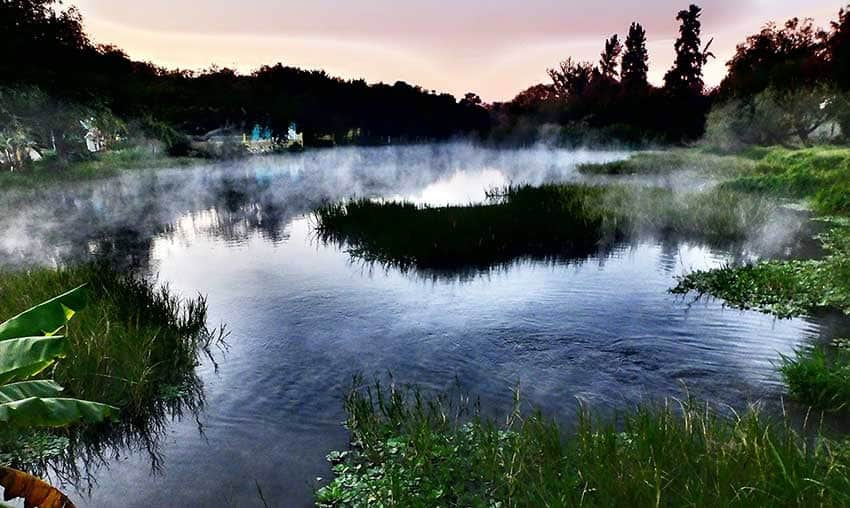
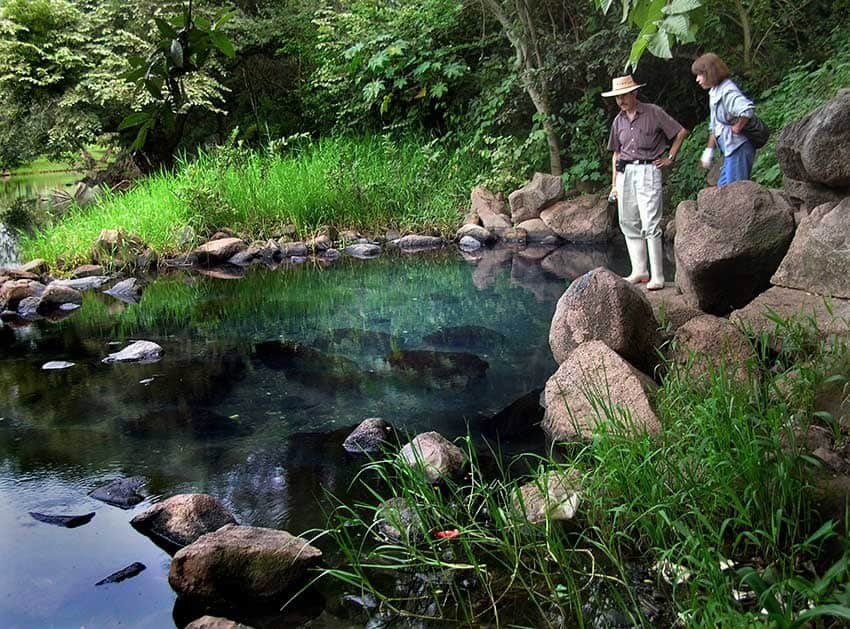
One of the prettiest of the Goodeids is the butterfly splitfin. It was found in Río Teuchitlán, the headwaters of the Ameca River, in 1955, by American zoologists Robert Rush Miller and J.T. Greenbank. The site lies near Jalisco’s Guachimontones or circular pyramids, at the foot of Tequila Volcano.
Miller eventually named the fish Ameca splendens, “the shining one” in reference to its “striking life colors,” particularly the brilliant yellow-orange band on the male’s tail fin.
Hobbyists soon went looking for it, to breed it at home, impressed with the male’s glittering metallic scales, which, they say, reflect light with turquoise flashes, evoking the graceful flapping of butterfly wings.

In no time, this little fish became a favorite in personal aquariums all over the world.
“I consider Ameca splendens the perfect aquarium fish,” says Juan Miguel Artigas. “They are interesting, lively, colorful, tolerant and they don’t require a large aquarium.”
Dibble’s Ark
Just Google Ameca splendens, and you’ll see references to it in every language on the planet!
Then, in the 1990s, a leading fish fancier, Englishman Ivan Dibble, started receiving reports that the butterfly splitfin could no longer be found in its native haunts. Similar fears about other members of the family, the golden skiffia and the spotted skiffia, impelled Dibble and friends to launch Fish Ark Mexico in 1997 at the Aquatic Biology Lab of the University of Michoacán, in Morelia.
Soon, aquarists from around the world were carrying certain species of these much-loved splitfins back to Mexico, and several local projects popped up (and died) in the Teuchitlán area in an effort to reintroduce the fish into their native habitats.
Back again after 127 years
“In our case,” says Karina Águilar, Conservation Manager of Guadalajara’s Urban Park System, “we knew that a Goodeid named Skiffia multipunctata once lived in ditches and channels in Parque Agua Azul because a Frenchman named Leon Diguet collected it there around the year 1899. Unfortunately, it disappeared here in Guadalajara and rumors claimed it had gone extinct.
“Today, however, we have created a new lagoon at the park, which — thanks to the biologists in Morelia — will soon be brimming with the spotted skiffia. In Spanish, we call this fish el tiro pintado, and this coming August, we will celebrate its return to Agua Azul Park with well-deserved pomp and circumstance.”
Mexican fish, Austrian zoo
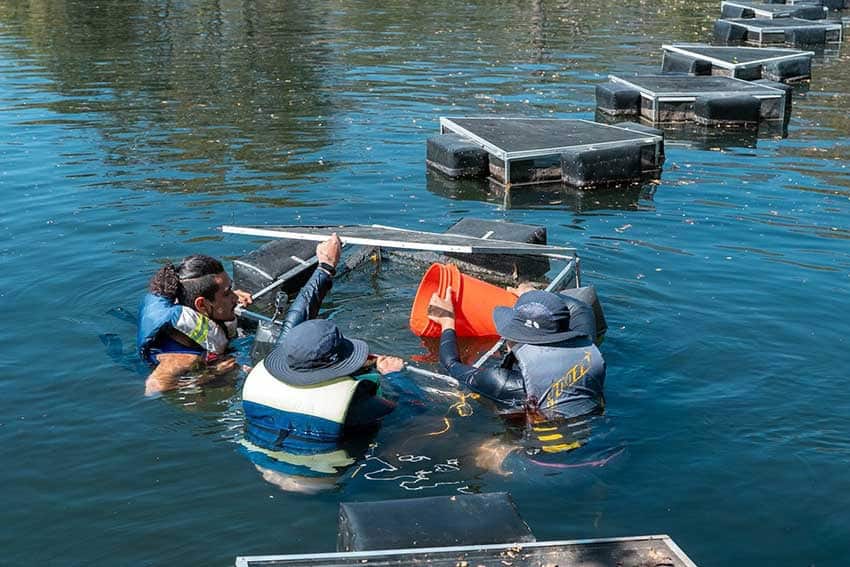
Projects like this one are being facilitated by Michael Köck, former Curator of Freshwater Fish at Haus des Meeres Aqua Terra Zoo in Vienna, Austria, but now Freshwater Conservation Manager at the Aquatic Lab in Morelia.
Köck had been caring for Mexican Goodeids in 120 aquariums in the basement of the Austrian zoo.
“But,” he told me, “there came a time when I began to worry about what would become of those fish after I retired … and I came to the conclusion that it would be better for me to work directly in Mexico and help save the original habitats of the fish.”
Köck presented these concerns at a workshop in Morelia in 2022.
“The topic centered on what we were going to do for the benefit of the whole group of Goodeids — because 90% of these species are threatened with extinction.”
Plan G is born
Out of this workshop came Plan G to Save the Goodeid Family, specifically to restore at least one habitat for each of the Goodeid species in Mexico and to accomplish this within a period of 10 years. The Plan was to bring back the fish that were extinct in the wild while helping those already established to do better.
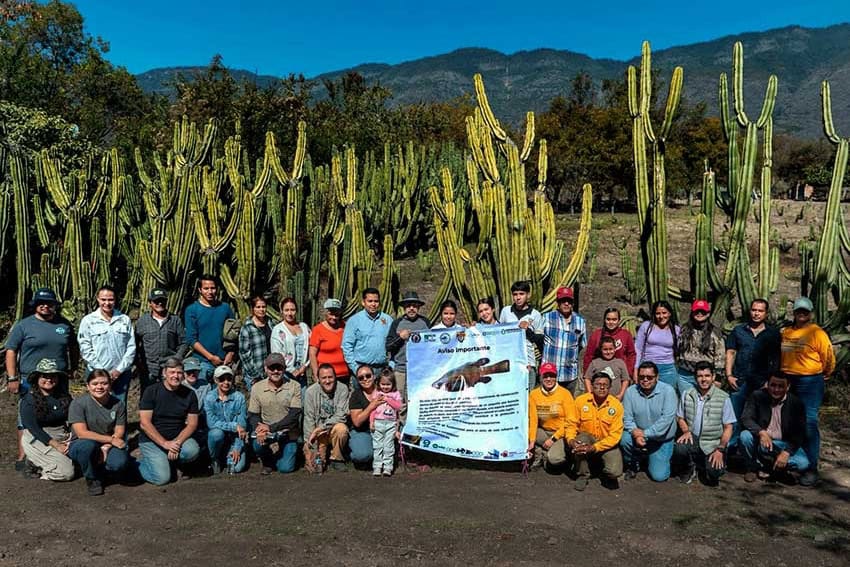
To bolster Plan G with financing and support, Michael Köck undertook a visit to zoos, public aquaria and museums across Europe in 2024, in a bid to engage stakeholders in this ambitious conservation plan. His travels took him through Denmark, Sweden, Germany, the Czech Republic, Austria, Hungary, Switzerland, France and the United Kingdom.
The show of support was overwhelming.
Passionate about conservation
“If you ask me why I gave up my job to work in Mexico,” Köck told me, “I will answer because I have seen what the people in this country are capable of achieving. I was impressed by the success they were able to reach with limited resources, and I wanted to be part of this movement. I have faith in this community: Mexicans are incredible when they want to achieve something, and the people I work with are passionate about succeeding in conservation. I’m here to help them where I can and to learn from them whenever I can.”
If you, too, would like to help the cause, you can donate to the Goodeid Working Group (donations@goodeidworkinggroup.com).
John Pint has lived near Guadalajara, Jalisco, for more than 30 years and is the author of “A Guide to West Mexico’s Guachimontones and Surrounding Area” and co-author of “Outdoors in Western Mexico.” More of his writing can be found on his website.