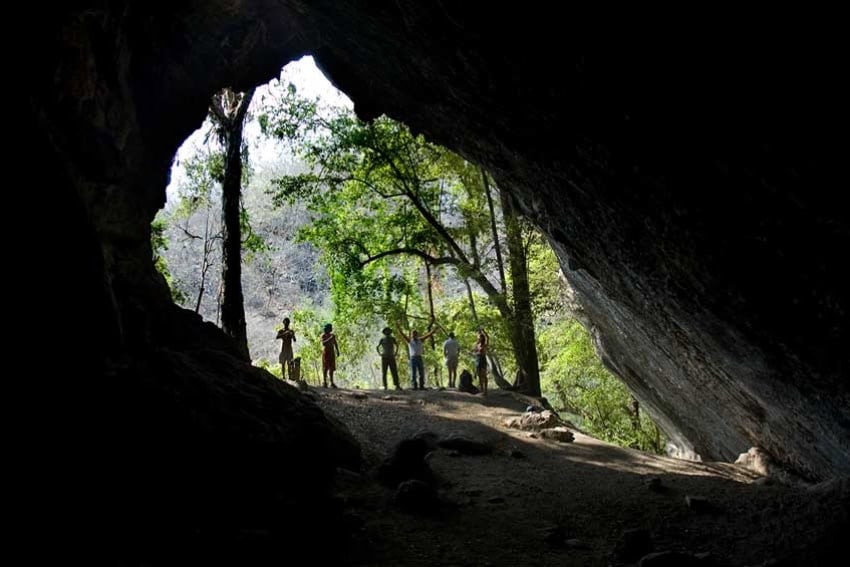
If you hike in Mexico long enough, sooner or later you’re likely to find yourself standing in front of a cave entrance, wondering if you should venture inside.
Whether invited by locals or entirely on your own, here are a few thoughts from someone who has spent many hours underground in Mexico.
Bags of golden coins
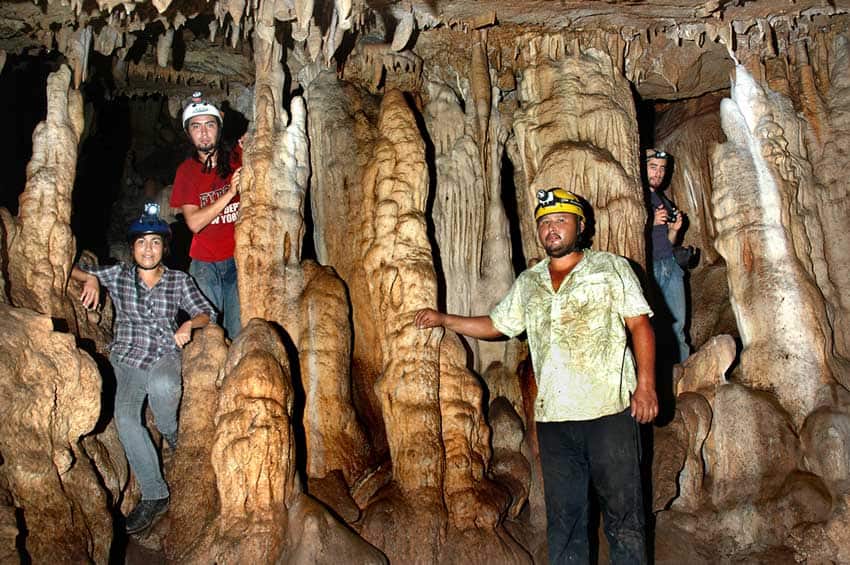
All over the world, people find caves enticing, but even more so in Mexico, which has a long history of colorful bandidos who, we are told, could think of no better place to hide their stolen coins and bars of bullion than a cave.
This stubbornly held belief has given rise to treasure-in-cave stories that I have heard again and again.
“This cueva has a small entrance, but after you crawl a while, it opens up into a huge room as big as a cathedral and then there’s a long tunnel that goes all the way through the mountain to the other side … además,” the storyteller often says, adding, “I was told that a guy went inside this very cave years ago and came upon bags filled with doubloons, but just when he was going to carry one away, a voice boomed out: ‘Todo o nada,’ meaning either you take all of it at once or you get nothing.”
Inevitably, these stories say that the beguiled explorer never made it out — but that has not discouraged countless treasure hunters from digging countless holes in just about every cave in the country.
Crystals 14 meters long
A more aesthetic sort of treasure does actually lie much deeper inside many caves: beautiful, delicate stalactites, stalagmites, aragonite crystals, and bizarre formations called helictites, which look like stalactites that have decided to defy gravity, pointing every which way.

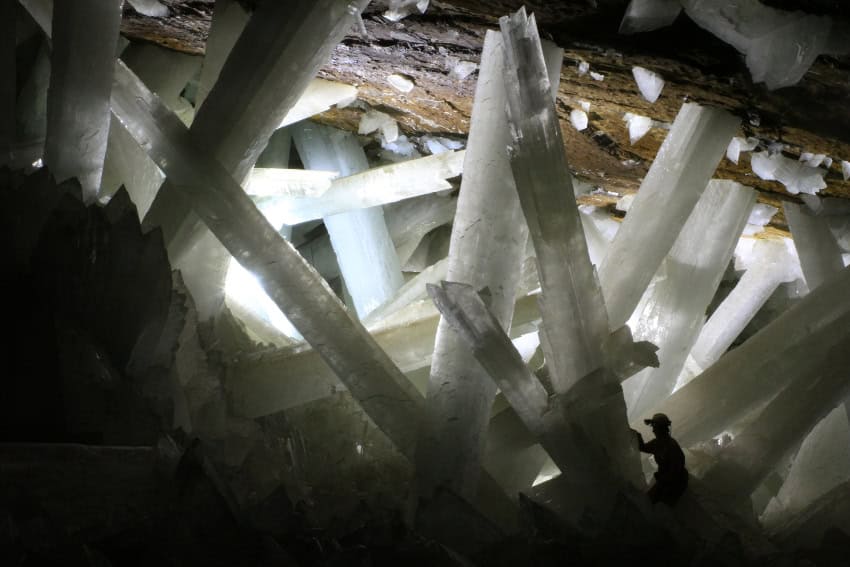
But the most stupendous cave formations of all are the famed selenite crystals of Mexico’s Naica Cave: up to 14 meters (about 46 feet) long and 4 meters (about 13 feet) thick.
North America’s deepest cave
Equally exciting is the unbelievable size of Mexico’s cave systems.
In 1965, students in Austin, Texas, asked their geology teacher where they could find the deepest cave in North America.
The answer turned out to be Oaxaca, Mexico, and led to the discovery of Sistema Huautla. At 103.4 kilometers (64.2 miles) long and 1,560 meters (5,118 feet) deep, it’s currently recognized as the deepest cave in the Western Hemisphere.
At the same time, exploration of Mexico’s cenotes has led to the discovery and mapping of 2,096.4 kilometers (1,302.6 miles) of wet and dry caves on the Yucatán Peninsula. If these huge systems are eventually linked up, Mammoth Cave in Kentucky will have to cede the title of “Longest Cave in the World” — 686 kilometers or 426 miles — to Mexico.
No wonder speleologists widely consider Mexico the new frontier in underground exploration, where one can experience the exhilaration of being the first person to step into a passage.
Which, when standing before the entrance to a Mexican cave, prompts the question: Should you go inside?
Mexico’s Sistema Huautla: The deepest cave in the Western Hemisphere
‘Thank God for my helmet!’
Consideration No. 1: Unless we are talking about a commercial cave, you need to have the proper equipment for going underground. Experienced cavers always carry a minimum of three sources of light, for example, a headlamp and two flashlights, each with spare batteries. Serious cavers also use helmets. They not only protect you from collisions with stalactites or low ceilings, but also make all the difference should you trip and fall. “Thank God for my helmet!” is one of the most often spoken phrases (in every language) beneath the surface of the Earth.
Consideration No. 2: Many caves flood during the rainy season. To appreciate the consequences, see “The Rescue,” National Geographic’s 2021 documentary on what happened to 13 boys when a cave flooded in Thailand.
So, if it’s the dry season, you’ve got the right equipment, and you are accompanied by experienced espeleólogos. But are you clear to crawl into a Mexican cave?
Invisible spores
Hold on. There are still a few more considerations. The most serious is Histoplasma capsulatum. This is a fungus that grows on bat guano and continuously produces tiny spores, invisible to the eye. Once you breathe them in, they lodge in your lungs, and your body fights them, subjecting you to nonstop coughing, fever and chest pains — if you are lucky.
Some years ago, 17 people went to visit a small, dusty cave in Jalisco, all of them wearing face masks. After the typical histo incubation period of 11 days, all of these individuals were feeling bad, and ended up at the IMSS medical center in Guadalajara. After hours of studies, they were told to report back the following morning.
“But what about the medicine? What do we take?”
“There is no medicine. Just relax at home for two weeks and you’ll be okay.”
“But why do we have to come back tomorrow?”
“Oh, it’s because we’ve never had 17 people with histo all here at the same time. This is very exciting for us!”
Bad air
Another complication you could run into in a wild cave is “bad air.”
At low spots, carbon dioxide — which is invisible and odorless — can accumulate. If this lake of CO2 is deep enough and you step into it, you will first find yourself panting heavily as if you were running a marathon. Should you find yourself in this situation, you have about two minutes to get yourself out of there.
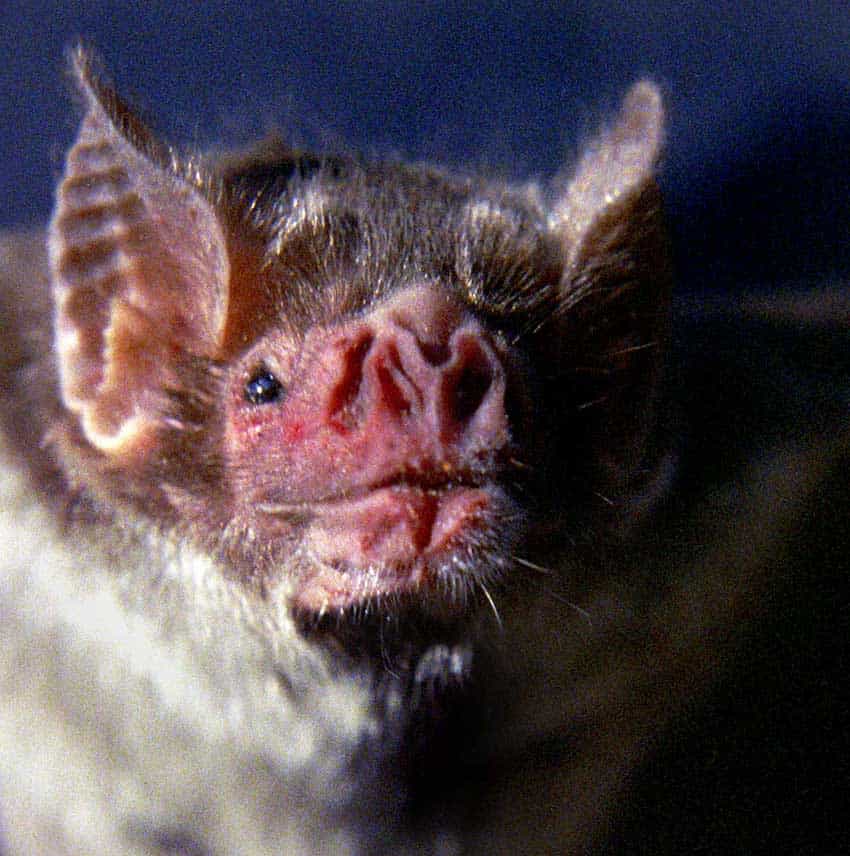
On top of all that, we have slight inconveniences such as low, tight crawl-ways half-filled with mud, guano and bat urine … and then there are the frequent encounters with rabies-carrying vampire bats (usually harmless unless you try to sleep in the cave). Perhaps you can see why some people in this country consider cueveros “locos.”
So, finally, should you or should you not crawl into that enticing Mexican cave?
We’ve given you (just about) everything you need to know. But the decision is ultimately yours.
John Pint has lived near Guadalajara, Jalisco, for more than 30 years and is the author of “A Guide to West Mexico’s Guachimontones and Surrounding Area” and co-author of “Outdoors in Western Mexico.” More of his writing can be found on his website.