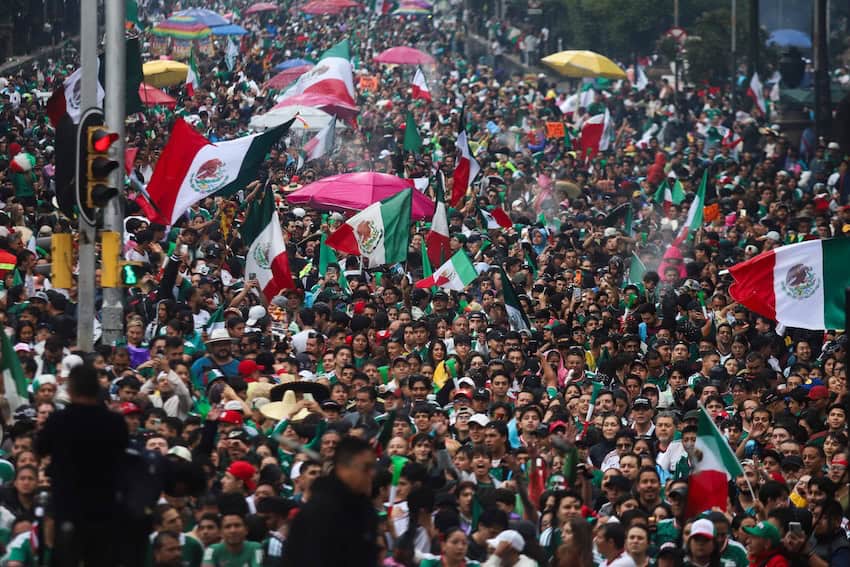
Mexico’s vast public squares are rivaling — and at times surpassing — stadiums as the center of World Cup celebrations, with the Zócalo in Mexico City emerging as the most attended official Fan Festival site of the tournament.
After the first week of the 2026 FIFA World Cup, the Zócalo Fan Fest had drawn an average of about 82,400 people per day, totaling roughly 576,800 attendees, according to Canaco, Mexico’s national chamber of commerce.
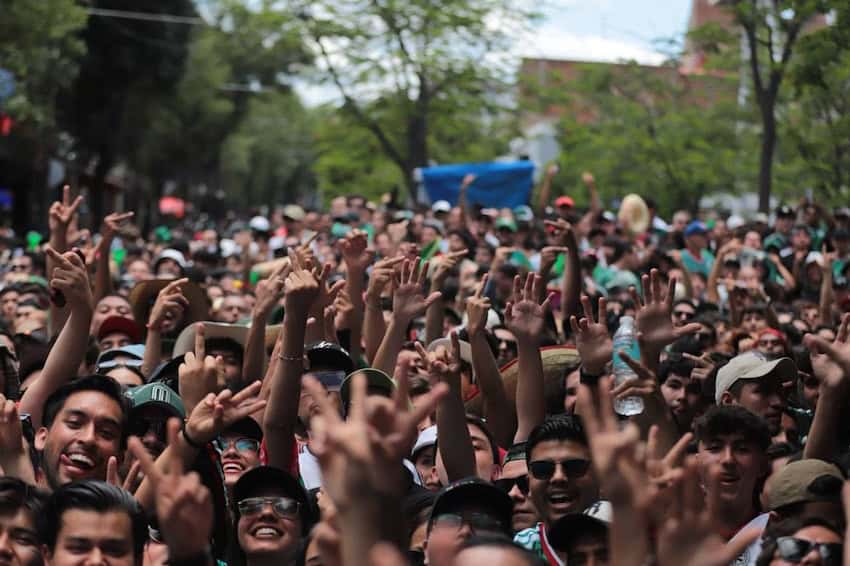
The daily figure has approached the renovated Estadio Azteca’s roughly 87,000-seat capacity — and in peak moments has exceeded it.
During Mexico’s 1-0 win over South Korea on Thursday night, authorities reported about 200,000 people packed into the Zócalo and surrounding Historic Center viewing areas, part of a broader turnout that night of more than 330,000 people at 18 World Cup fan events across the capital.
Streets including Paseo de la Reforma were closed as crowds spilled beyond designated fan zones, creating congestion and transit disruptions across central Mexico City, though authorities reported no confirmed injuries.
The viewing parties for the telecast from Guadalajara were “carried out in an orderly and safe manner and in a celebratory atmosphere among the fans,” the Mexico City government said.
FIFA issued a release this week saying its Fan Festival program surpassed 2 million visitors after the opening week of matches, with Mexico’s host cities leading the way.

According to FIFA, Mexico City had drawn more than 527,000 visitors, followed by Monterrey with 244,710 and Guadalajara with 218,424 — and those figures were from before the Mexico–South Korea match.
“The FIFA Fan Festival has been a key part of our offering to fans, and we are delighted at the reception it has received from visitors so far,” FIFA President Gianni Infantino said of FIFA’s official sites in 13 host cities across Mexico, Canada and the United States — the most in tournament history.
The economic impact has been significant. The Mexico City branch of the National Chamber of Commerce, Services and Tourism (Canaco) estimated more than 322.8 million pesos (about US $18.6 million) were generated at the Zócalo Fan Fest alone in its first week, driven by spending on food, drinks, souvenirs and other items.
Vicente Gutiérrez Camposeco, president of Canaco, said the influx “strengthens economic activity and projects a positive image of our capital to millions of people worldwide.”
Thursday’s win assured Mexico of finishing atop Group A and advancing to a Round of 32 match at 7 p.m. Tuesday, June 30, at Estadio Azteca — which FIFA has retitled Mexico City Stadium — against a yet‑to‑be‑determined third‑place team.
Before that, Mexico will conclude group-stage play at 7 p.m. Wednesday against Czechia at Estadio Azteca.
Because El Tri opened with a 2-0 triumph over South Africa and now sits at six points with the tiebreaker over South Korea, the result will not affect Mexico’s advancement.
However, it is essentially a must-win for Czechia after a 2-1 opening loss to South Korea and a 1-1 draw Thursday against South Africa. Czechia was 44th in the latest official FIFA world rankings compared to No. 11 for Mexico.
With reports from La Jornada, Soy Fútbol and MVS Noticias