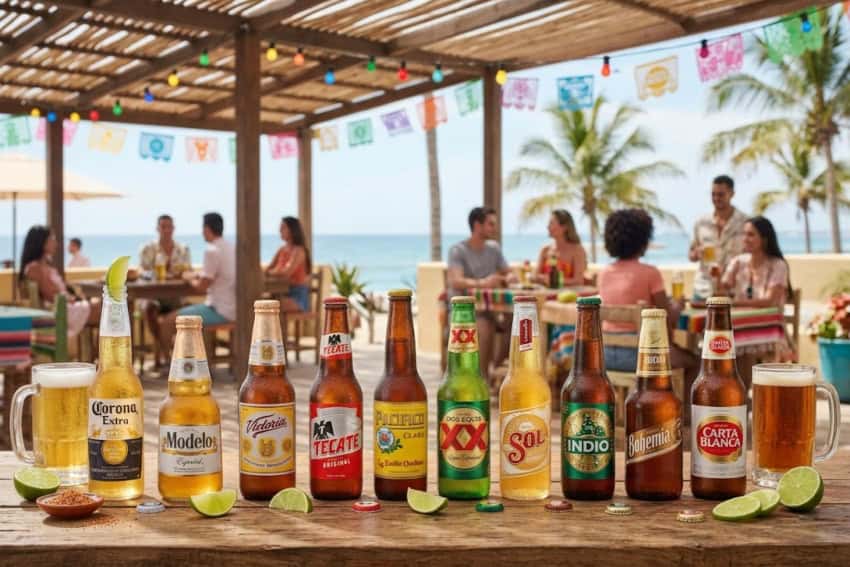
Mexico has built a global beer empire, turning a historic brewing tradition into massive economic power. From sun-drenched ads to the top of U.S. sales charts, Mexican beers have grown from local refreshments into global cultural and financial powerhouses.
This guide dives into the vibrant world of Mexican beer. We explore local drinking habits, decode quirky bottle names and highlight major sales milestones. We also look at how mega-events like the FIFA World Cup trigger record-breaking local retail booms, and track century-old favorites like Corona, Modelo and Victoria that continue to remain relevant.
Finally, we look at the shifting population trends and smart marketing moves that helped brands like Modelo Especial win over international drinkers, crowning Mexico as the undisputed king of beer exports.
The numbers that define the Mexican beer industry
Mexico in Numbers: Mexican beer from coronitas to caguamones
Impressive data backs Mexico’s status as the world’s top beer exporter, a position that brought in US $6.72 billion in 2024 alone. At home, beer easily wins as the country’s favorite alcoholic drink. In fact, 69% of adult Mexicans choose beer over other alcohol, drinking an average of nearly 80 liters per person every year.
Mexican drinkers also use a colorful local vocabulary for bottle sizes. Locals choose between 210-ml mini bottles (called coronitas or ampolletas) and standard 355-ml medias. For bigger parties, drinkers buy massive 940-ml bottles called caguamas (named after loggerhead turtles) or giant 1.2-liter caguamones.

Despite this deep local identity, two foreign brewing giants dominate Mexico’s commercial market: AB InBev (which bought Grupo Modelo) and Heineken México (which runs famous brands like Tecate and Dos Equis).
A taste-quenching World Cup windfall
More than half of Mexico’s expected economic windfall from the World Cup will be from beer sales
The ongoing 2026 FIFA World Cup has triggered a massive retail boom across Mexico, and beer sales are leading the charge. Data from Deloitte shows that beer sales will drive a staggering 55% to 65% of the tournament’s total economic boost. Major host cities like Mexico City, Guadalajara and Monterrey expected a 10% spike in sales — or triple the normal profits.
However, delivering enough beer to eager locals and tourists created a massive shipping challenge. Wholesalers and supply chain networks had to react fast, expanding their delivery fleets by up to 25% to prevent empty shelves. Overall, the tournament pumped a projected US $2.73 billion into the economy, proving that beer acts as a main engine for Mexico’s hospitality industry.
Mexico’s most iconic beer
Corona Extra celebrated its 100th anniversary in 2025. Today, it stands as a global symbol of Mexican pride and brilliant marketing, holding the title of the world’s most valuable beer brand at US $13.4 billion.
Cervecería Modelo launched Corona in 1925. Early brewers successfully convinced the public to switch from pulque (a traditional, pre-Hispanic drink) to light, European-style lagers by using smart, cleanliness-focused ad campaigns.
The company deliberately chose Corona’s famous clear-glass bottle to show off the beer’s bright golden color. Combined with great storytelling — including golden-age radio shows starring cultural icons like Pedro Infante — the brand wove itself into daily Mexican life. Today, even after an antitrust split forced AB InBev and Constellation Brands to divide U.S. and global distribution, Corona still dominates worldwide. It is also expanding into new areas, like the alcohol-free Corona Cero and freshwater cleanup projects.
Mexico’s brewing history: How it all started, and the oldest surviving brand
Established by Agustín Marendaz in 1865, Victoria holds the prestigious crown as Mexico’s oldest continuously brewed beer brand. Unlike the lighter pilseners that dominate much of the modern market, Victoria is a traditional Vienna-style lager characterized by its rich amber hue, smooth texture and deep, crisp flavor profile. This historic style was originally brought to Mexico by Swiss and German immigrants during the 19th century, heavily influencing the country’s evolving palate before disappearing in its native Europe.
Acquired by Grupo Modelo in 1935, Victoria has maintained immense popularity for over a century and a half through savvy marketing campaigns celebrating Mexico’s unique mestizo heritage, diversity and cultural inclusion. Instantly recognizable by its classic yellow label featuring King Gambrinus, Victoria remains a dominant domestic force and a sentimental favorite that seamlessly bridges Mexico’s deep historical brewing roots with modern beachside relaxation.
How Modelo conquered the US market
How Mexico’s Modelo Especial became the most popular beer in the US
In a historic shift for the beverage industry, Modelo Especial passed Bud Light to become the number-one best-selling beer in the United States in 2024, maintaining its crown through a combination of cultural momentum and strategic execution. While a highly publicized political backlash heavily impacted Bud Light’s market share, Modelo’s ascension was already a long-term trend driven by powerful shifting demographics.
The steady growth of a younger, highly diverse Latino population in the United States created a robust consumer base that premium Mexican brands actively thirsted for. Furthermore, distributor Constellation Brands executed a masterclass in marketing by intentionally positioning Modelo toward a broader, multicultural audience, using high-profile sports sponsorships with the UFC and college football to highlight the brand’s core theme of “fighting spirit.”
Only brewed in Mexico, Modelo Especial passed its own centenary as a dual-market champion, leading in sales revenue both at home and abroad (although it has since been passed in volume by Michelob Ultra).
Mexico News Daily