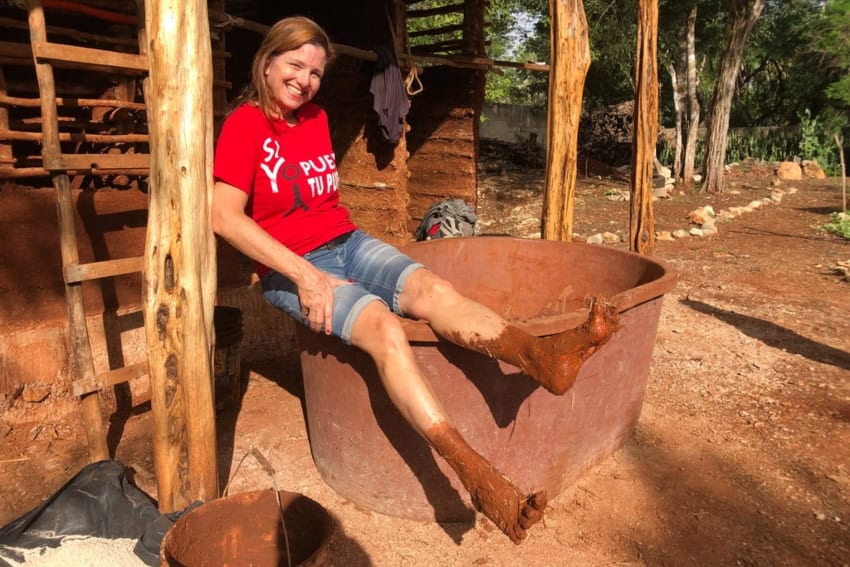
Recently, on a trip to Valladolid, I met a woman named Debi Morris, who is bringing adobe back to the Maya village of Ek’ Balam by building a community center out of the all-natural, sustainable material.
Morris fell in love with Ek’ Balam years ago after a taxi dropped her off in the middle of town rather than at the Ek’ Balam ruins. She was captivated by the warm, welcoming people, the laughing children and the surrounding smiles. So she decided to give back using adobe.
What is adobe?
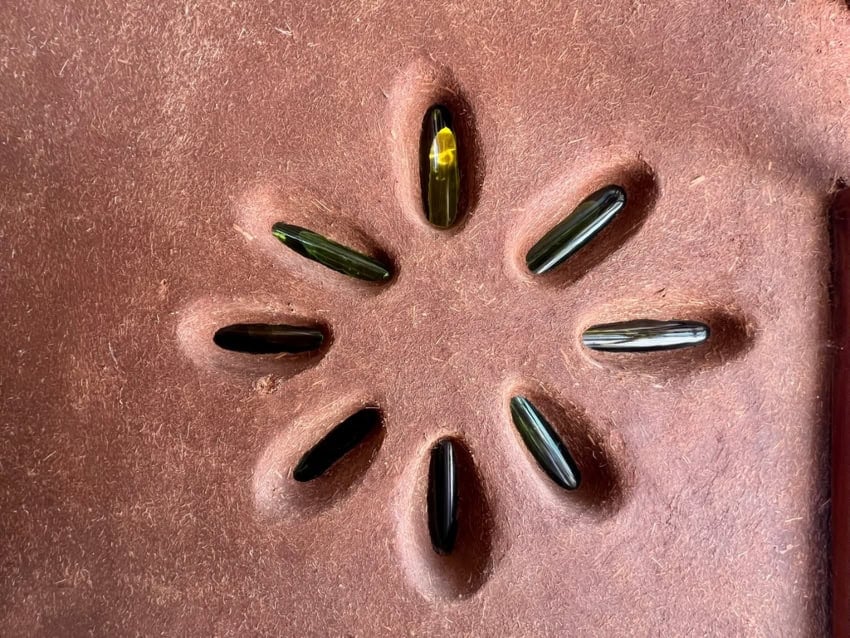
Adobe is a highly durable, all-natural building material that, with proper maintenance and moisture protection, can last for centuries. The proof is still standing in Yotzil, a tiny village in Yucatán. Other historic structures, such as New Mexico’s Palace of the Governors, built in 1610, still stand strong, proving adobe’s longevity.
Made of locally sourced natural materials, adobe recipes vary slightly from place to place depending on the soil and sand. In Ek’ Balam, it is made of high-clay red dirt, sand, dried grass, agave fiber, water and horse manure. Dried beforehand, the manure carries no odor. Builders also added a layer of fermented cactus juice, called baba de nopal, to waterproof the exterior walls.
Adobe also offers high thermal mass, making it ideal for escaping the heat of a Yucatán summer. Because of this thermal efficiency, adobe is growing in popularity as people look for ways to adapt to rising temperatures and reduce air conditioning usage.
Key characteristics of adobe
Composition: Typically consists of blended clay, sand, silt, a fibrous binder (such as chopped straw or agave fibers) and water to bind the mixture and prevent cracking.
Thermal mass: Thick adobe walls absorb heat during the day and slowly release it at night, providing natural climate control in hot, arid environments.

Sustainability: Sourced directly from the earth, adobe is non-toxic, biodegradable and fully recyclable.
Durability: Traditional adobe lasts for centuries but remains susceptible to water erosion, and so requires regular maintenance.
Adapting adobe to local soil
“You’re going to need patience. This is trial and error. There is no specific formula,” an expert advised Morris when she began.
She learned through trial and error that everything depends on local materials. For example, a builder cannot use the same formula in Mérida, even though it is in the same state of Yucatán, because the soil composition differs. In Ek’ Balam, one plot may have red dirt, while a neighboring plot contains entirely different mineral compounds.
“That was an eye-opener,” Morris said.
Not all red dirt works; the clay content must be tested first. “Thank God ours did, so that was a big blessing,” she said. Each layer requires experimentation.
Building in Ek’ Balam
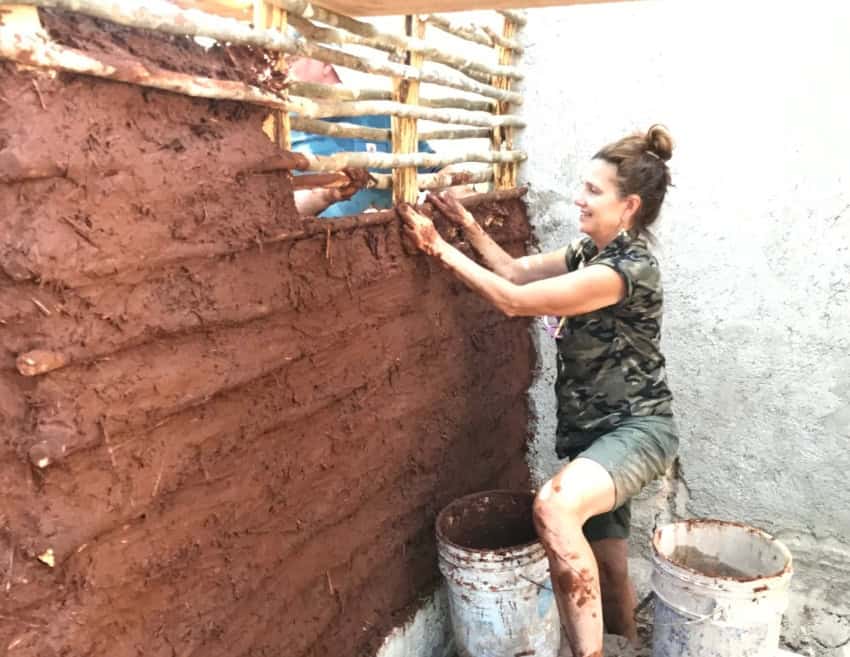
Construction begins with the frame: two layers of wood with a layer of rock in between. Once the frame is set, builders apply the first layer of adobe — a mixture of red dirt, water and dried zacate, a local grass found in surrounding fields. The mixture is combined using hands and feet.
Next comes the layering process: rock, adobe, rock, adobe. After drying for two days, the structure is ready for a second layer consisting of red dirt, sand, water and dried grass. For this layer, the grass is treated with borax to repel insects.
The third layer contains red dirt, fine double-sifted sand, sifted horse manure and agave fibers, which are also treated with borax and cut into 1- to 2-centimeter pieces.
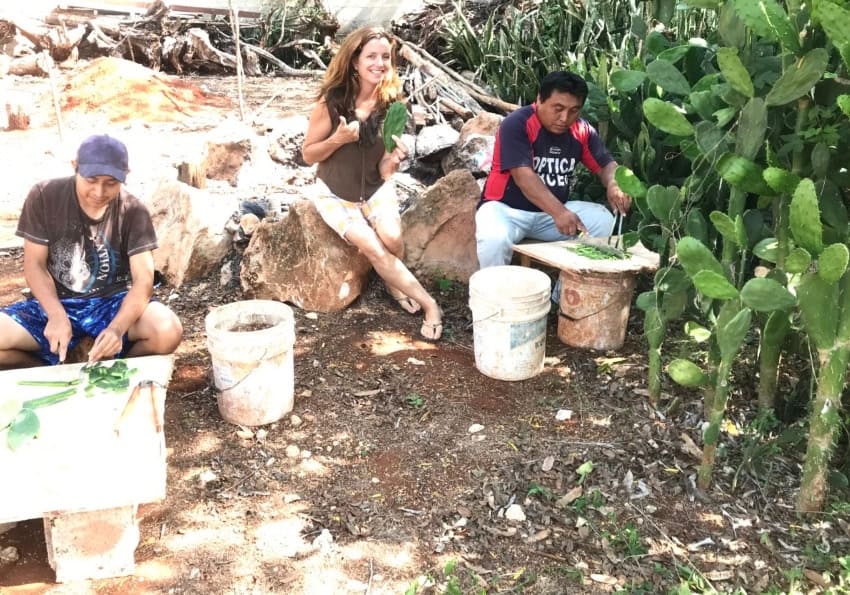
Finally, builders add baba de nopal, or prickly pear cactus extract. The extract is made by removing spines from cactus paddles, chopping them and fermenting them in water for at least 24 hours before straining.
Once the third layer is completed, it is sprayed with water several times a day for five days to retain moisture. On the eighth day, smoothed cracks are treated with warmed cactus extract for waterproofing. Before hurricane season, a final layer of natural linseed oil is applied for additional weather protection without compromising thermal performance.
Reviving an ancient practice
In 2004, Ek’ Balam consisted primarily of traditional palapas. Today, concrete homes have become common, but they trap heat, leading residents to joke that they feel like pizza ovens. Adobe offers a solution rooted in local heritage.
Although adobe construction was an ancient Maya technique, the knowledge was lost generations ago. Morris visited several villages asking abuelitos (grandfathers) if they knew how to make adobe. The answer was almost always, “My grandfather did.” In one nearby village, centuries-old adobe walls are still standing, proving the material’s regional durability.
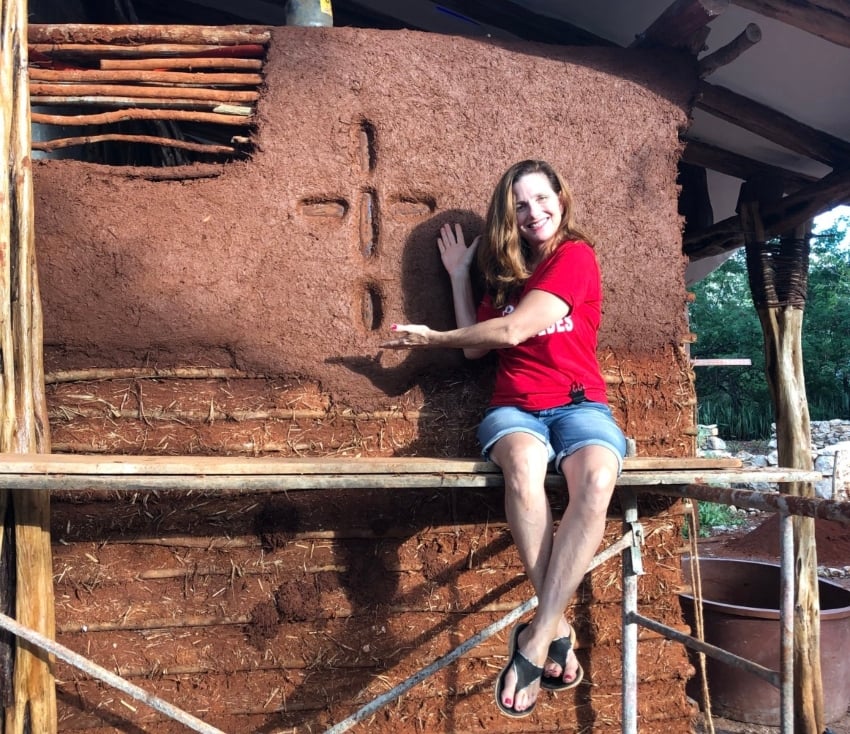
As a result, Ek’ Balam has welcomed the return of this traditional building method.
Mexico Correspondent for International Living, Bel is an experienced writer, author, photographer and videographer with 500+ articles published both in print and across digital platforms. Living in the Mexican Caribbean for over seven years now, she’s in love with Mexico and has no plans to go anywhere anytime soon.