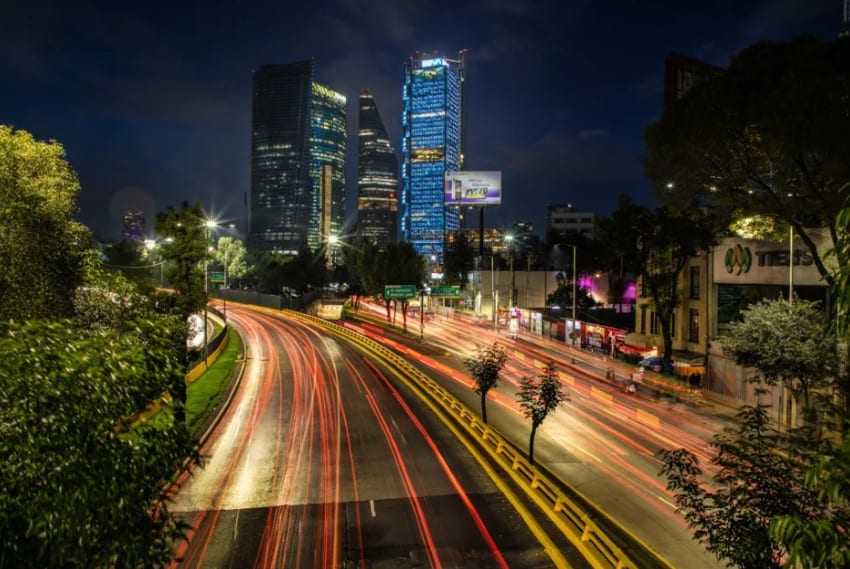
A 2024 New York Times report notes that Mexico is home to over 1.6 million U.S. citizens — the largest American community abroad. But it’s more than Americans: Argentinian, Spaniard, Chinese and Russian populations have all grown significantly, with Mexican authorities reporting a 64% year-on-year increase in Russian migrants in 2024. The stereotypical CDMX immigrant — a digital nomad typing furiously from a café while nursing the same almond-milk cappuccino for hours (yes, I’m describing myself) — isn’t the full story.
This article follows eight foreigners who’ve chosen Mexico City as home: a Siberian artist, a British designer, an American photographer and business owners from Venezuela to Israel. What they discovered is a city of contradictions: welcoming yet isolating, affordable yet expensive, home and foreign all at once. And somehow that’s exactly what keeps them here.
Why they left their old life behind
Anastasia’s move to Mexico City wasn’t entirely intentional. The multidisciplinary artist and sustainable streetwear designer had been living in New York for six years when she visited family in Russia. Upon her return, her U.S. visa was unexpectedly denied. Despite everything she owned still being in New York, she decided to move to Mexico City — permanently.
“What once felt like an abrupt disruption became one of the greatest gifts of my life,” she said. “I never felt that I fully belonged in my country, and I always knew my life would unfold across different parts of the world. Mexico felt like a warm embrace — a true home.”
In Venezuela, Orlando was earning US $38 a month. He left partly out of necessity, partly in search for the right place to build a career: San Francisco, Santiago, Buenos Aires, São Paulo, Bogotá. It was years of bouncing between cities before settling in Mexico City eight years ago, where he founded Meaningful, a 25-person growth marketing studio.
“I wanted to reconnect with my Latino roots and the Venezuelan community,” he said. “Mexico gave me all of that.”
An injury during a trek in Japan left U.S. citizen Logan with medical bills and drained savings. The cheapest flight west landed him in Mexico City. “Everything felt in flow. Life was working out here.”

The writer, photographer, and filmmaker has been here ever since.
Love brought Luke from Nottingham, England, seven years ago after meeting his Mexican wife while she studied abroad. They now await their first child.
Is Mexico City actually affordable?
As of 2024, Mexico City is the most expensive city for internationals to live in Latin America. While many publications blame gentrification, the reality is more complex: Food inflation rose 4-5%, and entertainment and services costs have surged. Mexico City’s size, tourism and concentration of higher-income residents mean businesses can — and do — set premium prices.
Is it still more affordable than living north of the border? Alexander, a German-born U.S. citizen who runs a bespoke events agency in Mexico, thinks so, though he acknowledges the privilege.
“You can have a better life when making U.S. dollars, but let’s not forget that things are getting more expensive.”
This is particularly impactful for families. As mental health clinic owner Jessica points out, earning potential often drops when moving here, and with children, costs multiply in unexpected ways. In Australia, where she’s from, childcare and schools operate on the assumption that both parents work — systems are heavily subsidized and organized around full work days. In Mexico, roughly 18% of public schools participate in after-school care programs.
The assumption is that family members are available for support, and, if a parent works, the family probably has access to Mexican social security benefits (IMSS), which include free healthcare. Without that built-in network, expats end up paying for nannies, inconvenient school days and private healthcare. The affordability equation changes significantly as circumstances shift.
But everyone interviewed agreed on one thing: The cost of living shouldn’t be your primary motivation. Orlando, who works with clients like DoorDash and Raycast, puts it directly.
“Come here to continue producing, creating wealth and building happiness for yourself and the people around you,” he said. “Don’t come just to settle and chill, especially if you’re young.”
Logan was even more blunt.
“Pick a better reason!” he said. “Only stay when you fall in love with it.”
The benefits of living in Mexico City
Nearly everyone mentioned Mexico City’s warm, welcoming energy. Logan said he’s watched life unfold without the usual struggle.
“I’m shocked by how I’ve found projects here,” he said. “It often feels like I’m being pulled into things when, all my life, I’ve pushed to make anything happen for myself.”
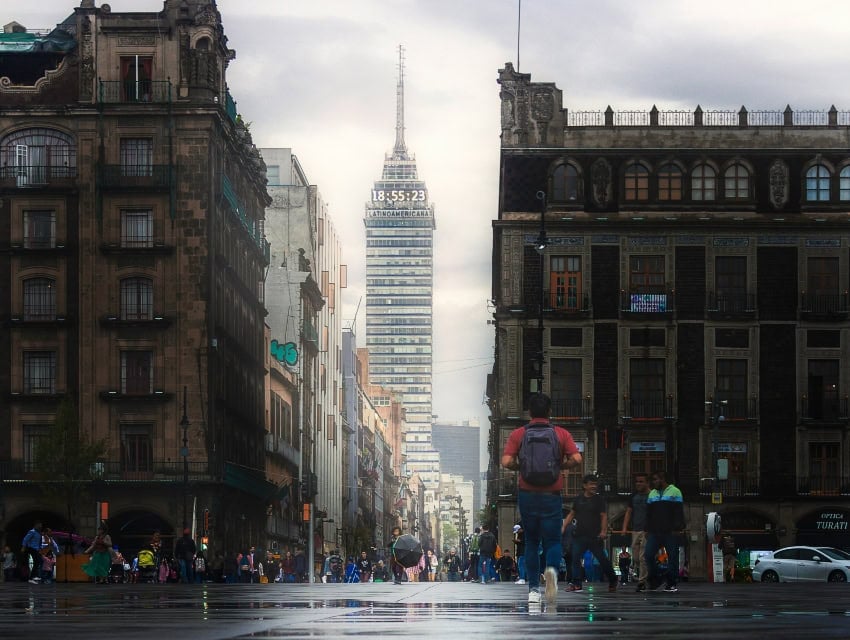
Luke, who runs the motion design agency Only the Bold, assumed creative meetups would be easy to find in a city this size. Even though he arrived before the pandemic, he discovered that in-person networking events were hard to find. So he and a Mexican friend started Motion Design México together to fill the gap. Rotem, an Israeli who left international tech to open Pasta Mestiza, found meeting people the easiest part of the transition.
The quality-of-life shift was universal, especially for those fleeing fast-paced cultures. Alexander left U.S. stress behind:
“Back home, everyone seems to be stressed, working like crazy just to pay bills. Once I came here, this all changed. I feel happier and more relaxed.”
Daily rhythms reflect this slower pace. Monica, a New Yorker who opened Curiosa Cafe in Mexico City’s Condesa neighborhood, starts mornings walking her dogs through Parque México. Orlando does the same along tree-lined Avenida Ámsterdam. Alexander works from coffee shops he’s not tried yet and then explores new neighborhoods when done for the day. And Mexico taught Anastasia something unexpected: the beauty of spending more time alone.
Do expats feel welcome?
But feeling welcome and feeling at home are different things. Everyone interviewed has built a real life in Mexico City. Whether they feel truly accepted is more complicated.
Rotem felt welcomed from the start, but the real test came during the peak of the Israel-Palestine war.
“Some tourists who came to eat in Pasta Mestiza would turn around when they realized I’m from Israel,” he said. “Not one Mexican reacted that way — they were always empathetic, even asking about my family.”
In six years, Orlando said he has had only one negative experience: a bank representative who took issue with his Venezuelan roots.
How long did it take for the city to feel like home? For some, like Anastasia, it was immediate. For Jessica, it’s been more cyclical.
“There are times when it felt like home and times when it didn’t,” she acknowledged.
Rotem captures the duality.
“I have moments where I can still feel on vacation, like being at a wedding and having chilaquiles at 1 a.m., then washing them down with tequila and dancing to banda music. That’s probably something I’ll never get used to — and I’m happy for that.”
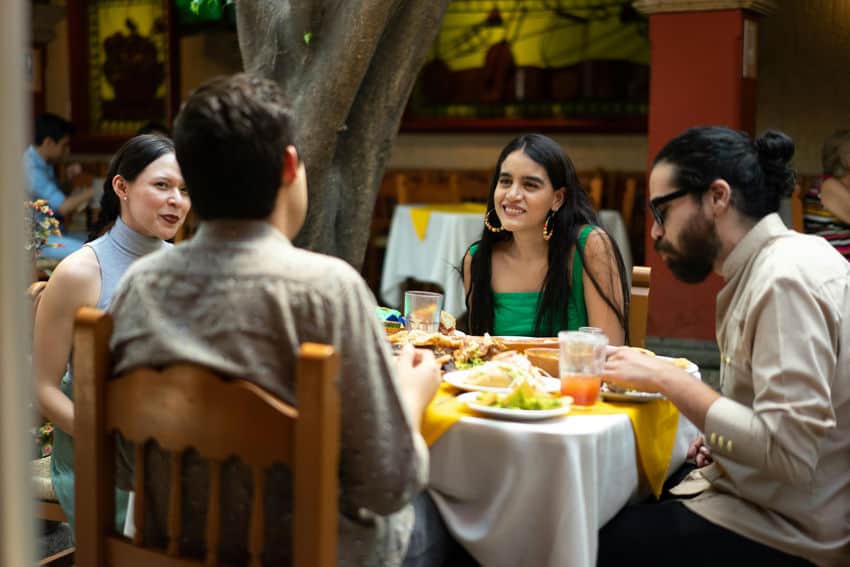
Does Spanish fluency increase belonging? Everyone interviewed has at least an intermediate understanding of the language, although mastery remains elusive for most.
Luke feels language is crucial, especially in social settings, where being able to keep up with fast-paced conversations is the difference between being a spectator and a participant:
“Something that haunts me is that you could replace me with a potted fern, and nobody at the party would spot the difference. At that point, I’m essentially a less aesthetically pleasing version of a houseplant.”
Navigating Mexico City’s systems and challenges
Jessica, who’s lived in Mexico’s capital the longest, experienced something no one warns you about.
“I feel the initial arrival is easier — the romance phase with great weather, affordable rent, friendly faces and delicious fruit. What was harder was not being prepared for how culture shock reveals itself the further you integrate. It’s not something you go through once at the start. It’s cyclical. The hardest times have been much later, in my experience.”
Mexico’s systems are proof of this. In Australia, the U.S., Canada and the U.K., rules-based environments mean that by following regulations, you’ll be protected. Consumer protection bodies can pressure banks and companies to honor refunds or compensate for errors. In Mexico, however, consumer protection agencies like Profeco exist on paper, but fines for illegal behavior go to the state rather than the harmed party — enforcing your rights usually means hiring a lawyer.
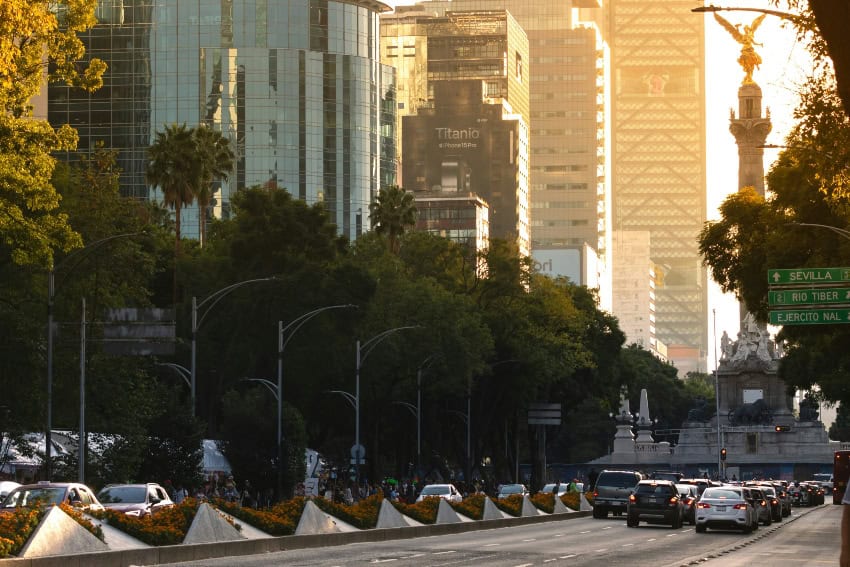
Monica misses the “customer is always right” mentality when dealing with suppliers for her cafe. Opening even a small business involves navigating multiple offices and portals — often in person — that can delay opening for weeks. Mexico’s tax collection agency, known as the SAT, relies heavily on a specific method of electronic invoicing, so a missing or incorrect factura can result in losing a deduction entirely — even if the expense was documented by other means.
For Jessica, this makes running a business feel precarious. The moment one link fails — an unhelpful bank, a supplier who won’t honor a contract, a permit delayed with no explanation — the whole structure wobbles, and there’s no obvious safety net.
Both Monica and Logan also said they faced landlord struggles. Each was threatened with illegal lease termination when higher-paying tenants appeared. Logan fought back.
“I scared him off with a legal text asserting my tenant rights, opening a case with PROSOC [Mexico City’s housing rights agency] and asking for his CFDI [proof that he was declaring the rental income from Logan to the SAT] and facturas, because I suspected he wasn’t paying taxes.”
Luke acknowledges the broader tension.
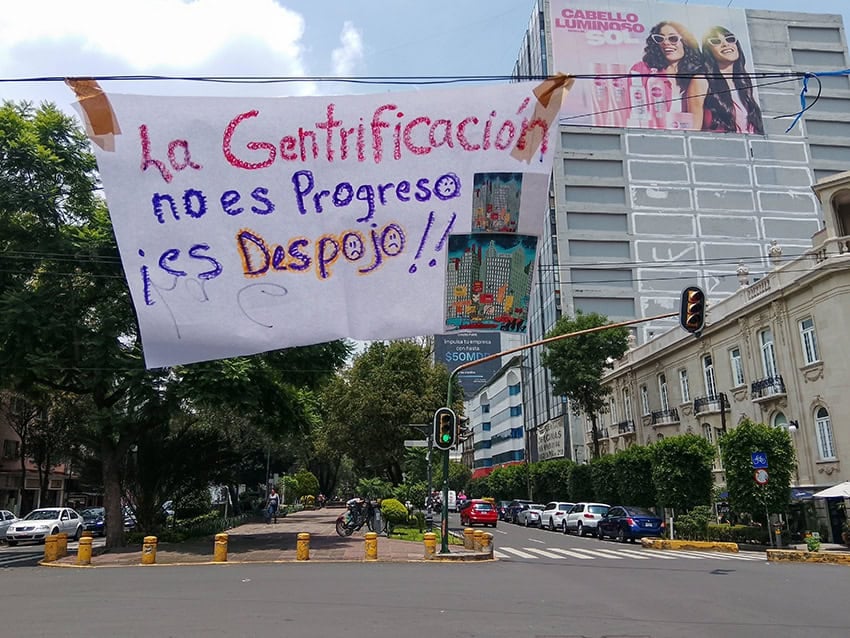
“The anti-gentrification movement is understandable, but it’s a reminder that you will always be seen as an outsider,” he said, then turned philosophical. “Ultimately, I think the answer is a reflection of your own internal reality, and we can create whatever reality we choose.”
Will they stay?
Can they imagine leaving? Some can, but not yet.
Anastasia isn’t quite ready.
“I’m still a bit traumatized by visa experiences, and nothing is ever guaranteed,” she said.
Luke joked he’d need “a world war, another pandemic or free tickets to Disneyland” to consider leaving Mexico. Orlando said he’d reconsider living here if democracy were threatened or if he needed better schools and safety for a future family.
The common thread is family. Rotem thinks about it often.
“The distance from my family is a big factor,” he said. “I believe that at some point I’ll want to spend more time with my parents, helping them when they get older.”
Jessica feels the same pull.
“As my parents age, it’s a thought that is often on my mind. The thrill of adventure is giving way to the pull of family, familiarity and a feeling of security.”
Monica and Logan said they would only leave Mexico for safety crises or family emergencies.
But none are planning exits now. Logan, a year and a half in, is still in the honeymoon phase. Orlando’s gratitude for Mexico has only grown — so much so that he became a Mexican citizen six months ago.
“The more grateful I became, the more it felt like mine,” he said.
Jessica captures it best.
“My Mexico journey is far from complete — it’s now a permanent part of my story and my life, and I suspect it will remain so in some form or another.”
Those contradictions promised at the start — welcoming yet isolating, affordable yet expensive, home and foreign all at once — aren’t problems to solve. They’re the reality of building a life in a place that isn’t yours by birth but that becomes yours through commitment.
Luke offers the final word:
“I believe people should be free to move where they want, even for economic reasons,” Luke says. “It comes down to a base human level: Are you being a good neighbor? Contribute something, integrate.”
Bethany Platanella is a travel planner and lifestyle writer based in Mexico City. She lives for the dopamine hit that comes directly after booking a plane ticket, exploring local markets, practicing yoga and munching on fresh tortillas. Sign up to receive her Sunday Love Letters to your inbox, peruse her blog or follow her on Instagram.