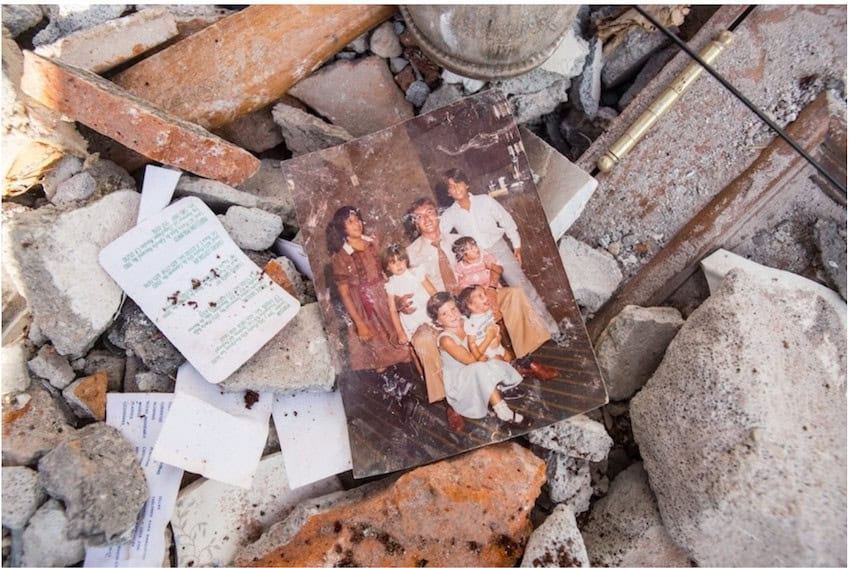
One of the most visceral and profound fears we Mexico City residents have is the seismic alert going off. And that’s no exaggeration.
Particularly for those of us who lived through the September earthquakes — which, in an almost absurd coincidence, all occurred on the 19th of different years — that sound is a near-physical reminder of the catastrophe.
Born and raised in Mexico City, I grew up listening to my parents’ stories about the terrible 1985 earthquake, when Mexicans united to help the military and first responders rescue people from the rubble.
“The response from their community was immediate,” Gaceta UNAM magazine noted at the time, “and extended to the most diverse tasks, such as the distribution of medicines, food, drinking water and clothing, as well as transportation to shelters.”

Therefore, it is no surprise that my generation grew up attending drills at school. We learned about the seismic nature of Mexico City, largely due to the confluence of tectonic plates in our country and the presence of two magnificent volcanoes.
It wasn’t until September 2017, in my first year of university, that I truly understood what it was all for. The tedium of the drills turned into outright terror when the seismic alert sounded.
And yes, September is back. As it happens year after year, there’s this morbid expectation that another seismic catastrophe will shake the nation’s capital. And why not? On Sept. 19, it has become all but customary.

To avoid this irrational fear, MND put together this explainer about why it’s practically impossible to predict earthquakes (yes, even in turbulent Mexico City), and why it’s an infinitesimal coincidence that they’ve occurred on the same day in different years.
No, there is no way to predict an earthquake — but we can prepare for them
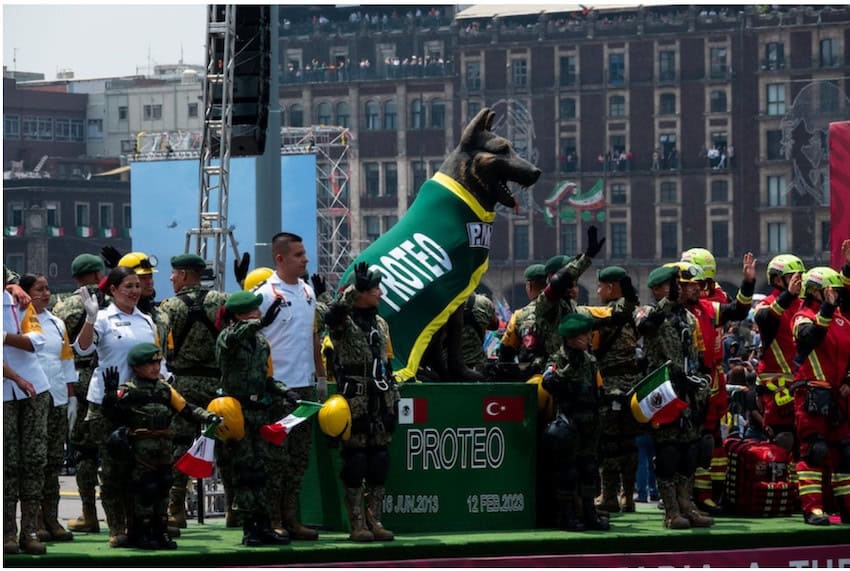
Ranging from 7.1 to 8.1 on the Richter scale, 1985, 2017 and 2019 are the years that have marked the strongest earthquakes in Mexico City’s recent history, as documented by the National Seismological Service (SSN). Leaving hundreds of thousands of people homeless and an uncertain death toll of hundreds on each occasion, it is understandable why these natural disasters instilled panic among the residents of the capital.
And, understandably, there’s a superstition that September is the month of earthquakes. Although fitting, it’s nothing more than a popular belief that science has taken pains to disprove.
In fact, SSN records show that there have historically been more earthquakes in December than in any other month. But what does this mean?
In Mexico, more than 15,000 earthquakes have been recorded so far in 2026, according to SSN monitoring. The number changes daily because the country has consistently high seismic activity.
Worried by yesterday’s earthquake? Honor Tepeyólotl, the Great Lord of Earthquakes in Mexico
Furthermore, this does not mean that all of the underground movement has been harmful to the population. Sometimes, it’s barely perceptible on the surface.
Although the records are accurate, they can only be taken after the telluric event. In other words, the technology we currently have is not predictive, but only serves to maintain a record of the country’s seismic activity.
This is because, according to the SSN, “not even the most advanced research has been able to develop a predictive technique for earthquakes, […] in the face of any seismic event, the only thing that can help us is prevention.”
This does not refer to the prevention of earthquakes per se, which are inevitable natural events, but to measures to mitigate the impact of these phenomena on the population. The drills we hated so much in elementary school are the best way to prepare for an event like this.
Tepeyóllotl, have mercy on us!
Through the National Center for Disaster Prevention, the Mexican government acknowledges that it is an extremely rare coincidence that the three strongest earthquakes in the country’s recent history occurred on the same day.
Almost ludicrous, and certainly grim, for those of us who live in the capital.
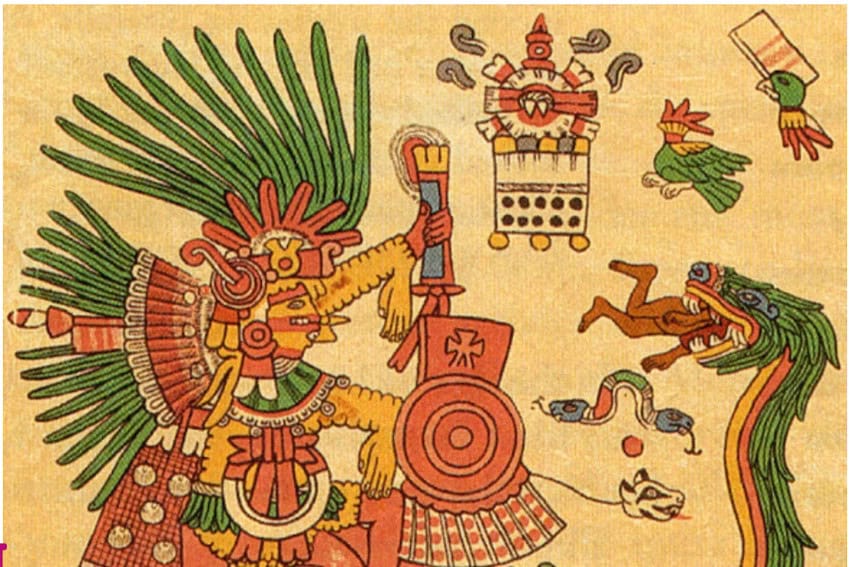
It’s almost as if the fearsome Tepeyóllotl, the great lord of seismic movements in the Mexica pantheon, were laughing at us and saying, “Let’s give the capital’s residents a little scare.”
So no, it’s not possible to predict earthquakes. We know why they happen, and that the movement of tectonic plates is inevitable. At best, it has given us our majestic Sierra Madre mountain ranges and the pair of magnificent volcanoes that crown the center of the country. At worst, it has left terrible death tolls across the territory, as part of the cost of living in a seismic country.
Let us entrust ourselves, then, to the lord of the mountains. Perhaps only he, with his guttural roar in the bowels of the earth, can calm the subterranean movements that plague the ever-unstable Mexico City.
Andrea Fischer contributes to the features desk at Mexico News Daily. She has edited and written for National Geographic en Español and Muy Interesante México, and continues to be an advocate for anything that screams science. Or yoga. Or both.