
Most foreigners who relocate to Mexico arrive with most of their liquid assets sitting in a bank outside of Mexico’s borders. Before long, they are wondering about the best ways to move money from there to here to fund everyday expenses.
Whether it is money for rent and groceries, or a big-ticket item like a car or real estate, finding the most economical way or ways to move money across borders is not necessarily intuitive.
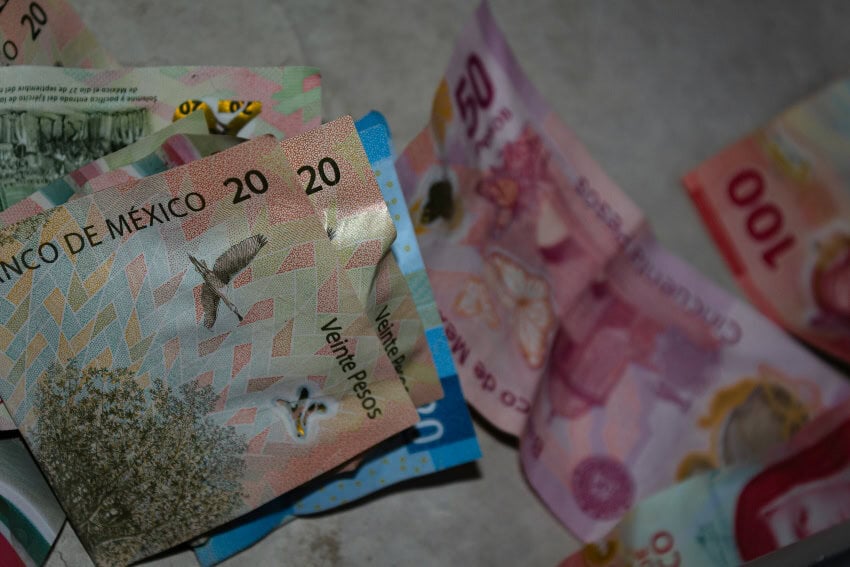
Below are the best — and worst — ways to accomplish this boring but necessary task.
Factors to consider before choosing a money transfer method
If you’re new to living abroad and have never done a cross-border money transfer, it is natural to feel fear and uncertainty about the safety and reliability of the transaction. And that is before you even consider cost.
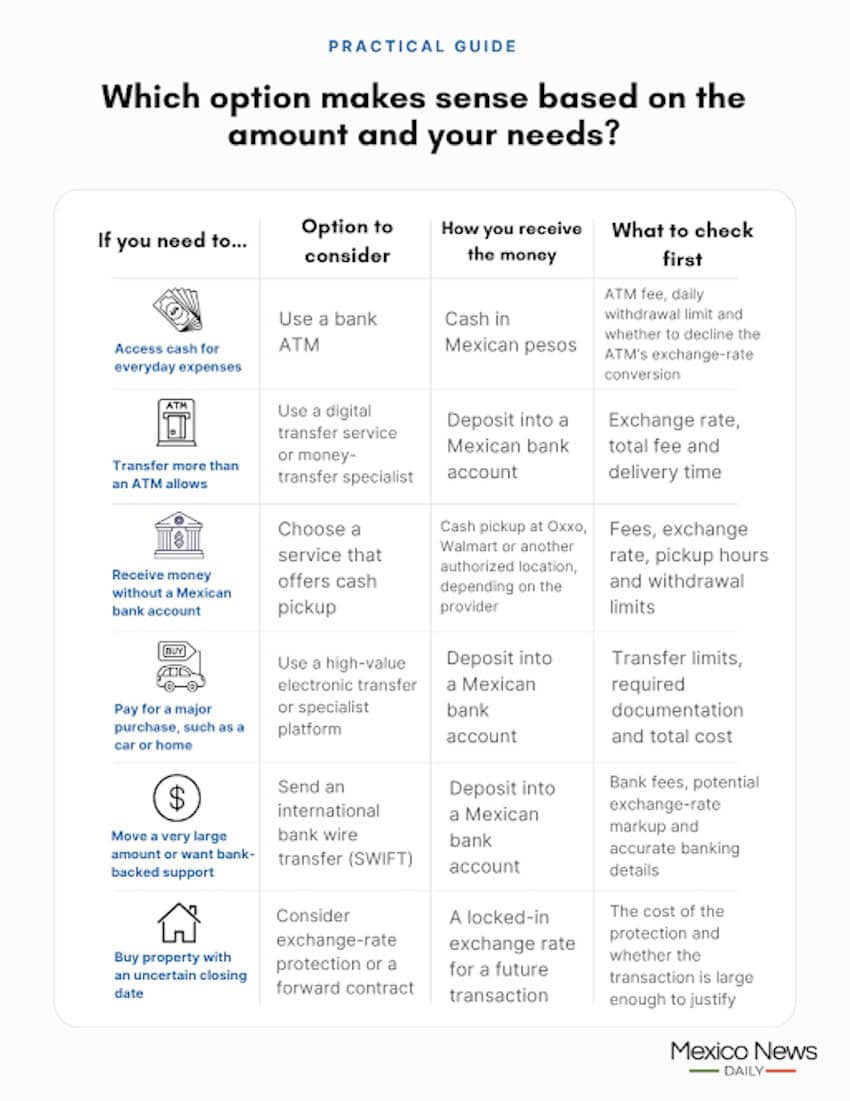
The truth is, there is no “one size fits all” best method for moving money across borders. The best option depends on three things. How much you need to transfer? How soon you need the money? In what form do you want the funds?
Mexico and My Money: MND launches new series on personal finance

The best ways to move small amounts across borders
When you have no bank account in Mexico and only need to access small sums from a foreign bank account, a Mexican bank ATM is your best option.
At a Mexican ATM, two different fees are applied to cash withdrawals. The first is a “convenience” fee, which ranges from 30 to 200 pesos per transaction. The second is the exchange rate commission applied when converting money from your home country’s currency to Mexican pesos.
As a non-bank customer, it is wise to test out different brands and locations. BBVA and HSBC tend to charge larger transaction fees to out-of-network users, while fees from Banorte and Santander are typically lower. Even within the same bank, ATMs in touristy areas often have higher fees than those in non-touristy neighborhoods.
While the ATM’s convenience fee cannot be avoided (though some U.S. banks will refund them), foreigners can avoid exchange rate markups at Mexican ATMs that can reach 6%. To protect yourself, always decline the Mexican bank’s conversion rate when withdrawing funds. The transaction will still process, but at your foreign bank’s exchange rate, which is almost certainly better.
In addition, take care to avoid standalone ATMs that are not tied to major banks, such as those in convenience stores, gas stations and other public venues. These are easy for criminals to tamper with and can also apply exorbitant fees.
How to move large sums across borders
Because the daily limit on ATM withdrawals in Mexico is about 11,000 pesos (US $645), there are times when this method will not meet your needs. For transfers exceeding ATM limits — such as US $1,000 to US $50,000 — electronic transfers (also called EFTs or ACH transfers) are the most cost-effective option.
Money transfer specialists like Wise, Remitly, Revolut and others handle a large volume of these transactions. But they are not all the same.
Transaction fees and wait times from one provider to the next vary widely, so it pays to shop around. While Wise can move US $1,000 to Mexico in seconds, with Remitly it could take three to four days. Exchange rate markups with these services can range from 0.8% to as much as 3% over the mid-market rate.
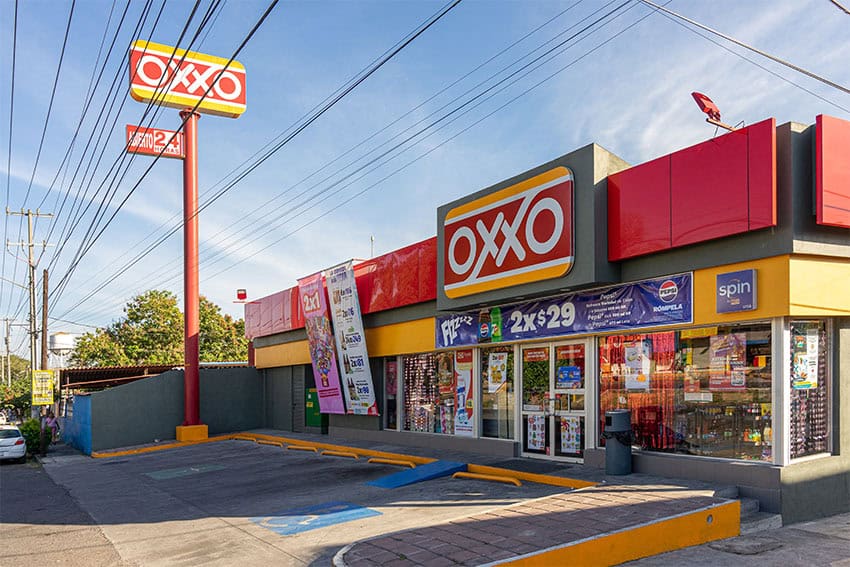
In addition, while most who use these services have a Mexican bank account to receive the funds, some providers like Western Union or Remitly allow senders to pick up cash at Mexican retail chains like Oxxo or Walmart. Others give customers the option to send money to a mobile wallet.
Besides helping foreigners living in Mexico access their funds in overseas banks, these service providers also handle a large share of the nearly US $62 billion in annual remittances sent home by Mexicans working abroad.
In rare cases when a foreigner might need to move an even larger sum of money to Mexico — such as US $500,000 for a home purchase — a standard money transfer service may not suffice.
Among top specialists, platforms like OFX and Wise can accommodate high-value transactions of this size. Even when they do, it is common to experience longer wait times.
International wire transfers
In these cases, the most reliable option is an international bank-to-bank wire.
International wires use the SWIFT payment system and a unique code for each banking institution, ensuring funds reach the correct destination. They may also require a phone call to verify the sender’s identity.
This method is considered the safest of all, though keep in mind that international wires may take several days to reach the destination bank. Additionally, traditional banks add big exchange rate markups (2% or more) and fees (up to US $50) on international wires.
Due to these shortcomings, international wires only make sense when an ACH transfer does not satisfy your needs, or when you insist on having a person assist you for peace of mind.
How to lose a lot of money while moving it into Mexico
Convert physical cash you carried to Mexico
This old-school method of moving cash across borders carries some of the highest commissions. At money changers in Guadalajara, exchange rate markups can reach 5%. At a kiosk inside the arrivals hall of an international airport, it is even worse, with markups reaching 10% to 20% over the spot exchange rate. These places tend to target desperate travelers and should be used only in an emergency.
Choose a money transfer service without comparing fees first
Because quality and reliability are a moving target with money transfer specialists, it pays to collect multiple quotes and periodically check customer reviews. That said, some providers routinely fall short, hitting customers with 3% or higher fees, such as PayPal and its subsidiary, Xoom.
Fail to manage exchange rate risk
For anyone who needs to send large sums of money to Mexico with an uncertain time horizon, managing exchange rate risk is critical. In the case of a foreigner buying Mexican property with funds sourced from abroad, if the peso strengthens against your home currency while you wait months for paperwork to finish, you could end up paying tens of thousands more than intended.
Fortunately, there are now services for this, too.
With MexEdge, it is possible to purchase a forward contract for a fee of about 1% that locks in the current exchange rate for up to two years. While forward contracts do not make sense for small transactions, the savings can add up on larger ones.
Conclusion
No matter which service you use, U.S. citizens should know that banks and money transfer services are legally obligated to report cross-border transfers exceeding US $10,000 under the Bank Secrecy Act. The law applies to U.S. financial firms as well as foreign banks with branches in the U.S. to combat money laundering.
For foreigners living in Mexico without a local bank account, many of the best money transfer options will not be available. It is a key reason to consider opening a local account, which will be the topic of the next article in the “Mexico and My Money” series.
MND writer Dawn Stoner is reporting from Guadalajara.