The goal of our “From the archive” series is to revisit popular stories that capture the unique history and culture of life in Mexico. This Sarah DeVries article — originally published in February 2025 — explores whether living in a beachfront community really qualifies as an authentically Mexican experience.
About 15 years ago, when I had my first online job, one of my supervisors lived in Los Cabos. She very much enjoyed telling people “what it was like in Mexico,” and was proud of her knowledge.
“Well, in my experience here, that’s not a problem at all!” she’d say when one of the many other Mexican residents would casually bring up an issue. “Things are pretty easy in Mexico, you know. All you have to do is …”
A friend of mine who worked with me and lived in Mexico City would privately express her annoyance to me. “That’s easy to say if you live in a gringo paradise with low population density. I’d love to see this ‘Mexico genius’ get by in my own barrio.”
Even in Xalapa, where spotting a foreigner is like stumbling upon Waldo, I’ve been on the receiving end of this kind of annoyance. “You live in a bubble in Xalapa; that’s not the real Mexico!” a friend of mine once insisted. She herself had lived for years in a tiny town outside of a fairly dinky and unglamorous city. I rolled my eyes and let it go; it wasn’t something I cared to debate.
Besides, if that was “the real Mexico,” I’d happily leave it all for her.
Where is the real Mexico, and how do I get there?
Chances are that you clicked on this article primed for a debate. It’s a sensitive topic, especially among those of us who consider Mexico home and ourselves to be fully integrated. Whether we foreigners live in beach towns or tiny towns, everyone’s surely got an opinion!

So what is the measuring stick that people use to define the “real” … any place, actually? Because this tendency isn’t at all unique to Mexico.
Think of every Hallmark rom-com you’ve ever seen: a high-powered and glamorous businesswoman travels from her sleek New York City apartment back to her home for the holidays. It’s always a small town in the U.S. Midwest. Everyone knows each other, and her high school sweetheart is there, handsome and single, or perhaps widowed.
That small town? That’s the “real” America, the movie says. Not like New York City, which was actually established first. Similarly, people in Mexico — especially foreigners — often have some strict ideas about what counts as “authentically Mexican.”
I suspect, actually, that Mexicans do not have conversations about this, which is telling: they have nothing to prove. They’re Mexican, and wherever they live in the country is “really” Mexico, period.
Not all beaches are developed equally
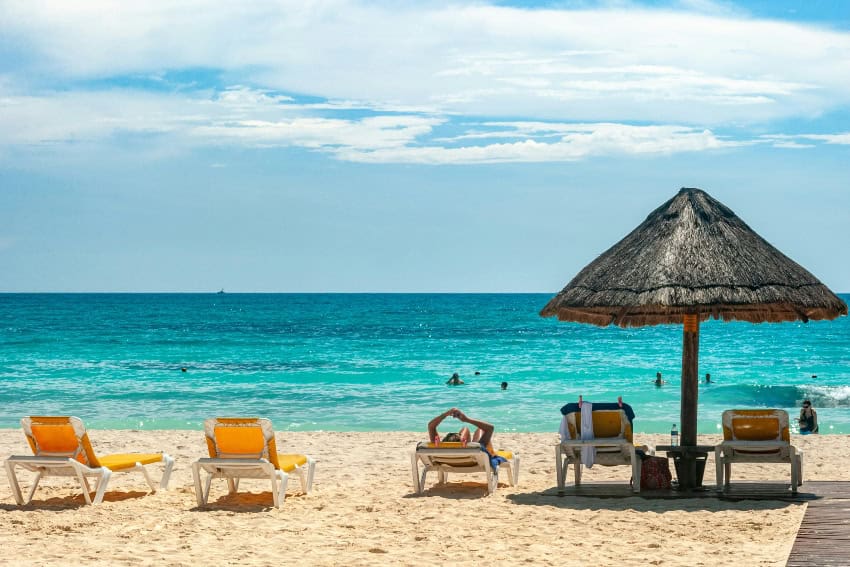
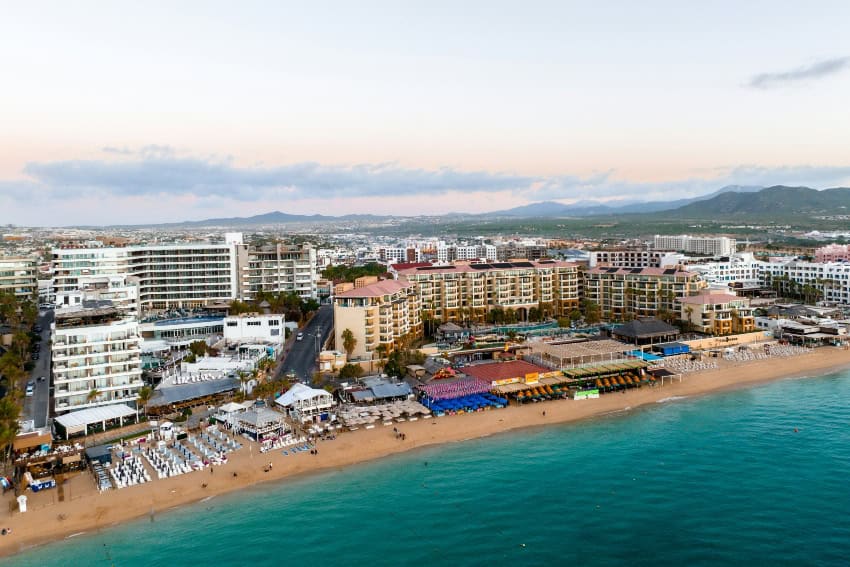
Still, beach communities receive special scrutiny. Not all beach communities are alike, though. Living in Cancún or Los Cabos, for example, is very different than living in Chachalacas, Veracruz.
Cancún and Los Cabos are full of fancy beach resorts and the kind of development that could attract royalty. Everyone who works there has to speak at least some English.
Chachalacas is a tiny town that only recently got paved roads. Its fanciest hotels are fancy simply because they have in-room air conditioning and a pool. English can most certainly not be counted on, and beach parking is on the sand … or you can take a bus from a small, unfancy town nearby. Bathrooms are bare toilet seats in the middle of small wooden shacks; 1 star for sure. To flush the toilet, there’s a large tub of water outside and a bucket. But boy, is the seafood good!
From our archive: How many stars would you give that baño? A rating guide for Mexican bathrooms
So here’s the question: Is Chachalacas more real than Cancún? It’s hard to argue that they share much in common besides the beach. Or perhaps it’s the presence, or not, of foreigners in a place, be it the beach or somewhere else. Does the fact that one might look around and see a sea of one’s paisanos make it less authentic? For some, I think it absolutely does.
We were in the real Mexico all along
And of course, the question might not even be a consequential one. People live where they want to live. Does it matter if they’re adapting or not? Do people even care if where they’re living is authentic in a stranger’s view? But no matter where you are, if you live on or near the beach, expect to get side-eyed when you talk about your knowledge of Mexico.
The word “beach” is practically synonymous with “vacation,” which explains a lot. You hear it in our language: “Time to leave the beach and get back to the real world.” This is a sad phrase to me, since it separates the real world from the kind of world that you’d actually like to live in. So perhaps the rest of us are just jealous?
My daughter has an educational book about sex. It spends some time talking about the differences between boys and girls. It does a good job of emphasizing that things like haircuts and clothing are pretty much never exclusive to one sex. “There are all kinds of different ways to be a boy,” it says, and “there are all kinds of different ways to be a girl.”
This, I believe, is the correct attitude to have with most things. Like everywhere else, Mexico is a very diverse place. There are as many different ways to “be Mexico” as there are different ways to be Mexican.
So wherever you are, maybe don’t worry about it too much. If someone wants to challenge you on it, like my friend above, shrug your shoulders and suggest a Tex-Mex style margarita, or maybe a caguama … you know, depending on where you are.
Sarah DeVries is a writer and translator based in Xalapa, Veracruz. She can be reached through her website, sarahedevries.substack.com.