The funny thing about growing up in California with Mexican immigrant parents is that you are perpetually intimate with, and distant from, your Mexican roots. Every holiday season, therefore, becomes a delightfully unique interpretation of both cultures mashed together.
Tamales wrapped in banana leaves and filled with turkey for Thanksgiving? Opening gifts at midnight for Noche Buena, and then again on Christmas morning? Getting your face smashed into a birthday cake?
These are all welcome in my life as a Mexican-American who must constantly toggle between my two identities on both soils.
Sometimes, though, one cultural norm or ideology can overtake the other, leaving one half egregiously overlooked, if not completely erased. For me, that has always been the case with Día de Muertos.
Halloween was the festive U.S. tradition my household embraced in its most suburbanized form: dressing up as Ninja Turtles, trick-or-treating with pumpkin-shaped buckets, and devouring pounds of Jolly Ranchers, fun-sized Snickers and M&Ms for weeks after.

I’ve never been the king of spooky season, but I’ve also never avoided it. As I grew older and met my wife, our family Halloween tradition became dressing up in custom-made outfits that reflected our personalities or the region we lived: two high school teachers dressed as our favorite punctuation marks; two Boston post-grads dressed as the local subway trains. (Spoiler: this year we are dressing up as Chedraui employees.)
And yet, despite traveling to Mexico regularly throughout my life, and having immigrant parents who spoke Spanish and were connected to their roots in Veracruz in different ways, I don’t have any real Día de Muertos memories from my childhood.
Finding the tradition
It wasn’t until the 2010s that I recall the concept entering mainstream culture in California and elsewhere beyond Mexico. For my wife and me — both as a couple, but also in our respective Mexican-American upbringings throughout the 1990s and 2000s — we never experienced our parents or family members building altars in our California homes. Not until maybe around Pixar’s “Coco” (2017), that is.
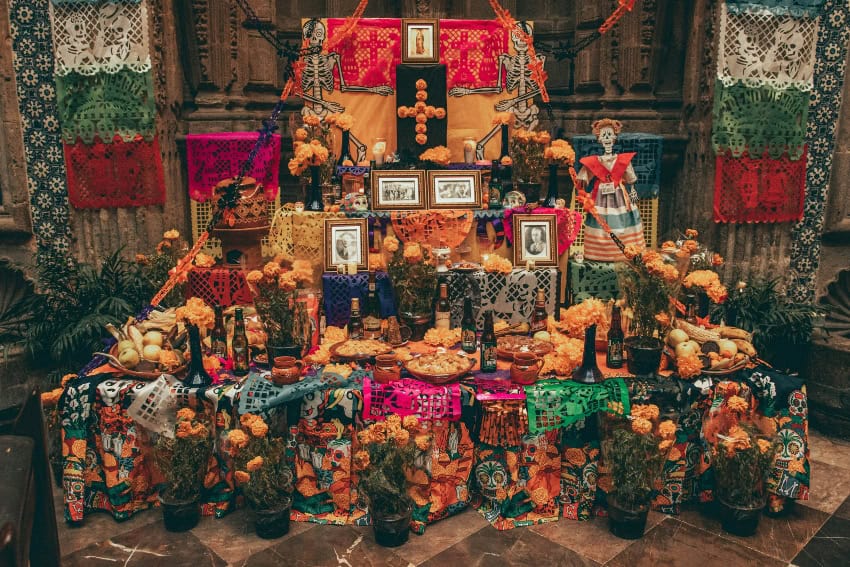
That tradition has quickly spread. Within the past decade, it has become more commonplace to see altares, ofrendas and Día de Muertos-themed households worldwide. Of course, it existed long before “Coco,” but it wasn’t as ubiquitous as it is today.
When my son was born in 2023, my wife and I had already spent significant time in Mexico, including traveling to Oaxaca for a month during Día de Muertos season and fully immersing ourselves in its wondrous spirit of parades, parties and gravesite visits.
We had learned, while exploring Mexico’s vast regional scenes and lodging with family members in various states across the span of multiple summers, about the importance of Día de Muertos as a form of intimate ancestral remembrance. In contrast to the candy-collecting rampage we’d always known the end of October to be, we’ve been able to incorporate those important elements of Día de Muertos into our lives — and in our son’s understanding of this time of the year.
Now, having fully transplanted our lives to Veracruz, we get to experience the best of both worlds as a young family: the playful, goofy costumery and decorations of Halloween, combined with the artisanal charms and spiritual connectivity of Día de Muertos.
I wouldn’t have it any other way.
Building core memories
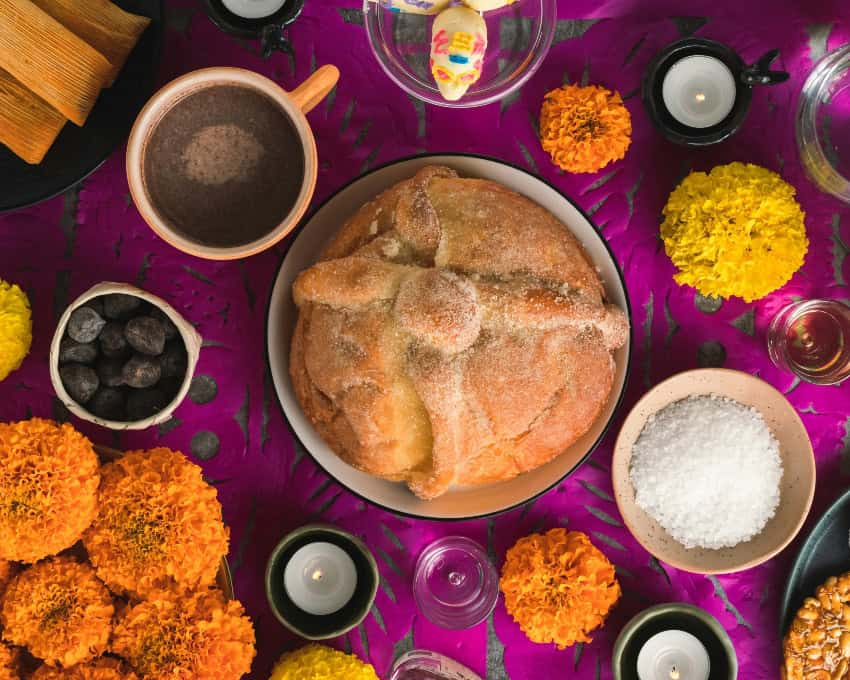
Undoubtedly, our son’s autumnal memories will be completely different than ours: Instead of knocking on doors in a cul-de-sac with a group of neighborhood kids, he’s going to a field of cempasúchiles in a mountainous pueblo to get his photo taken on a horse that is whimsically painted like a calavera. Instead of visiting the pumpkin patch and riding a train through cornstalks and bales of hay, his abuela and bisabuelo are coming over to our house to eat pan de muerto and build a collective family altar with photos of family members that he, or even I, will never meet.
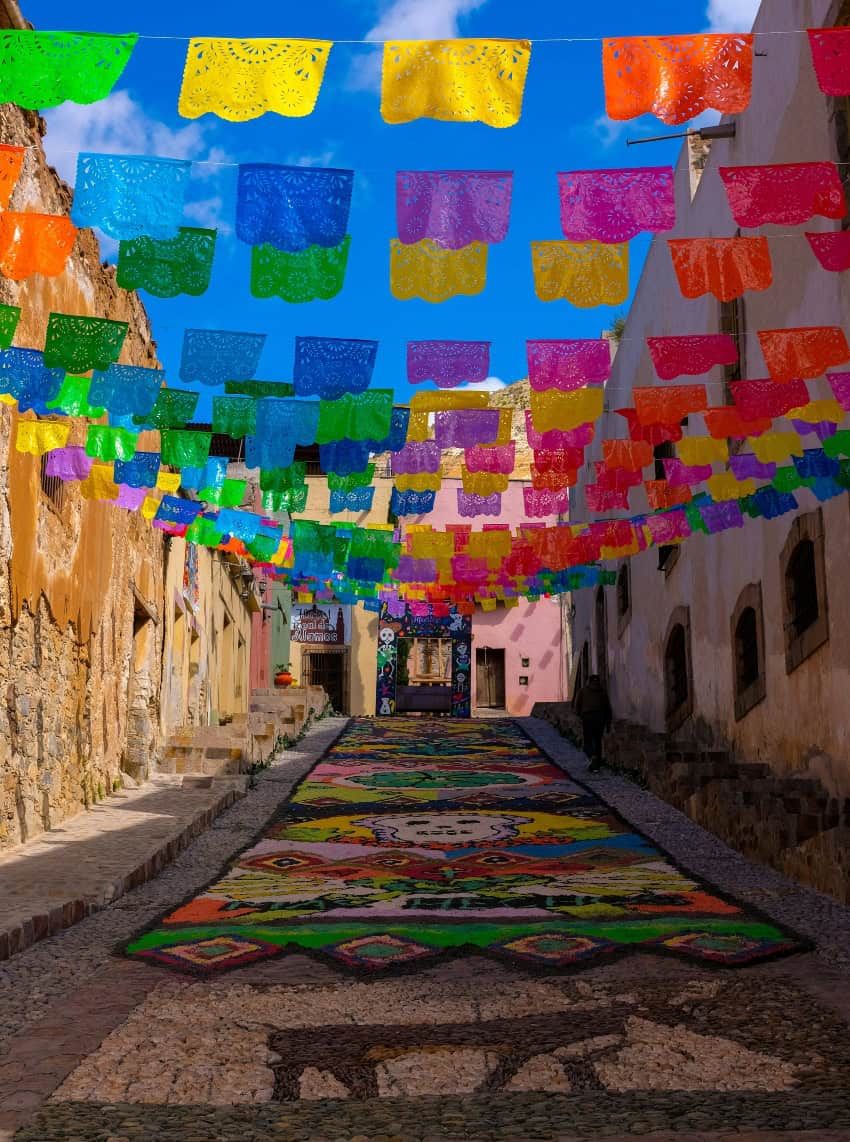
Each has their own joys and core-memory-building functions, and I enjoy them both. I hope he does, too.
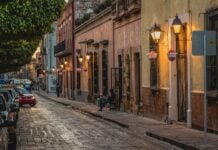
It’s true that our current community doesn’t offer much traditional Halloween vibes, in the Americanized sense. You may see a decorative witch or black cat dangling from a window, here and there. Earlier this week, I walked past a large inflatable ghost on someone’s balcony, but it was awkwardly angled to avoid the mess of wires that complicate our narrow, colonial streets.
It’s just a different atmosphere in these smaller Mexican cities and towns, and the sidewalks don’t really allow for large groups of children to roam around without parents losing their minds over incessant traffic safety.
Trick-or-treating vs. Día de Muertos parades
In 2024, we flew to Mexico City for Halloween and Día de Muertos. It was noticeably different from our experience in Veracruz. A local group of parents organized families online for a neighborhood walk, with designated homes that had registered in advance, so we knew who would be giving out candy.
Similarly, we went to a mercado in Mexico City that weekend for a “calaverita” — a Mexican version of trick-or-treating, where kids dress up and go stall to stall asking for treats.
In those instances, my son, wife and I got to experience some of that old-school Americana by walking around Mexico City with strangers — some, but not all of them, international — and knocking on doors (or wandering shop aisles) together. That version of Halloween offers a communal, neighborly bonding that isn’t always seen during other holidays, which more often than not take place inside homes with close family members, rather than out in public and in the streets. We certainly could use more of it.
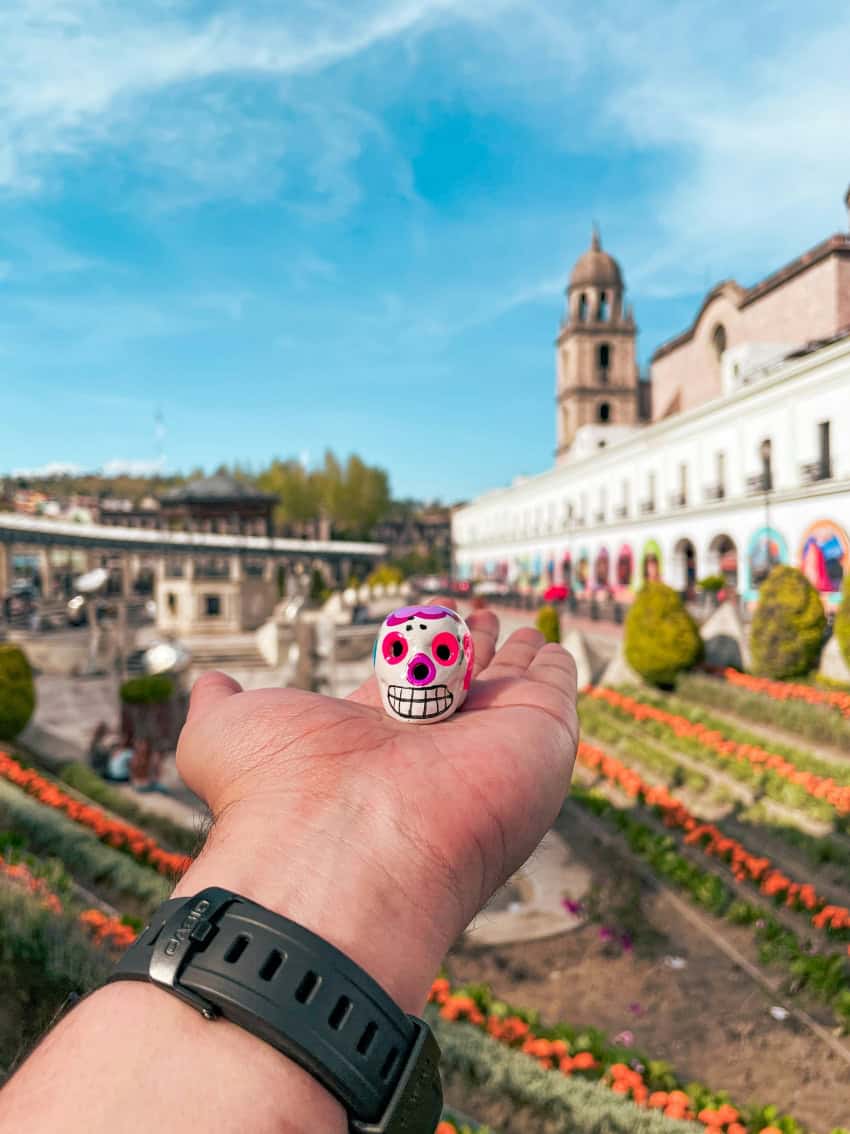
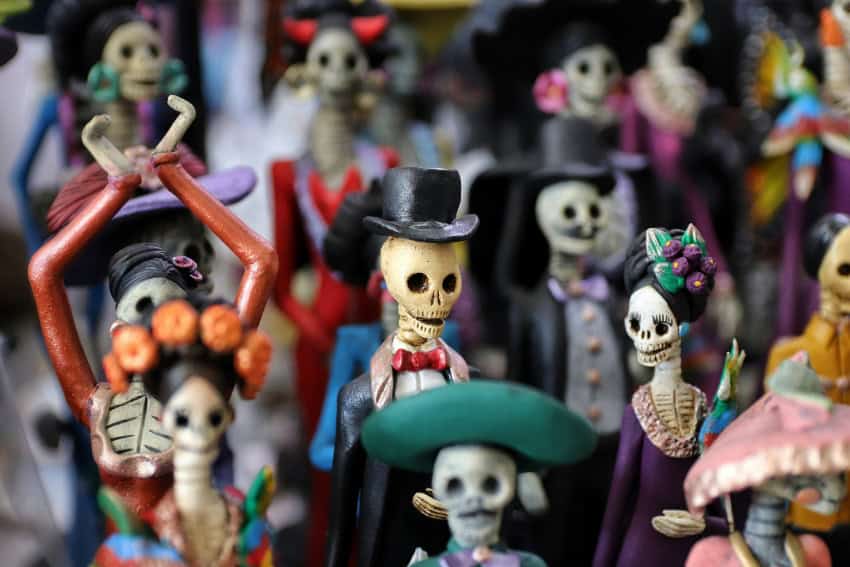
Then, there’s the other side of it all: attending a Día de Muertos parade and being part of a collective throng of spectators, while ceremoniously dressed performers and various forms of alebrijes dance, flutter and chant around you. (It’s worth noting that Día de Muertos parades, like the one in Mexico’s capital, are relatively new traditions in many areas; they weren’t commonplace when I was growing up, but are a part of Día de Muertos’ increasing popularity.)
I’m glad my son will get to be immersed in those cultural experiences in ways my wife and I weren’t for Halloween.
Fusing traditions in an ever-connected world
Having access to those dual experiences is a life hack, really. That’s not to say that Halloween has never existed in Mexico, or that Día de Muertos is nonexistent in California. In each case, the cultural traditions are becoming more fused than ever before, largely thanks to social media, travel access and other global factors.
You no longer have to be in Oaxaca’s Centro to experience Día de Muertos, nor do you have to reside in a U.S. suburb to appreciate Halloween. Depending on where you are, you may not be able to fully replicate the magic of the other — but you learn to salvage whatever aspects you can.
By being in Mexico, we are reminded that we will always have generous access to, and understanding of, both celebratory worlds. That’s ultimately the beauty of being a Mexican-American binational family, no matter the seasonal holiday or time of year.
Alan Chazaro is the author of “These Spaceships Weren’t Built For Us” (Tia Chucha Press, 2026), “Notes from the Eastern Span of the Bay Bridge” (Ghost City Press, 2021), “Piñata Theory” (Black Lawrence Press, 2020), and “This Is Not a Frank Ocean Cover Album” (Black Lawrence Press, 2019). He is a graduate of June Jordan’s Poetry for the People program at UC Berkeley and was selected as a Lawrence Ferlinghetti Poetry Fellow at the University of San Francisco. His work can be found in NPR, The Guardian, SLAM, GQ, L.A. Times, and more. He is currently based in Veracruz.