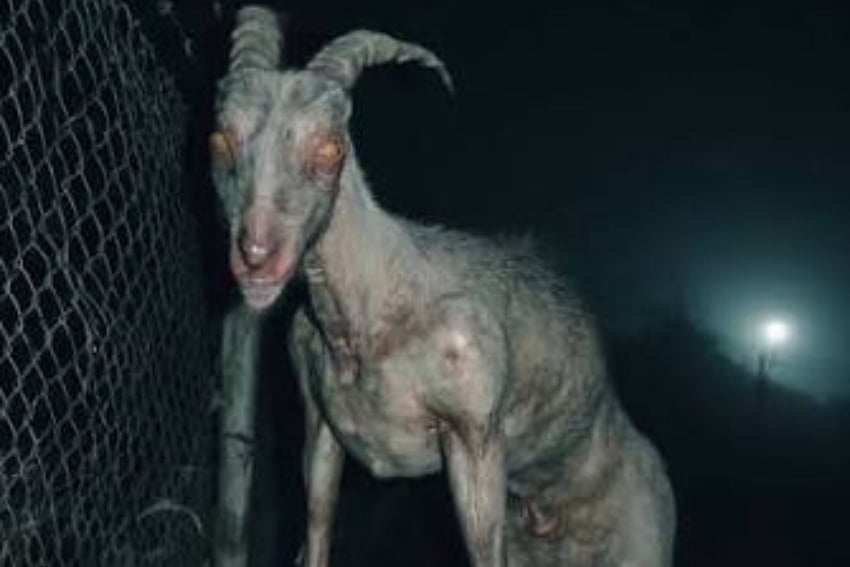
In a country so deeply connected to its pre-Hispanic past, where scratching the earth reveals pyramids dating back millennia, it is only natural that some of those ancient spirits are still glimpsed in the streets and around the corners of houses.
Especially during the second half of the year — when the days grow shorter, colder and darker — it pays to keep your eyes wide open. You wouldn’t want a chaneque to swipe your wallet, or for your birth nahual to appear bearing bad news.
These are just a few of the Mexican monsters that still feature in popular culture and accompany us on our journey through this plane of existence.
Ahuízotl
View this post on Instagram

Also known by the Hispanized name ahuizote, this wolf-like creature terrorized the Mexica people. Resembling a giant wolf with glowing eyes and fierce fangs, it was said to be a “friend of the rain gods.”
Its name, derived from Old Nahuatl, translates to “water-spiny one” or “river spines,” as its grayish fur would bristle upon contact with water. This mythological creature was likely inspired by the water opossum (Chironectes minimus).
The only surviving written account of this creature is attributed to Bernardino de Sahagún, the great chronicler of the Spanish invasion of present-day Mexico. In Book XI of “General History of the Things of New Spain,” he described the creature as having “small, pointed ears, a black and very smooth body, and a long tail with something resembling a human hand at the tip.”
The creepiest spots to visit in Mexico City during spooky season
Aluxes
In Maya mythology, aluxes were small spirits that inhabited the dark recesses of the jungle. They were found at sites considered to be gateways to the underworld, including trees, caves and cenotes.
Archaeological records from southeastern Mexico, Belize and Guatemala suggest that aluxes dressed like ordinary people of the Maya Empire, according to UNAM Global. Indeed, they were depicted as “little people” with angry expressions.
They are believed to be playful and mischievous, frequently stealing items to annoy humans. Even today, in some villages, farmers build aluxes small stone houses known as kahtal alux, and leave offerings of food or tobacco to earn their protection and ensure good harvests.
Axolotl
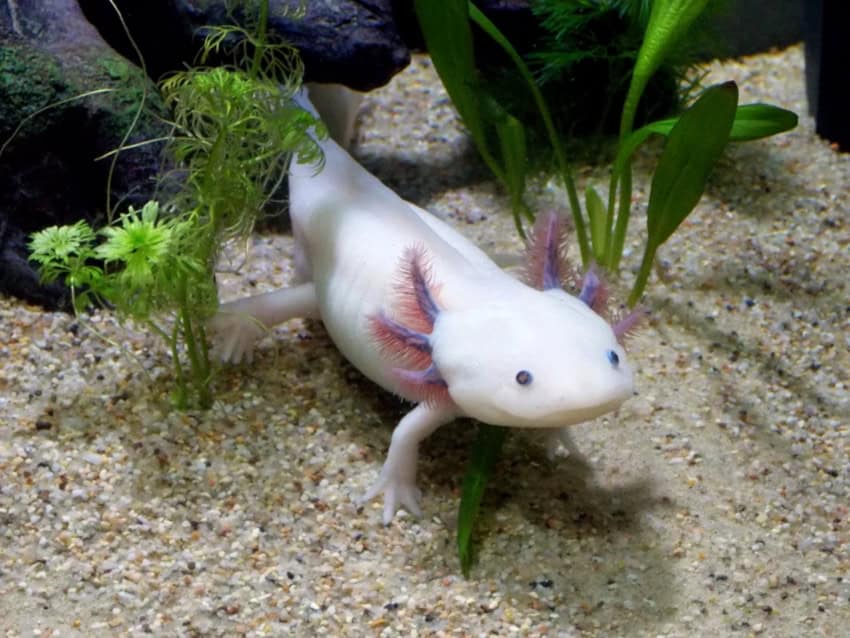
Even though Clara Brugada might want everyone to love axolotls, historically, they have been considered “water monsters.” In fact, that is the translation of the word “axolotl” from ancient Nahuatl.
These creatures from Xochimilco are cousins of the tiger salamander, and because of their head shape, the Mexica found them hideous. Today, however, axolotls are widely considered to be adorable.
Even in ancient Tenochtitlán, the Mexica knew that these aquatic creatures — endemic to the iconic Xochimilco area — could “completely regenerate their limbs after suffering an attack or escaping a predator,” per the Ministry of the Environment.
Despite their friendly appearance and harmless nature, their natural habitat is severely degraded, which jeopardizes their continued survival in the canals of Xochimilco.
Chaneques
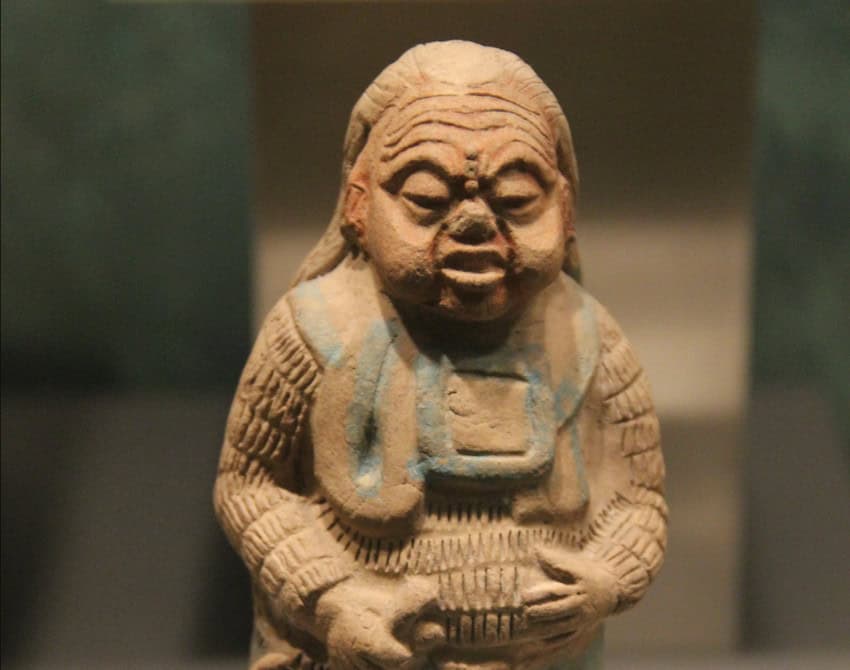
Chaneques are mischievous spirits that, disguised as children, steal the souls of those who bother them. In Mexico City’s traditionally Indigenous neighborhoods, they are still believed to be “invisible” guardians of nature who play pranks on ordinary people: Did you suddenly feel dizzy or lose your car keys? It was likely the chaneques.
In Mexica culture, they were known as ohuican chaneque, a term translating to “those who inhabit dangerous places” or “masters of the house.” Like the aluxes, they are responsible for protecting rivers, mountains and animals. The belief is so widespread across the country that, while it remains popular in parts of Mexico City, it is also found in the southern states of Tabasco and Veracruz.
Nahual

The figure of the nahual is not exclusive to Mexica mythology. On the contrary, it appears in various Mesoamerican civilizations under different names, yet its spiritual function remains the same. The term derives from nahualli, translated from Nahuatl as “hidden” or “disguise,” and refers to a mystical being that shapeshifts to guide human beings toward spiritual growth.
In the Mexica worldview, it was believed that every person was born with an animal spirit responsible for protecting and guiding them through life’s obstacles.
This “Mexican monster” emerged from Mexica mythology with three distinct natures. The first refers to a type of “spirit animal” that guides warriors on their journey of inner discovery, acting as a sort of alter ego. The second is a sorcerer, healer or shaman who “reveals hidden things” and possesses the ability to shapeshift. The third is a hybrid of the previous two. Interested readers can calculate their birth nahual online — for instance, 9 Kan, the fire serpent.
Andrea Fischer contributes to the features desk at Mexico News Daily. She has edited and written for National Geographic en Español and Muy Interesante México, and continues to be an advocate for anything that screams science. Or yoga. Or both.