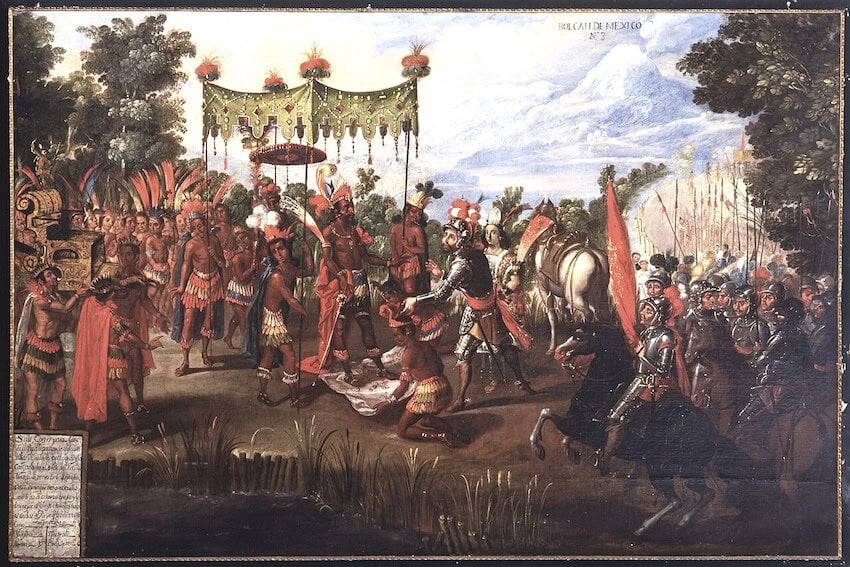
Francisco López de Gómara never set foot in America, nor had he ever encountered Mexica culture. However, as a Spanish humanist historian endorsed by the Catholic Church, he enjoyed writing chronicles and official records about the discoveries his country’s conquerors had made in the New World.
At the height of his career as chronicler of the new territory, around 1552, he proposed an idea that would change the way Indigenous Americans were viewed.
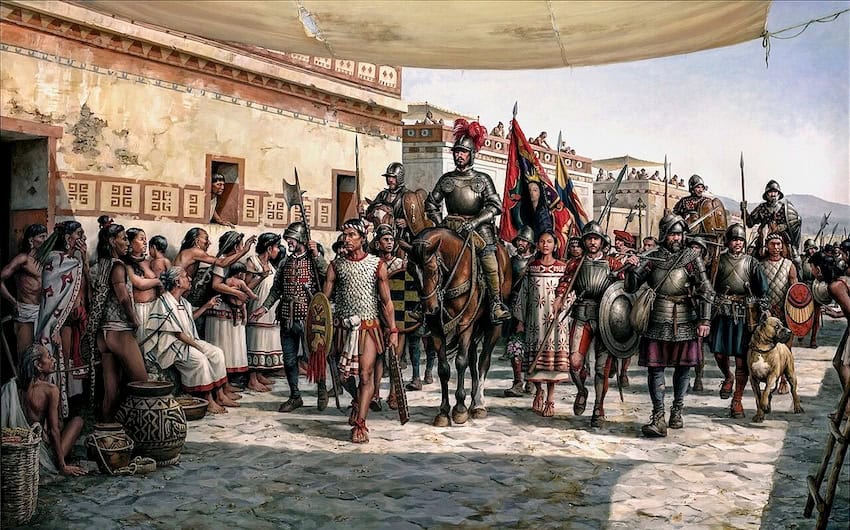
As Hernán Cortés’ secretary, he thought it appropriate to suggest that the Indigenous people in Mexico had allowed European colonization because they considered the Spaniards to be gods, and specifically that Cortés was the return of the god Quetzalcóatl. A historical review of pre-Hispanic records, however, does not corroborate this assumption.
No mention of ‘gods’ in firsthand accounts
During his years as a conquistador, Cortés wrote many letters to the Spanish monarchs. In them, he reported the most significant events in the process of territorial colonization that the Spanish sought to carry out abroad. In none of them, notes historian Camilla Townsend, does he address the idea that the native inhabitants saw the Spaniards as gods.
Yet, López de Gómara’s “white gods” narrative was so convincing and powerful that many colonizers from Europe adopted it as a banner that delegitimized the existing ways of life in the Americas. Despite the millennia of scientific, cultural and religious development already possessed by the native inhabitants, the force of arms, foreign diseases and hate speech against the pre-Hispanic world were powerful Spanish tools that diminished their power. The idea that the Mexica believed the Spaniards were “white gods” was so effective that it was eventually used to justify the military campaigns waged throughout the Americas to conquer Indigenous peoples, since the myth characterized them as naive and naturally submissive to European conquerors of supposedly superior intellect.
Not only that, it was valid in the eyes of the Spanish invaders to question whether the beings they encountered in the New World were truly human, and therefore, whether they deserved God’s mercy.
Cortés was never Quetzalcóatl
Eight ominous omens are said to have preceded Cortés’ arrival. All of these manifestations appeared to Moctezuma in the months leading up to the arrival of the Spanish in Tenochtitlán. None of them were related to the ancient Mexica myth that the feathered serpent god Quetzalcóatl would one day walk among humankind again.

In a 2002 article in the INAH journal, Arqueología Mexicana, historian Miguel de León Portilla argued that the belief in “the return of events and people seems to have been a recurring element in Mesoamerican thought.”
Although the religious ministers of Tenochtitlán indeed preached the myth of Quetzalcóatl’s return, there is no evidence linking this mythological and cultural framework in the minds of the Indigenous peoples of Mexico to the Spaniards’ arrival.
Why were the Spanish able to successfully conquer the Mexica?
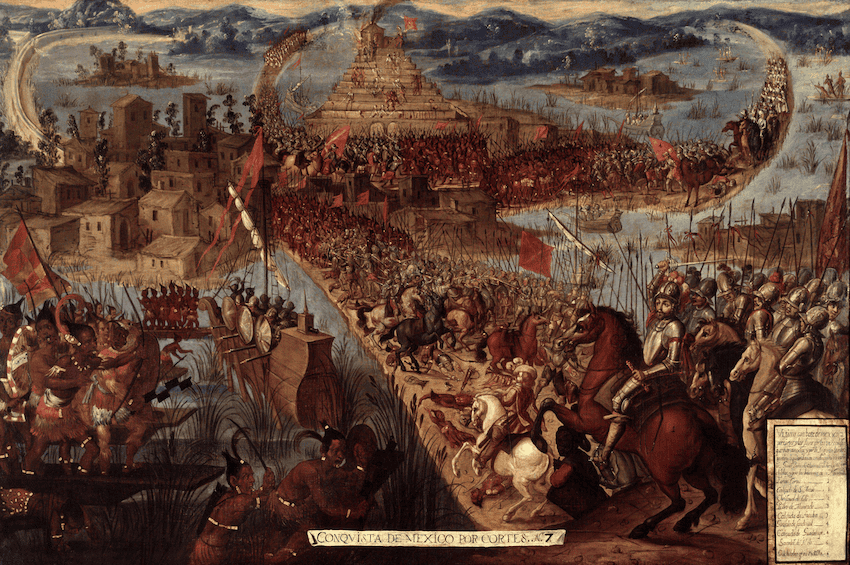
While it is true that the Spanish possessed superior weaponry to the Mexica, there is no primary evidence demonstrating that this made the Spanish appear as gods in their eyes. On the contrary, it is well known that Cortés managed to subdue Tenochtitlán with the help of the Tlaxcalans, who had a much larger army than the Spaniards. What’s more, the Tlaxcalans had an in-depth knowledge of the local terrain. Otherwise, the European expansionist campaigns in America would likely have been unsuccessful. Sheer numbers and technology were the decisive factors, not misguided Indigenous beliefs.
Although historical records from the period support this more practical version of events, even in Mexico, the belief that the Mexica thought the Spaniards were gods still lingers.
Centuries after the conquest, this persistent assumption seems rather absurd and is similar to the belief that America was actually discovered when people had been there for millennia.
Andrea Fischer contributes to the features desk at Mexico News Daily. She has edited and written for National Geographic en Español and Muy Interesante México, and continues to be an advocate for anything that screams science. Or yoga. Or both.