
For English speakers, Spanish can feel deceptively familiar. So many words are similar that it’s tempting to trust them. The danger isn’t in the words you don’t know, but in the ones that you think you do.
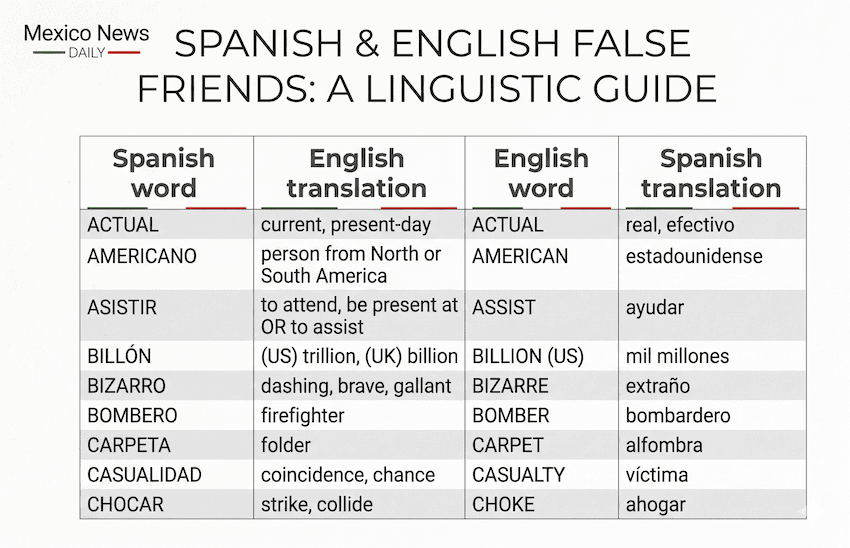
In linguistics, words that look and behave similarly across languages are called cognates; they share both form and meaning. On the other hand, false cognates, also known as false friends, look similar but behave differently. These are words that have drifted apart in meaning through a process known as semantic shift, the way languages evolve in response to their own geographical and historical contexts.
Shared origins, different journeys

False friends offer a fascinating window into linguistic history. For those of us inclined to nerd out, they read like an archaeological dig through etymology, revealing how common roots evolved in different directions.
Spanish grew directly out of Latin, while English began as a Germanic language and later absorbed large amounts of Latin-based vocabulary through French, religion, law and science. The result is a shared pool of familiar-looking words, some of which shifted gently in meaning, while others wandered off entirely.
False friends can get you in trouble because the listener may still understand you, just not in the way you intended. The resemblance gives you confidence, until it sabotages your intentions. Let’s look at a few of these traitors in action.
A toast to accidental motherhood
Imagine you’re at a social gathering and spill your drink. Wanting to recover gracefully, you smile and announce, “Estoy embarazada.” Heads turn. Someone places a hand on your shoulder in far more solidarity than seems necessary. An awkward way to learn that embarazada doesn’t mean embarrassed, it means pregnant.
Drama by pretense
Pretender is frequently misused by learners because it looks so familiar. In Spanish, pretender means to intend or to plan to do something. It has nothing to do with acting fake or putting on a show; that sense of pretending would be fingir. However, you could certainly say, “No pretendas fingir que me amas,” which means “don’t intend to pretend that you love me,” if you’re ready to raise the drama to telenovela levels.

Authority lost in translation
You’re in the middle of a heated debate and jump in with a confident “Actualmente,” fully expecting it to carry the force of a sharp actually. What you’ve actually said, though, is currently. Your firm intervention suddenly sounds less like a fact-check and more like a calendar update.
Better than trusting your memory
You might ask someone to “recordar” a meeting, thinking you’re requesting a recording you can replay later. In Spanish, recordar doesn’t mean to record audio or video; it means to remember. If you want the meeting captured and saved, you’ll need grabar.
Don’t commit when you want to compromise
You might think you’re being polite by saying you are open to a compromiso, imagining you can all reach a fair agreement. In Spanish, however, compromiso means a commitment, and very often, an appointment. So instead of signaling flexibility, you just announced that you have somewhere else to be. Not exactly the spirit of a good conversation.
Thanks for tolerating
You might warmly tell someone that you soportar their decision. In Spanish, however, soportar doesn’t mean to support or encourage. It means to tolerate or put up with, often with effort. So, instead of sounding loyal and uplifting, you may have just implied that you’re bravely enduring their choice.
You don’t need an epiphany to carry out a task
Realizar is another word that often tricks English speakers. It looks like the English word realize, so it’s tempting to use it when you’ve had an insight. But in Spanish, realizar means to carry out or perform a task. For sudden clarity, you’ll want darse cuenta. Realizar is about execution, not enlightenment.
Not level-headed, just tender-hearted
Sensible is another word that feels like a safe compliment, until it isn’t. In English, calling someone sensible suggests they’re practical, level-headed and calm. In Spanish, sensible means sensitive, emotionally fragile. So, if you describe a colleague as “muy sensible,” you are not praising their sound judgment but rather implying that you’ve had to keep them company more than once while they cried.
Not that kind of introduction
And then there’s a false friend that deserves a big warning label. If you’re one of the many who says, “Voy a introducir a mis amigos,” this is your cue to pause. Introducir is not used for introducing people; that would be presentar. Introducir means to insert. The problem is that it sounds fine until the mental image lands.
The bilingual brain
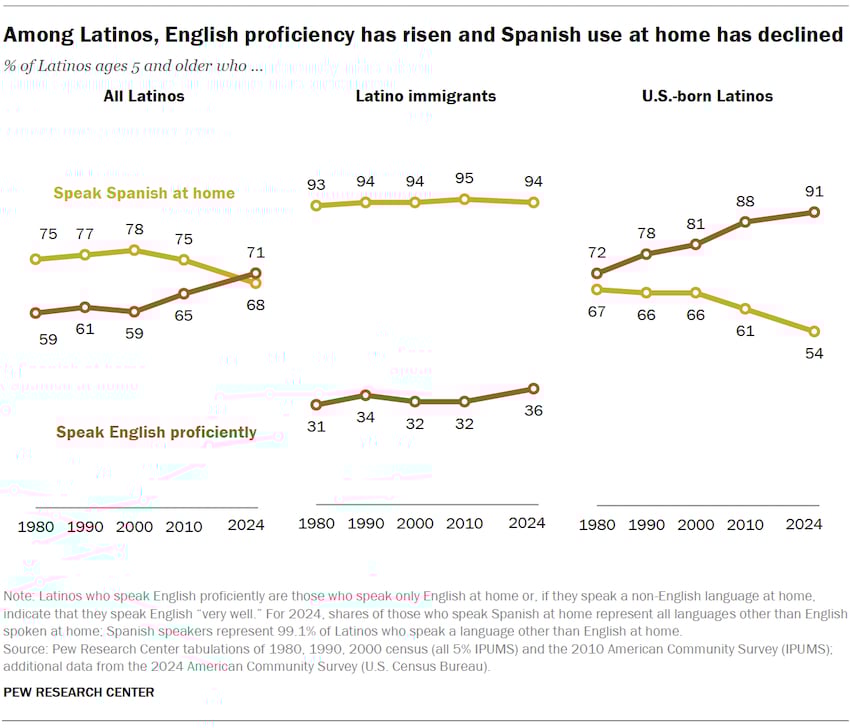
Juggling two languages means constantly choosing one while suppressing the other, a mental training that strengthens attention and task-switching. The benefits show up throughout life: bilingual babies adapt more quickly to their environment, and bilingual seniors often experience slower cognitive decline. In other words, learning another language gives your brain a healthy workout.
The payoff isn’t only neurological. Knowing different languages expands your reality. When a familiar word reveals a different meaning, it challenges your assumptions. You begin to sense that language is not just a tool for describing the world, but a lens through which the world is interpreted. As that lens widens, so does your perspective. What once felt universal becomes circumstantial, and you become more flexible. Occasional stumbles aren’t a failure, but evidence that you’re growing toward a more compassionate understanding of your place in the world.
Sandra is a Mexican writer and translator based in San Miguel de Allende who specializes in mental health and humanitarian aid. She believes in the power of language to foster compassion and understanding across cultures. She can be reached at: sandragancz@gmail.com.