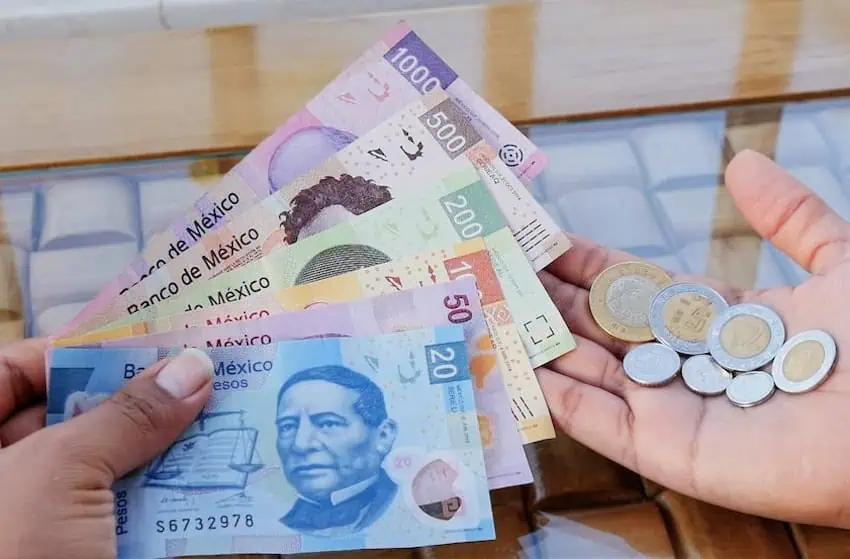
“No tengo baro, ¿me pichas una chela?” If you’re scratching your head, don’t worry! We’ve got you covered. Mastering the art of discussing money is crucial no matter where you are or which language you’re speaking. Therefore, it’s essential to familiarize yourself with the local lingo. Mexican words for money can sometimes be a little confusing!
Slang terms can vary widely, so being prepared will help you navigate conversations with ease. In this article, we will dive into some Mexican slang around money.

Baro
Starting off with “baro,” this term is a popular way to refer to money in Mexico. Originating from the Spanish word “barro” (clay), which was once used to make coins, “baro” has evolved into a casual term for cash.
Example 1:
- “No voy a salir hoy, no tengo baro.” (“I’m not going out today, I’m out of money.”)
Example 2:
- “Traes baro que me prestes?” (“Got some bucks to spare?”)
Pichar
Next, “pichar” is a term for paying for someone else’s expenses, like buying a friend a drink or covering the bill at a restaurant. It’s derived from the English term “pitch in,” meaning to contribute or throw in.
Example 1:

- “¿Quién va a pichar las pizzas?” (“Who’s going to pay for the pizzas?”)
Example 2:
- “Hoy yo picho el cine, la próxima vez te toca a ti.” (“Today I’ll pay for the movies, next time it’s your turn.”)
View this post on Instagram
Cuentas Claras, Amistades Largas
Finally, the phrase “Cuentas claras, amistades largas” translates to “Clear accounts, long friendships”, it can also be the equivalent to the phrase “good friends make good neighbors”. This saying emphasizes the importance of settling debts and being transparent with money matters to maintain healthy and long-lasting relationships.
Example 1:
- “Ten te debía 100 pesos. Cuentas claras, amistades largas.” (“Here, I owed you 100 pesos. Clear accounts, long friendships.”)
Example 2:
- “Siempre pago lo que debo, ya sabes: cuentas claras, amistades largas.” (“I always pay what I owe, you know: clear accounts, long friendships.”)
Bringing It All Together
So, next time you’re navigating social situations in Mexico, remember these handy phrases. Whether you’re discussing money, offering to pay for a friend, or stressing the importance of honesty in financial matters, these expressions will not only enhance your language skills but also help you connect more deeply with Mexican culture.
Although you will hear these words often, bear in mind that saying baro to refer to money and the verb pichar to pay for someone is a very informal way to express yourself. However, these informalities are part of getting to know the true essence of a language.
Paulina Gerez is a translator-interpreter, content creator, and founder of Crack The Code, a series of online courses focused on languages. Through her social media, she helps people see learning a language from another perspective through her fun experiences. Instagram: paulinagerezm / Tiktok: paugerez3 / YT: paulina gerez