When I heard the news last week that the Public Education Ministry (SEP) had decided that Mexico’s school calendar would be shortened by a month and a half — seemingly out of nowhere — I was already grouchy.
“A month and a half early? That’s got to be a prank,” I typed in a group chat I have with a few parents I get along especially well with. “Anyway, about this Mother’s Day event …”

The real source of my grouchiness at the time was the kids’ proposal — apparently accepted without question by the teacher — that we be invited to school to play a soccer game with our children. Competitive physical exercise as a Mother’s Day gift? I kid you not.
I was incredulous and ready to cause a stink about it.
A puzzling and preposterous idea
Alas, that soon faded into the background as I realized that we had more pressing issues to discuss — mainly, what we would do with our children for an extra month and a half this summer? And what would become of the lessons they hadn’t yet completed, or the exams? This particular generation of sixth graders had missed their kindergarten graduation because of COVID-19. Now, thanks to officials deciding to shorten the Mexico school calendar, it looked like they’d miss their elementary school graduation as well.
The first thing I watched was Education Minister Mario Delgado’s announcement on a Facebook post in which he explained that the school year was going to end on June 5 instead of July 15, as previously planned.
“Because of various circumstances and petitions, we’ve made the decision to move up the end of the school year,” he said in a recorded video.

Hmm. Circumstances and petitions? Like, from his kids?
The man behind the announcement
So who was this guy who’d decided “with other state education ministers” (and who are they, for that matter?) that the World Cup and hot weather in some parts of Mexico were good reasons to cut the school year short for the entire country with less than a month’s notice?
From what I could glean from a cursory internet search, Delgado is essentially a “party man” with Morena. He’s an economist who’s held various positions, including as a senator and as a deputy in the Mexican Congress. He also served as head of the Morena party and was the Mexico City education minister before that. He resigned as the Morena party boss in 2024 to join President Sheinbaum’s cabinet as her education minister.
Most glaring to me was the fact that he has not, as far as I can tell, ever worked in any capacity at a school. He hasn’t been a teacher or a principal. His degrees have nothing to do with education. Also, revealingly, Delgado was at the center of a controversy regarding some lavish spending habits by Morena officials — members of a political party whose central identity is built around austerity.
Now, my belief that all politicians should take a vow of poverty, priest-style, is another article entirely. They have not, but it’s still not a great look.
Does having kids qualify you to be education minister?
All this begs the question of why he was chosen as education minister. Surely, having once been a student and having kids who are students isn’t enough alone to qualify you to lead an educational institution. But it did seem to explain why he’d proudly announce such a preposterous idea.
Even more preposterous was his apparent surprise that anyone might have a problem with the new plan. I mean, how out of touch do you have to be with regular people to not realize that they might be upset about this? Did he assume that most Mexicans would be taking their children to World Cup games?
Some dumb reasons given for the calendar change
As both a parent with a child currently in the Mexican schools and someone who was a teacher here for years, I feel particularly qualified to comment on this, so let’s look at some of the points that he — or they, if I’m being fair, as the state secretaries apparently agreed unanimously on this calendar change — considered:
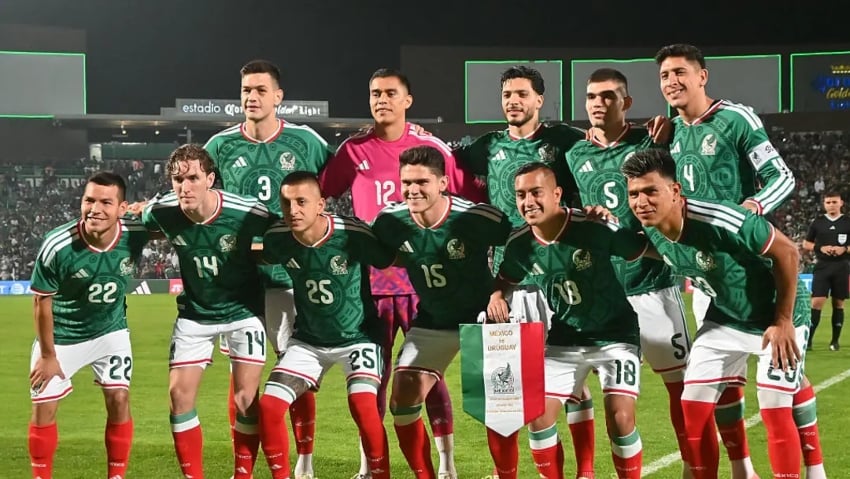
- Some kids and their parents might want to watch or attend the World Cup 2026 games instead of going to school.
- Some students might be affected logistically by the games.
- In some parts of Mexico, it’s going to be hot during June, especially if you live in the desert. Maybe it will be too hot to go to school.
- According to Delgado, kids don’t really do anything in their classrooms after June 15 anyway.
- Parents unfairly treat the school as daycare (how dare they have jobs!), and teachers should get to rest instead of being required to babysit.
Some things they failed to consider
- Shortening the school year in this way is illegal. Save for extraordinary circumstances — say, a worldwide pandemic — national law says there must be at least 180 days of classes. The exact number can vary between 180 and 200; this year’s original calendar was set for — and is once again — 185 days long.
- Delgado hadn’t apparently run the idea by the president. On the day after his announcement, at her daily press conference, President Claudia Sheinbaum seemed to be put on the defensive. She responded by saying that the decision was not yet “set in stone.”
- Childcare. In this economy, as in many economies, it is common for both parents to work. It is common for both parents to need to work, in fact. School is, indeed — at least in part — a very necessary daycare.
Gender assumptions are still alive and well
In a country that seems to be trying hard, at least at an institutional level, to find gender parity, it saddens me that basic gendered assumptions are so alive and well in Mexico. Aunts, grandmas, moms — there’s always assumed to be some woman in the family just sitting around, waiting to swoop in to care for children at a moment’s notice. When there’s not, that’s taken to be a private family problem, not an institutional one.
This is probably the point that made me the most upset. How telling that the decision-makers who wanted to shorten the Mexico school calendar apparently thought releasing kids a month early wasn’t a big deal at all! Morena may be a party of the poor, but its politicians are quite privileged. They would not have any trouble securing childcare for their own kids: They could afford camps, tutors and nannies.
The little people? Meh, they’d figure it out — just flatter them with how great they are: “Something something, strength of the Mexican family, something something.”
Really? Nothing happens during the last month of school?
As someone who was a high school teacher here in Mexico for five years, I can personally tell you that this idea is not true. Teachers have a curriculum. We plan our curricula and space them out in the time we have. The only time I didn’t “do much” academically with a class was the last couple of weeks when I had seniors about to graduate. But we still didn’t just sit around.
No self-respecting teacher is just going to sit around with their students doing nothing for a month, and the assumption that this is what happens speaks to the very little faith institutional leaders have in those charged with the job of educating the nation’s children.
Also, most families and many businesses make long-term plans based on the SEP calendar: When can summer camp programs be offered? When can families plan vacations? When should you set your ice cream cart outside of schools, and when should you make other plans? When do we need to talk to a boss or two to see if we can get reduced hours or an adjusted schedule in advance? All these “little people” logistics without the resources required for sudden change were apparently forgotten.
The plan is off again
Happily, the plan for the new calendar was quickly scrapped. What unnecessary drama! In his remarks regarding the backtrack, Delgado stated, “We know how to correct course because we know how to listen. The proposal of May 7 served its purpose of sparking a necessary debate about the flexibility of the school calendar.”
Uh-huh. Sure, man.
Once it was over, our busy parent chat for my kid’s classroom received a message: On June 5, the kids would be giving presentations on historical mathematical figures, and did we want to dress them up in Greek togas?

“Sheesh,” joked one of the moms, as exhausted as the rest of us by endless school-related requests. “Maybe the school year should have ended on June 5.”
Mother’s and Teacher’s Day gifts
As for Mother’s Day? In the end, I didn’t go. My kid was sick with a bad fever, which is in line with most Mother’s Days for me — there’s always something, and those somethings are not usually cards or flowers.
I had actually been planning to go to our “soccer-game gift,” but the gods had other plans for me that did not involve me giving the teacher the stink eye for not having told her students, “Now, children, how about we think about something your moms might actually enjoy?”
But later, when the group leader asked for suggestions for a Teacher’s Day gift, I was ready.
“I’ve got it! We let her play soccer with our kids!”
Sarah DeVries is a writer and translator based in Xalapa, Veracruz. She can be reached through her website, sarahedevries.substack.com.