
If you’ve spent time in Mexico, you’ve likely felt a familiar mix of fascination, frustration, and affection for a country that’s magnetic and vividly alive. For Americans who know Mexico primarily through headlines, however, it can appear almost unrecognisable: a nation portrayed as unstable and chiefly responsible for a host of U.S. problems.
That portrayal closely mirrors the rhetoric of U.S. President Donald Trump. Across speeches, social media posts, and televised interviews, Mexico is often cast as a country willfully flooding the United States with drugs and failing to control migration. In a Fox News interview on Saturday, January 3, following recent events in Venezuela, Trump even hinted at the possibility of conflict much closer to home.
“Your vice president, JD Vance, said that the message is pretty clear: that drug trafficking must stop. So was this operation a message that you’re sending to Mexico, to Claudia Sheinbaum, the president there?” Fox’s Griff Jenkins asked.
“Well, it wasn’t meant to be, we’re very friendly with her, she’s a good woman,” Trump began. “But the cartels are running Mexico. She’s not running Mexico. We could be politically correct and be nice and say, ‘Oh, yes, she is.’ No, no. She’s very, you know, she’s very frightened of the cartels. They’re running Mexico. And I’ve asked her numerous times, ‘Would you like us to take out the cartels?’ Something is gonna have to be done with Mexico.”
Trump’s language frames Mexico less as a neighbour or partner and more as a looming threat. For those who’ve never travelled south of the border, this one-dimensional depiction can easily become the dominant lens through which the country is viewed.
The reality, however, is far more intricate.
Misrepresented blame
One of Trump’s most frequent claims is that Mexico is deliberately flooding the United States with fentanyl, leading to hundreds of thousands of deaths. While the CDC confirms the opioid crisis has indeed resulted in more than 100,000 overdose fatalities annually in the U.S., attributing this tragedy solely to Mexico oversimplifies a deeply complex issue.

Fentanyl does cross into the U.S. from Mexico, but through criminal networks, not as a matter of government policy or national strategy. Drugs are most often smuggled through legal ports of entry, frequently by U.S. citizens, using increasingly sophisticated methods. Mexican authorities actively work to disrupt these networks, often at considerable risk and cost.

Trump’s framing isn’t only misleading, it shifts responsibility away from U.S. demand, domestic trafficking networks, and the public-health dimensions of addiction. Drug trafficking is a shared challenge, and rhetoric that ignores this reality strains cooperation on both sides of the border.
The reality of enforcement
Trump has argued that Mexico does little to control migration and that declines in border crossings are solely the result of his policies. This narrative omits key facts.
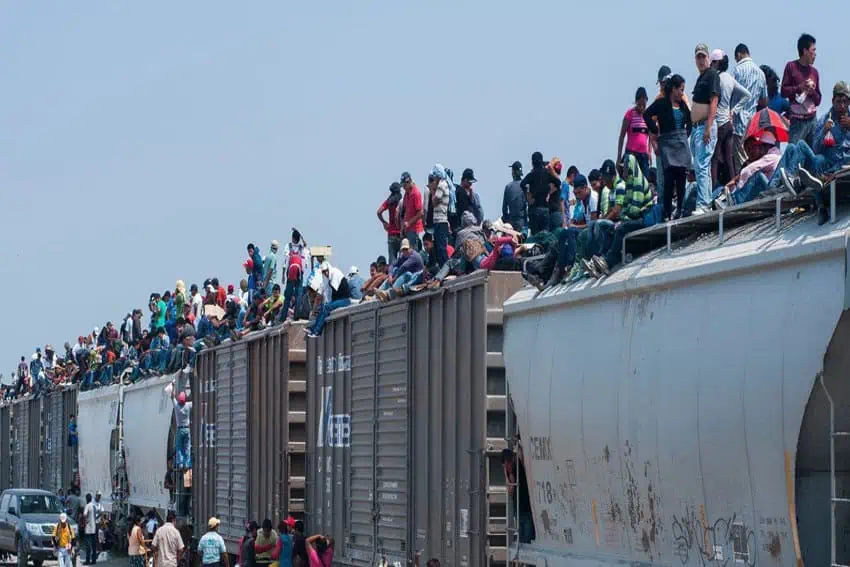
Mexico enforces its immigration laws rigorously, often under extraordinary strain. Data from the Migration Policy Institute documents checkpoints, detention centres, deportations, and patrols along Mexico’s northern border, many operating with limited resources and constant scrutiny.
Reducing this reality to slogans about walls and tariffs overlooks the complexity on the ground. Mexico isn’t passively allowing migration, it’s managing a regional humanitarian crisis in real time, while absorbing pressures that never reach U.S. headlines. This effort, while imperfect, reflects the work of countless officials and citizens navigating difficult circumstances.
Exaggerating the threat

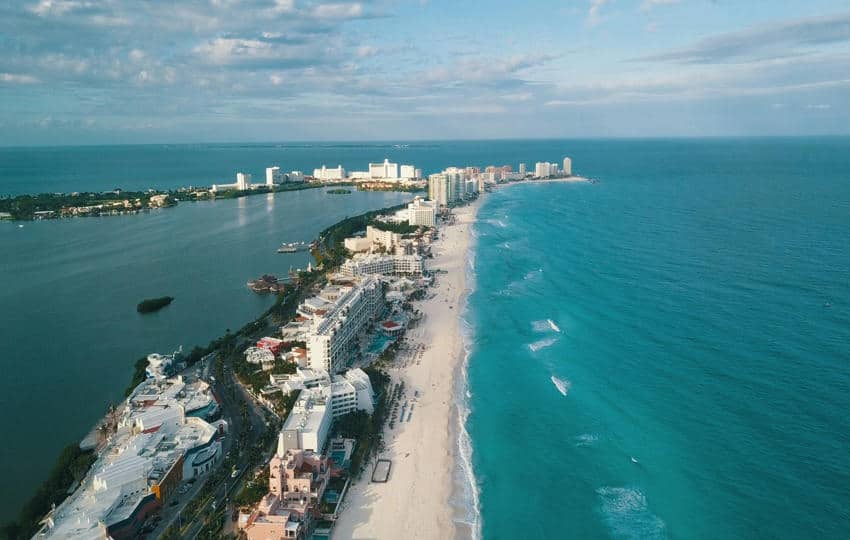
Trump often describes Mexico as a cartel-run state where danger is omnipresent. While violence certainly exists, it’s uneven and highly localized. Data from Mexico’s National Institute of Statistics and Geography shows that large areas of the country, including Mérida, Querétaro, Oaxaca, and most neighbourhoods of Mexico City, remain notably safe.
In these places, daily life looks much as it does elsewhere. People walk through parks, shop in markets, and sit in cafés without the constant fear implied by Trump’s portrayal.
Distorted narrative
Trump has repeatedly claimed that Mexico doesn’t cooperate enough with the U.S. in terms of extraditions. This assertion is demonstrably false and is supported by U.S. Department of Justice data that highlights Mexico’s long history of extraditing criminals to the U.S., often under significant political pressure and real danger to the officials involved.
Cooperation between the two countries extends well beyond law enforcement. Extraditions involve complex legal and diplomatic considerations and mischaracterising this history undermines trust while fueling unnecessary suspicion.
An oversimplification
Throughout 2025, Trump maintained that walls and tariffs could single-handedly resolve border issues. In reality, migration and trade are shaped by deep-rooted forces including inequality, violence, labour demand, and global supply chains. Treating these challenges as problems with simple, mechanical solutions obscures their true nature.
Trade deficits, which Trump frequently cites as evidence that Mexico is exploiting the U.S., are similarly complex. They reflect consumer behaviour and market dynamics, not wrongdoing. Tariffs, moreover, are paid by U.S. importers, costs that ultimately land on American businesses and consumers, not on Mexico.
Inflated numbers
Trump routinely inflates figures related to illegal crossings, drug deaths, and cartel activity. These exaggerations fuel anxiety and suspicion among audiences watching from afar. For those of us living in Mexico, they more often provoke frustration and disbelief.
Day to day Mexico is vibrant, functional, and resilient. The lesson isn’t to dismiss data, but to approach dramatic claims with scepticism and to balance statistics with lived experience.
Residents here often navigate between two competing narratives: the Mexico we know, and the Mexico portrayed in political theatre. That distinction shapes how we live, where we settle, and how we explain our lives to friends and family back home. It reminds us that Mexico isn’t a monolith defined by danger, but a country of nuance, contradiction, and endurance.
Beyond fear driven narratives
Trump’s narrative about Mexico reflects a broader pattern of exaggeration and blame-shifting. For those relocating to or already living in Mexico, the takeaway is simple: the country is richer, more vibrant, and more complex than any Trump headline or speech suggests. Bureaucracy can be frustrating, crime exists, and governance can feel bewildering at times, but daily life goes on. Families gather, businesses grow, markets buzz, and communities support one another.
Rhetoric has consequences. Words spoken from a political stage shape perceptions, influence policy, and colour everyday interactions. Statements like “Something is gonna have to happen to Mexico” carry weight well beyond the moment they’re uttered.
Charlotte Smith is a writer and journalist based in Mexico. Her work focuses on travel, politics, and community.