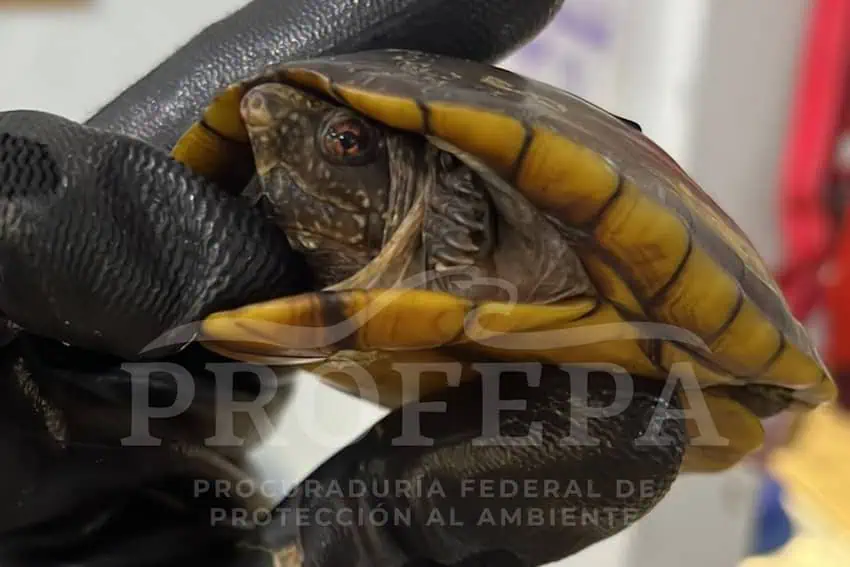
Officials from the Federal Environmental Protection Agency (Profepa) conducted a seizure of 200 turtles at Mexico City International Airport (AICM) after their export paperwork was found to be incorrect.
The passenger was traveling with 193 live specimens of broken-breasted turtle (Kinosternon acutum), one dead, and six live specimens of broken-chest scorpion turtle (Kinosternon scorpioides). They were all traveling under documentation that corresponded to the white-lipped broken-breasted turtle (Kinosternon leucostomum).
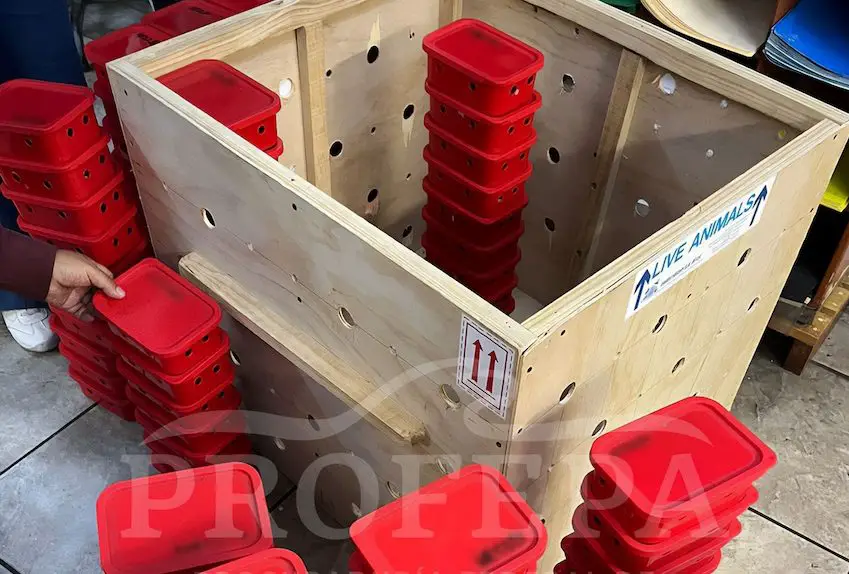
In a press release, Profepa said it will send the specimens to a specialist wildlife unit operated by the Ministry of Environment and Natural Resources (Semarnat).
The illegal pet market is one of the main factors contributing to the extinction of species in their natural habitat.
In Mexico City metro area alone, Profepa said, between 150 and 200 exotic animals are seized every year. Mexico City Profepa chief Lucio García Gil told newspaper La Jornada that the most common species seized in the capital include exotic birds such as macaws or parrots, reptiles, primates and big cats. These are owned by wealthy families, merchants and even drug lords.
One such example was a monkey named “Botas,” a who belonged to notorious cartel boss Joaquín “El Chapo” Guzmán.
Mexican law permits the ownership of exotic wildlife provided they are acquired from authorized firms and proper care is provided

In Mexico, illegal possession and trafficking of turtles can result in up to nine years in prison and fines ranging between 74,400 pesos to 744,000 pesos (US $3,981 to $39,810).
Mexico News Daily