State and municipal governments in Veracruz have been accused of embezzling more than 33 billion pesos (US $1.8 billion) between 2007 and 2017.
During the 10-year period, the Veracruz Auditor’s Office (Orfis) filed 158 criminal complaints against mayors and state and municipal officials due to financial irregularities it detected in public accounts.
Successive Institutional Revolutionary Party (PRI) administrations, led by Fidel Herrera Beltrán and later Javier Duarte governed Veracruz for almost the entire period to which the complaints refer.
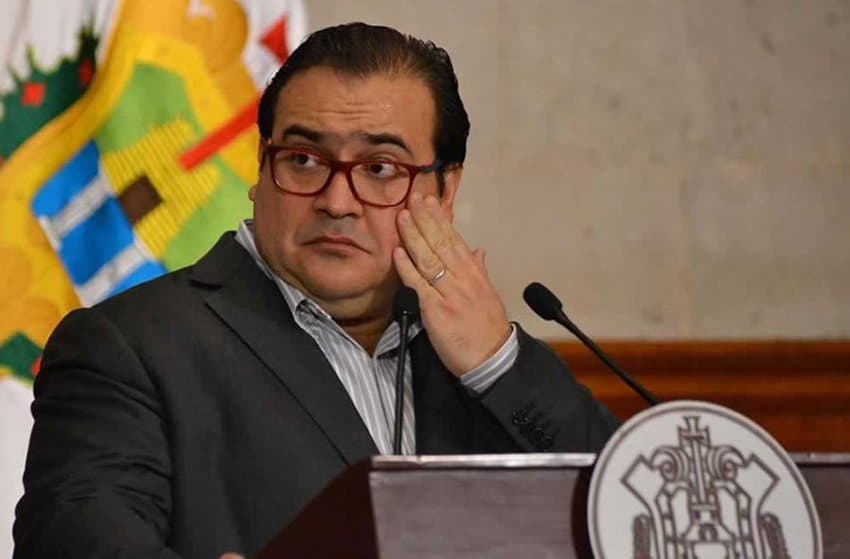
Duarte was sentenced last month to nine years in prison for money laundering and criminal association while his predecessor has also been accused of corruption.
State government officials are accused of embezzling around 97% of the 33 billion missing pesos but a higher percentage of the criminal complaints — 100 of 158 — are against their municipal counterparts.
Almost 93% of the missing funds were detected in audits of public accounts for 2015 and 2016, the final two years of Duarte’s six-year term.
While the PRI leads the way in terms of the number of allegations against its officials, no political party that held power in Veracruz at a municipal level during the most recent three-year term is untainted by the claims of corruption.

Mayors of 153 of 212 municipalities in the state are accused of illegally diverting resources in 2017 alone: 71 represented the PRI; 29 held office for the National Action Party; and 22 for the Democratic Revolution Party.
The others belonged to four other, smaller parties.
The municipal administrations, which were in office between 2014 and 2017, are alleged to have embezzled more than 1.1 billion pesos (US $58.5 million) of public money last year.
According to Orfis data, last year’s alleged municipal embezzlement is the highest it has ever recorded.
The 1.1-billion figure is five times greater than the entire budget the federal Secretariat of Public Administration (SFP) has this year to crack down on corruption.
The funds are believed to have been diverted via overpayments to contractors for public works, through other payments for which no records exist or by simply not paying suppliers and other government creditors and taking the money owed.
With irregularities totaling more than 142 million pesos, the municipal government of Coatzacoalcos, led by PRI mayor Joaquín Caballero Rosiñol, is accused of the largest diversion of resources last year followed by the administrations in Acayucan and San Andrés Tuxtla, governed until 2017 by an Alternativa Veracruzana and PRI mayor respectively.
However, Orfis has not yet filed any criminal complaints against municipal officials for last year’s irregularities. Former mayors and ex-officials accused of diverting the resources must be given the opportunity to either provide documentation that justifies the use of the money or to return it.
In previous years, officials have been able to provide paperwork that resulted in Orfis reducing the amounts of the irregularities it initially detected.
In 2014, the figure came down from 116 million to zero and therefore no criminal complaints were filed.
Source: Milenio (sp)