A raid in the Oaxaca municipality of Santa María Atzompa rescued 61 people on the weekend — including 56 youngsters — from forced labor and abuse.
Earlier complaints were dispelled when the captors claimed they all belonged to the same family, but the state Attorney General’s office continued to investigate.
Saturday’s raid found that rather than being one happy family there were 61 people being held as forced laborers: seven women, 27 girls and 29 boys, along with six babies younger than two years.
Originally from the Chiapas town of San Miguel Miotiqui, the victims were found living in crowded conditions in a space that also served as a warehouse. The captives’ only bed was made of pieces of cardboard; there was no bathroom on the property.
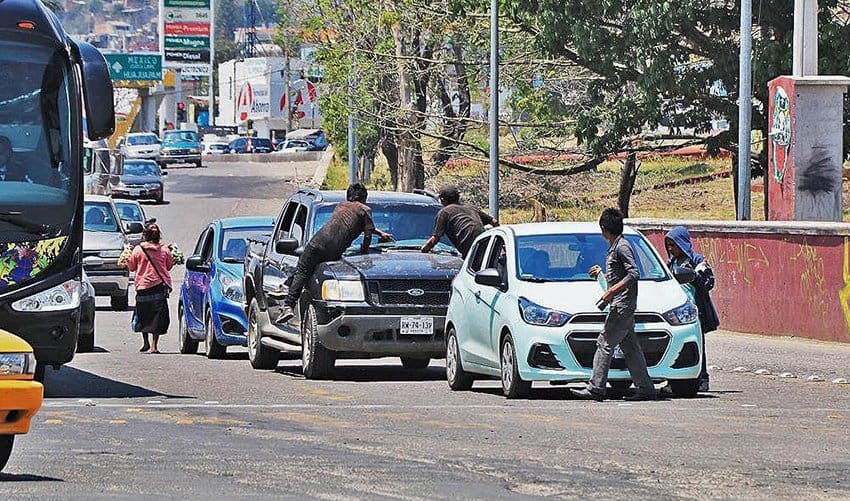
The youngsters were transported to busy intersections in nearby Oaxaca city where they sought money from motorists by juggling, selling various products or begging for 12 hours or more per day.
The investigation found that the adult women were sexually assaulted by their captors and forced to give birth in the building where they were kept.
Police arrested the presumed leader of the gang of human traffickers and 10 others.

Their captives were placed in the care of the DIF family services agency.
Source: Milenio (sp), El Financiero (sp), NVI Noticias (sp)