There are 73 mining projects within natural protected areas in Mexico, one in a Unesco heritage site, but they are allowed to operate due to a law which defines mineral extraction as a public good.
That would change, however, if the the Senate ratifies the General Law of Ecological Balance which would prohibit mining in natural protected areas.
It is unclear whether the new law would revoke previously granted mining concessions.
The Ministry of Environment has identified 11 highly contaminated places in natural protected areas caused by mining, while many other extraction projects threaten wildlife.
The Unesco protected Monarch Butterfly Biosphere Reserve, on the border between Michoacán and the state of México, is the site of one mining project operated by Grupo México, the country’s biggest mining company.
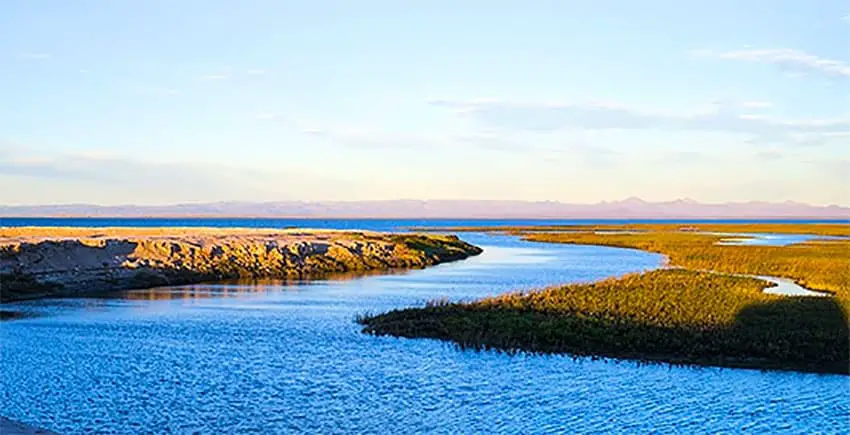
The Vizcaíno Biosphere Reserve, home to the peninsular pronghorn and the mating and birth site of the gray whale, has four mining projects. The Colorado River Delta, habitat of the endangered vaquita marina, is another site of extraction.
Two areas seeking Unesco classification have outstanding mining concessions: Valle de los Cirios Protected Area in Baja California and the indigenous Wirikuta area in San Luis Potosí.

Manuel Llano, director of investigative the NGO Cartocrítica, detailed the scale of the issue. “There is an area of 2.4 million hectares overlapping between mining concessions and natural protected areas … There are at least 400 concessionary mining titles … inside natural protected areas. The main one is Grupo México which has 84 mining concessions,” he said.
“There is water hoarding, destruction of habitats, accidents, carelessness, negligence and there is corruption …” he added.
Edmundo del Pozo from Fundar, another NGO, called on the Mining Law to be amended. “One would not imagine that in natural reserves they would allow mining activities and mega-mining or hydrocarbon projects, but it is the reality … There must be a substantive modification of the Mining Law to repeal the preference for public good, which violates human rights,” he said.
“Behind the mining activity has come criminalization, violence, the collusion of mining companies with organized crime, … and a series of attacks against communities and land defenders,” he added.
Fundar has documented more than 800 socio-environmental conflicts and 440 attacks on land defenders in relation to mining and extraction projects.
Sources: Milenio (sp), Sin Embargo (sp)