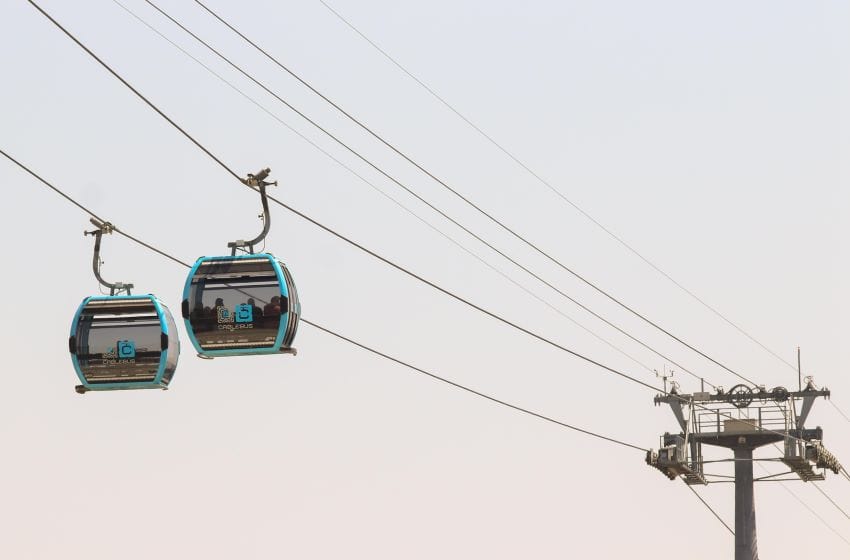
Aerial tram lines will be developed in the Oaxaca City metropolitan area to enhance local transportation, ease congestion on the ground and boost tourism, state Governor Salomón Jara announced on Sunday.
The project will include a large-scale cable car line, like that of México state’s Mexicable, and a “cablebús” system, similar to that of Mexico City, which seats 10 passengers in each unit.
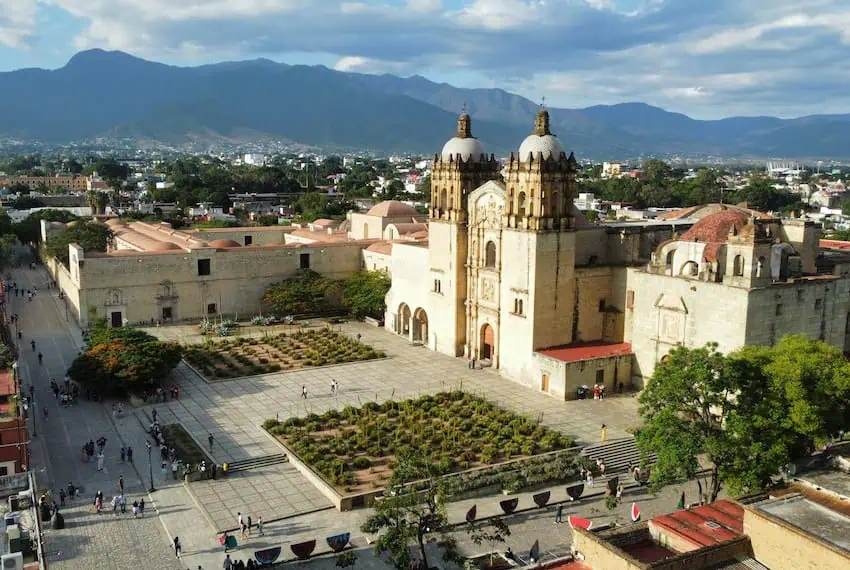
The plan has the full support of Oaxaca City Mayor Raymundo Chagoya. “I really like the idea,” Chagoya said. “Oaxaca will shine much more with a cable car.”
The mayor also alluded to the aesthetic appeal of aerial transport over one of Mexico’s most beloved cities. “As an additional attraction, we will really enjoy seeing the city from above,” he said.
Although the route is not yet finalized, one possible route would connect two favorite tourist attractions — the Cerro del Fortín, where the annual Guelaguetza festival takes place, and the Álvaro Carrillo Theater.
However, Governor Jara stressed that the principal aim of the cable car system is to improve urban mobility by connecting strategic points within the city.
Another aim is to connect Oaxaca’s city center with the mountainous suburbs. One route under assessment would link the city with the Monte Albán archaeological site, around 10 kilometers away.

Governor Jara said the state plans to finance the project without relying on debt.
5 new Cablebús lines are coming to Mexico City
While on Sunday, Governor Jara was presenting the aerial tram plans for Oaxaca, in Mexico City President Claudia Sheinbaum and Mayor Clara Brugada were announcing the construction of the Tlalpan-Coyoacán Cablebús Line 4, which is expected to be the longest in the world.
The new line will be paid for using federal funds and is expected to transport 65,000 people per day over 11.4 km, which is further than the existing Iztapalapa line (11.2 km).
¡Impulsamos el progreso desde las alturas! 🚡⚡
La Línea 4 del Cablebús Tlalpan-Coyoacán será una realidad, y en la CFE estaremos orgullosos de ser parte fundamental de este proyecto que transforma la movilidad en la Ciudad de México.Con el impulso de la presidenta… pic.twitter.com/UJ3D0eFddI
— CFEmx (@CFEmx) July 29, 2025
On the ground, moving between Los Pedregales to the University City of Mexico’s National Autonomous University (UNAM) can take up to two hours in rush hour traffic, compared to the 40 minutes expected via Cablebús, noted Sheinbaum.
Line 4 will consist of eight stations: Universidad, Cantera, Perisur, Mercado Hidalgo, Reforma, Parque Morelos, Cultura Maya and Pedregal de San Nicolás.
It will also connect more than 30 neighborhoods in Tlalpan and nine in Coyoacán and will have connections to other public transportation modes, such as the Metro, allowing commuters to travel between the north and south of the city, according to Mexico City’s Transport Minister Ulises García.
Five Cablebús lines are expected to be completed during Brugada’s six-year term, with construction on the Álvaro Obregón-Magdalena Contreras and Milpa Alta-Tláhuac lines commencing this year, and the Cuajimalpa-Xochimilco line in 2026.
With reports from El Universal Oaxaca, Estado Actual, Milenio and El Financiero