The 92nd edition of Oaxaca’s famous Guelaguetza festival has officially commenced, bringing to the state a wide range of events that showcase traditional dance, music and folklore.
The week-long festival originated from a Zapotec ritual known as Daninayaaloani or Hill of the Beautiful View, in honor of Centéotl, the corn goddess. As part of this ritual, people gathered to share offerings, eat food and dance over eight days.
On Sunday, actors performed “Donají, the Legend,” which recounts the love story between the Mixtec prince Nucano and the Zapotec princess Donají.
After the Spanish conquest, the festival transformed into a Catholic celebration, honoring the Virgin of Carmen. It has long been celebrated on the two Mondays closest to the Catholic Day of our Lady of Carmen on July 16 and has gradually evolved into the Guelaguetza festival.
Monday marks the first Lunes del Cerro (Monday on the Hill) of the festival, set to take place at the Guelaguetza Auditorium. It can be watched via the Oaxacan Radio and Television Corporation (CORTV) broadcast or Guelaguetza’s social media.
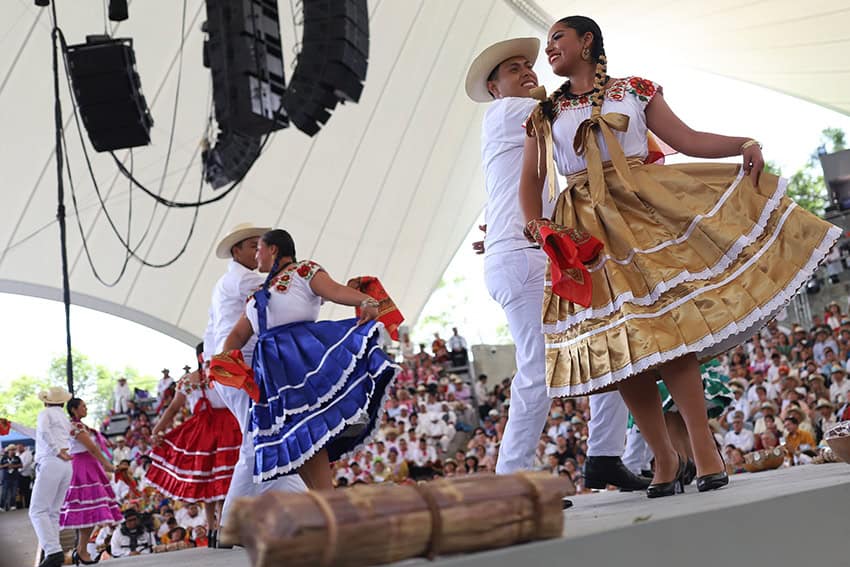
Lunes del Cerro showcases performances from across Oaxaca’s eight regions. Regional bands and dancers from the Central Valleys, the Sierra Norte, La Cañada, Tuxtepec, Mixteca, the Coast, the Sierra Sur and the Isthmus will perform in traditional costumes.
At the end of each performance, Indigenous communities typically offer regional handicrafts, fruits, ceramics and other local products to the audience.

Oaxaca city expects to attract 139,000 tourists throughout July, with Guelaguetza running from July 21-28, with the second Monday on the Hill taking place on July 28.
However, celebrations for La Guelaguetza will take place throughout the whole of July, including food fairs, parades, musical concerts, dance performances and visual arts exhibitions.

Some of the best places to enjoy the festivities include Zimatlán, Teotitlán del Valle and Cuilápam de Guerrero.
Funds will contribute to Oaxaca’s hurricane recovery
Oaxaca Governor Salomón Jara announced in June that all profits from the Guelaguetza festival will contribute to the reconstruction of regions destroyed by Hurricane Erick.
In a social media post, Jara announced the creation of a Guelaguetza fund, with all ticket sales from the festival’s two Mondays on the Hill being redirected to hurricane clean-up efforts.
In addition to the 40 million pesos (US $2.1 million) expected from Guelaguetza’s profits, the state government will also redirect profits from Oaxaca’s Mezcal Fair, which takes place from July 18-29.
With reports from El Universal Oaxaca