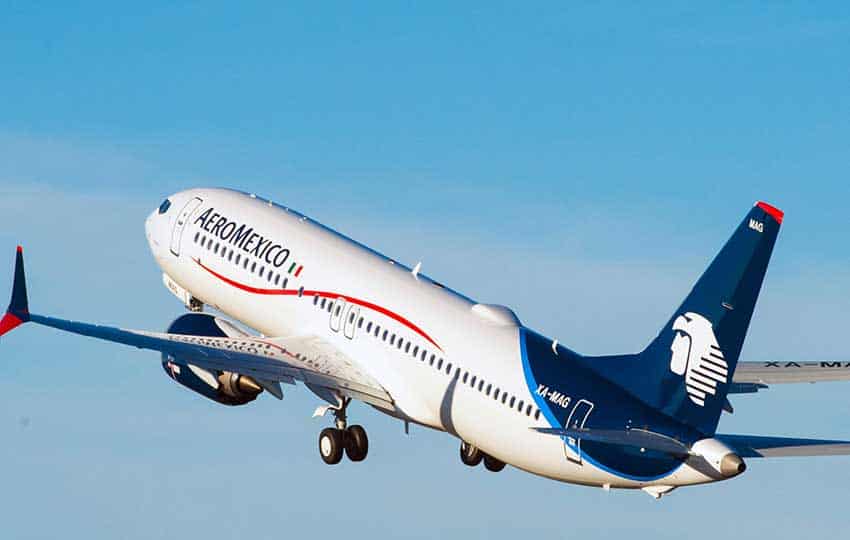
Aeroméxico announced Wednesday that it will begin operating at the new Mexico City airport in April with two flights per day to cities in Mexico’s southeast.
The Felipe Ángeles International Airport (AIFA), located about 50 kilometers north of downtown Mexico City in México state, will open in late March.
Aeroméxico said it will operate two flights per day from AIFA to Mérida, Yucatán, and Villahermosa, Tabasco.
“Our customers will have the flexibility … to fly from these two cities to AIFA or AICM,” the airline said in a statement.
AICM is the current Mexico City airport, located about 10 kilometers east of the capital’s historic center.
Aeroméxico said its decision to use AIFA was made after analyzing the needs of its customers. It had indicated late last year that it wasn’t planning to operate out of the new airport, built by the army on the Santa Lucía Air Force base.
CEO Andrés Conesa said the airline is in the final stage of a “profound process of restructuring and transformation that will allow us to emerge strengthened and take decisions like this for the benefit of the connectivity of our country, … our customers and the creation of jobs.”

Aeroméxico is the third airline to announce it will operate at AIFA after Volaris and VivaAerobús.
Volaris announced in October that it will operate daily flights to and from Tijuana, Baja California, and Cancún, Quintana Roo, starting March 21. VivaAerobús will fly to Monterrey, Nuevo León, and Guadalajara, Jalisco, starting the same date.
Airport departure fees will be more than 60% lower at AIFA than at AICM. Domestic passengers will pay 245 pesos (US $12) while those flying internationally will be charged 466 pesos (US $23).
With reports from Forbes México