Drought is taking a toll on livestock in southern Coahuila: one farmer saw 50 of his goats die this year and sold the rest of his famished herd for a pittance because he couldn’t afford to feed them.
Much of northern Mexico is currently in drought, leading the National Water Commission to declare a drought emergency earlier this month. One of the affected areas is southern Coahuila, where the El Tulillo dam is completely dry.
Nearby is the small town of Hipólito, where 73-year-old Silverio Alférez Piña began raising farm animals 25 years ago.
“There’s never been a drought like now,” he told the newspaper Vanguardia. Alférez described the current conditions as “ugly” before bluntly declaring that “there’s no water” in Hipólito, located 70 kilometers northwest of state capital Saltillo in the municipality of Ramos Arizpe.
Growing fodder is consequently impossible, meaning that local farmers have to buy feed for their animals. Alférez, however, reached a point at which at which he could no longer afford the feed his goats, cattle and horses needed.
With insufficient food, goats in his 140-strong herd, including pregnant does, began to die. Alférez admitted that his stubbornness led him to soldier on as a farmer but after approximately 50 of his goats had died he realized he couldn’t continue. He sold his scrawny surviving goats for a total of just 800 pesos (US $39).
Alférez also lost cattle due to the drought as well as some of his mares. “I sold all my [surviving] mares, about five of them died on me,” he said. “I sold pure [skin and] bones and … [the buyers] paid me as they wished,” he said.

Alférez has kept a couple of calves but is now out of the commercial farming game because turning a profit became impossible. He now runs a small store, which he opened with money he saved from his pension.
Other Hipólito residents also had to sell their farm animals because they didn’t have the money to feed them, Vanguardia reported.
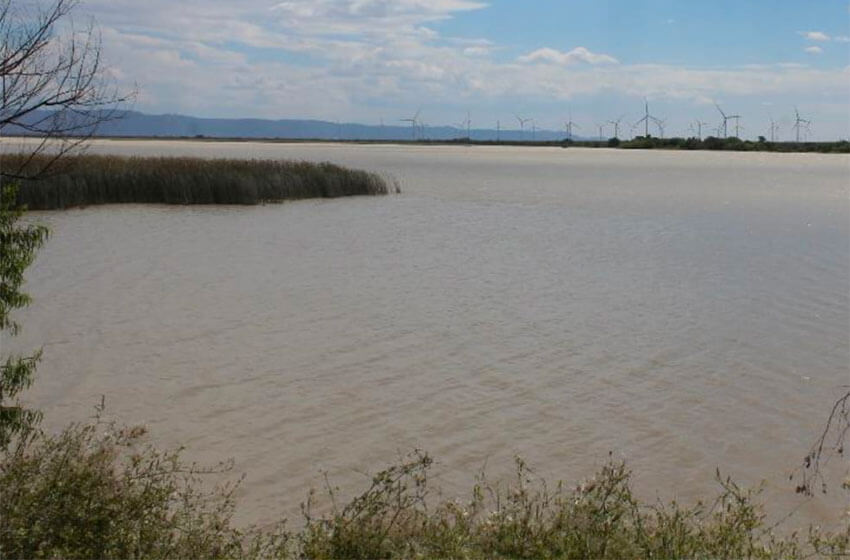
Located about five kilometers from Hipólito on the border between Ramos Arizpe and the municipality of General Cepeda, the empty El Tulillo dam – which went completely dry four months ago – serves as stark testament to the drought the region is currently enduring, the worst in at least 20 years.
“It’s all dry,” said Eusebio López, a local official. “Not just the dam, the entire … [area], there’s nothing for the animals to eat.”
With reports from Vanguardia