President López Obrador has rejected a United States government claim that criminal organizations control “ungoverned areas” that account for about one-third of Mexico’s territory.
The commander of the United States Northern Command made the claim Tuesday at a U.S. Department of Defense press conference in response to a question about the situation on the Mexico-U.S. border.
“I would say that [the recent influx of migrants to the border] is a symptom of a broader problem that … manifested itself over the last year or so. …Two major hurricanes, Covid, instability created by transnational criminal organizations, all of these are indicators and reasons why people want to leave Central America, South America and Mexico to come to our nation,” General Glen D. VanHerck said.
“… Counternarcotics, migration, human trafficking, they’re all symptoms of transnational criminal organizations who are operating oftentimes in ungoverned areas – 30% to 35% of Mexico – that is creating some of the things we’re dealing with at the border,” he said.
“And so, we need to take a whole-of-government look at that problem. I think it’s a national security imperative that we must look at.”
At his regular news conference on Thursday, López Obrador dismissed the general’s territorial control claim as untrue.
“But we respect the opinion of everyone,” he added. “We’re going to continue having good relations with the United States government, we’re not going to argue with the United States government. [President Joe Biden] is very respectful with us.”

According to the news magazine Proceso, it was the first time since the 2006-2012 presidency of Felipe Calderón that a high-ranking United States military leader publicly enunciated the scale of the Mexico’s drug trafficking and territorial control problem.
However, the United States Drug Enforcement Administration (DEA) has acknowledged the sway cartels hold in Mexico, and the U.S. drug market.
“Mexican TCOs [transnational criminal organizations] are the greatest drug trafficking threat to the United States; they control most of the U.S. drug market and have established varied transportation routes, have advanced communications capabilities, and hold strong affiliations with criminal groups and gangs in the United States,” the DEA said in its 2020 National Drug Threat Assessment report.
It said that Mexican cartels continue to control lucrative smuggling corridors, primarily across the United States’ southwestern border.
“The two largest organizations, the Sinaloa Cartel and the Jalisco New Generation Cartel (CJNG), show signs of expansion in Mexico, demonstrating their continued influence even compared to other Mexican TCOs,” the DEA said.
“These TCOs expand their criminal influence by engaging in business alliances with other organizations, including independent DTOs [drug trafficking organizations], and working in conjunction with transnational gangs, U.S.-based street gangs, prison gangs, and Asian money laundering organizations.”
In addition to the Sinaloa Cartel and the CJNG, the DEA identified seven other Mexican criminal groups that have a significant drug trafficking impact on the United States.
They are the Beltrán Leyva Organization, the Northeast Cartel/Los Zetas, the Guerreros Unidos, the Gulf Cartel, the Juárez Cartel/La Línea, the Familia Michoacana, and Los Rojos.
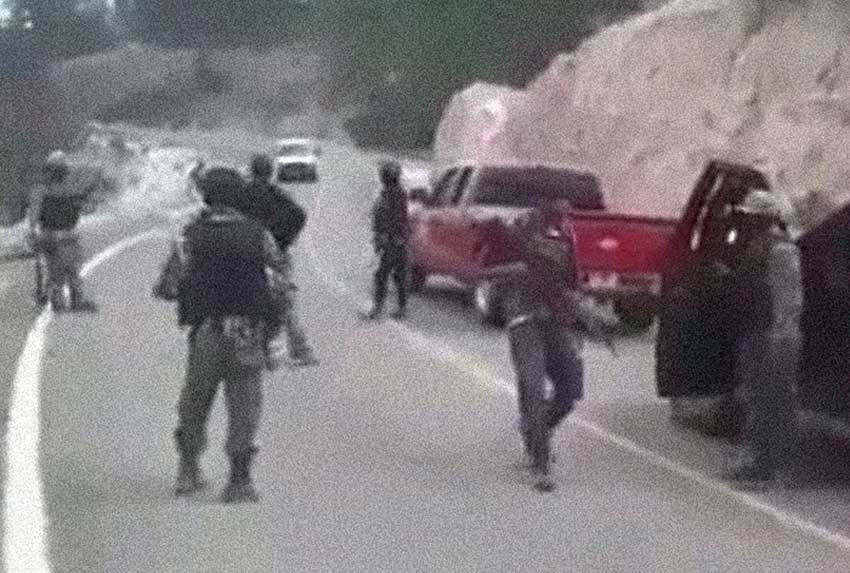
Mexico has long been considered to have a territorial control problem, especially in rural areas where there is evidence that cartels control large swathes of land in several states.
Source: Reforma (sp), El Financiero (sp), Infobae (sp)