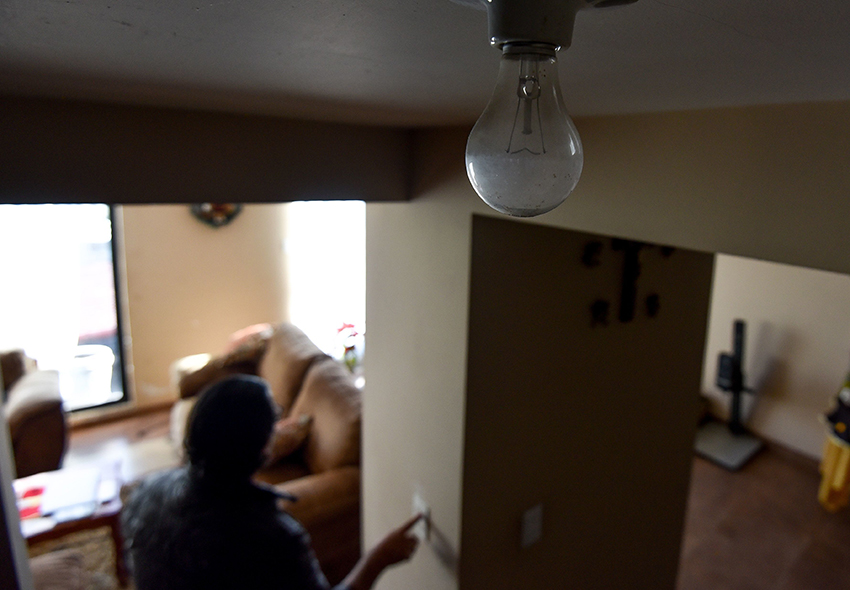
The Yucatán state government is working with the Federal Electricity Commission (CFE) on an ambitious energy infrastructure and modernization plan that seeks to eliminate by 2027 the blackouts that have been recurring over the last five years and to achieve energy self-sufficiency by the end of the current administration in 2030.
“Yucatán is facing a complex energy situation, especially during this season of extreme heat,” Yucatán Governor Joaquín Díaz Mena said at a recent press conference held jointly with CFE officials. He added that the service failures are a result of decades of neglect and a lack of planning in the development and maintenance of the electrical infrastructure, as previously the work was concentrated solely in Mérida.
The National Chamber of the Manufacturing Industry (Canacintra) agrees, noting that the entire Yucatán Peninsula’s electrical infrastructure is insufficient to meet growing residential, industrial, and tourist demand.
In March, the CFE announced that it would invest US $2.5 billion to develop five new power plants across Mexico. The new self-sufficiency plan for Yucatán state includes the construction of two combined-cycle plants: one located in Mérida (Mérida IV) and the other in Valladolid. These plants will run mostly on natural gas and are designed to increase by 92.16% the electricity generation capacity on the peninsula.
The announced plan also includes a natural gas pipeline dubbed Cuxtal II, which is under construction. According to CFE head Emilia Calleja Alor, the pipeline will optimize electricity generation and distribution throughout the Yucatan Peninsula. Once the pipeline starts operations, the Valladolid plant will be integrated into the Mérida IV plan, Calleja explained.
Officials expect the Mérida IV plan to begin operations in October this year, while the Valladolid one is expected to start by mid-2027.

Canacintra emphasizes that while planned and implemented projects to increase electricity supply are needed, the frequent service interruptions have been more due to the deficient transmission and distribution networks.
To that end, the CFE has also said that this year 145 transmission projects will begin operations to relieve congestion, transport energy more efficiently, prevent overloads and improve voltage control.
“All of this has a clear objective: that by the end of the six-year term, Yucatán will be self-sufficient in electricity generation,” Governor Díaz said, referring to the measures being taken in his state.
Power outages are not exclusive to Yucatán. Last May, the Yucatán Times reported that power outages occurred in at least 21 of the country’s 32 entities, leading the National Energy Control Center (Cenace) to declare a state of emergency in the nation’s electricity system on more than three occasions.
With reports from La Jornada Maya, Posta, El Universal and Estamos Aquí