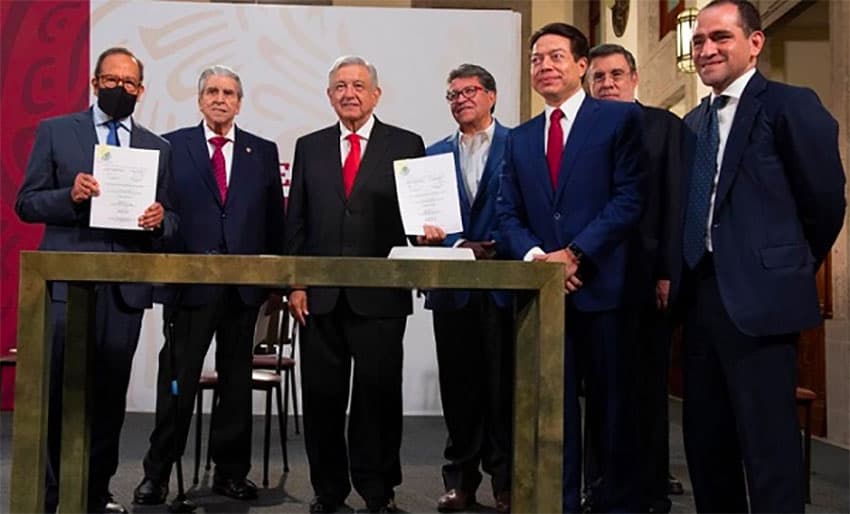
President López Obrador presented a plan on Wednesday to reform Mexico’s pension system to avoid what he called a crisis in which current workers would not have a “dignified retirement.”
Under the plan, which was to be sent immediately to the lower house of Congress, obligatory pension contributions will increase from 6.5% of a worker’s salary to 15% over a period of eight years. Employers’ share of the contribution will increase from 5.15% to 13.87%.
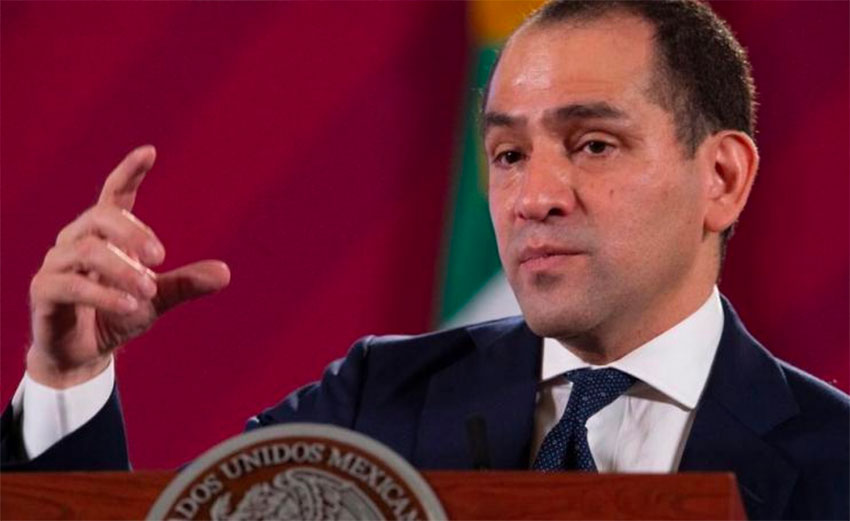
As a result, workers’ pensions in retirement will increase by an average of 40%, Finance Minister Arturo Herrera said at the president’s news conference on Wednesday morning. Workers who earn low wages will see even bigger increases under the proposed scheme.
“It’s about radically changing retirement conditions,” Herrera said although he stressed that government contributions to workers’ pensions will not increase above the current rate of 0.225%.
Government contributions will, however, be redirected to benefit the lowest wage earners.
The pension reform also seeks to reduce the length a time a person has to work to in order to access their pension from 1,250 weeks, or about 25 years, to 750 weeks, about 15 years. The age at which workers can access their pension is proposed to remain unchanged at 60.
Herrera said that approximately 82% of the population will have access to a guaranteed pension. The overall goal, he added, is to increase workers’ pensions so they come close to the salary they earned just prior to retirement.

López Obrador said the reform is needed because the current pension system, in place since 1997, will leave current workers with limited pensions in retirement.
“A reform was carried out some years ago and it came up short, to say it kindly. If that reform is not corrected, workers upon retiring would receive less than half their salary. This would keep getting worse over time, … there would be a crisis down the track,” he said.
“Those who would suffer the most would be current workers; it would erase the possibility of a fair and dignified retirement. That’s why a commitment was made to make a new reform to the pension system and it has the support of the business sector and the labor sector,” López Obrador said.
The president of the Business Coordinating Council (CCE), an umbrella organization representing 12 business groups, lavished praise on the reform and said it was the result of collaboration between the private sector and the government.
“I consider it an historic achievement for Mexico. It is truly momentous, we’re going to touch the lives of more than 20 million Mexicans. … This is enormously important and shows that we’re all interested in the wellbeing of Mexico,” Carlos Salazar Lomelín said.
The CCE chief added that the creation of the new pension plan shows that it’s possible to find solutions to “old problems” by working together.
Creating the plan while the country is going through the biggest health crisis in “our generation” makes the achievement “much more momentous,” Salazar said.
The business sector — Salazar included — has clashed with the government amid the coronavirus pandemic because it believes that federal authorities are not doing enough to support the economy.
The current pension system, which totals some US $266 billion, is “completely unfair” to workers, he said, adding that the new one will allow Mexico to meet international standards.
The Financial Times reported that the pension reform is not expected to meet significant opposition in Congress, which is dominated by the ruling Morena party and its allies. However, the plan is not seen as foolproof in its current form.
Some analysts said that raising employers’ pension contribution entails a risk that Mexico’s already large informal sector, in which workers and businesses don’t pay taxes or receive benefits, will swell.
“This [reform] just makes being in the formal sector even more expensive,”said Valeria Moy, head of the Mexican Institute for Competitiveness, a think tank.
Mariana Campos, a budget specialist at México Evalúa, another think tank, said the reform proposal “needs some extra ingredients or employers will just say ‘I’m going into the informal sector.’”
Source: Milenio (sp), Financial Times (en)