President Andrés Manuel López Obrador traveled to Campeche this Friday, where he will take his first ride aboard the work-in-progress Maya Train for a supervision trip.
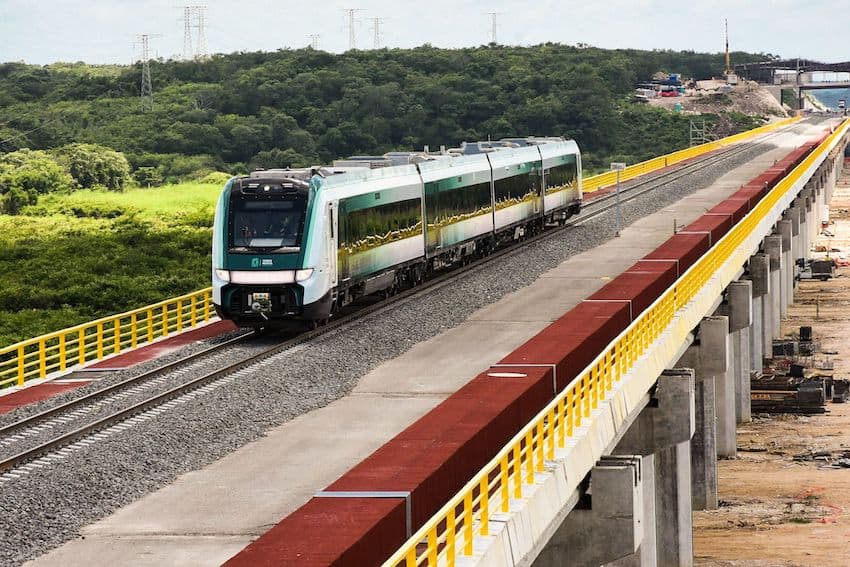
The first four carriages of the Maya Train were delivered in Cancún on July 8, where they have since completed a series of static and dynamic tests. On Tuesday, the carriages left for Campeche, where AMLO delivered his fifth annual government report on Friday morning.
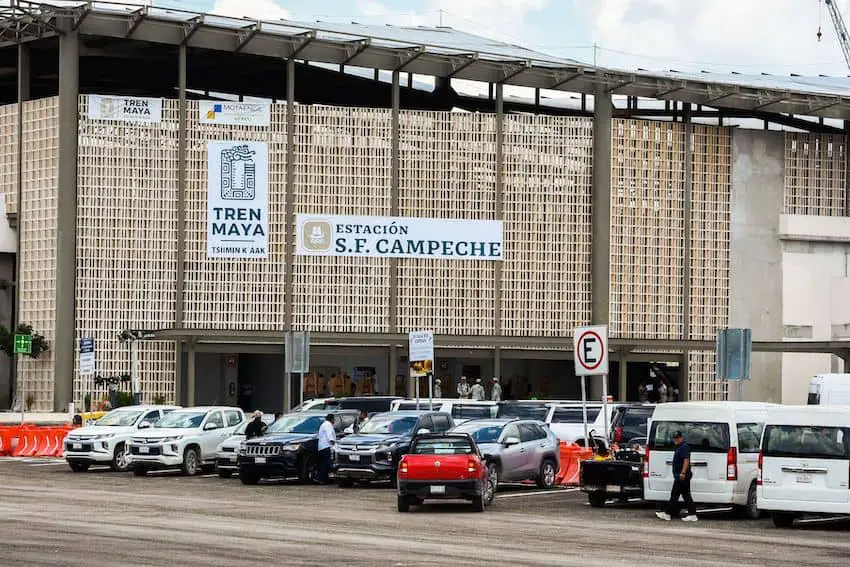
Directly after his presentation, AMLO was set to board the train for a supervision tour of sections 2 and 3 of the project, which conclude in Mérida. On Saturday, the president will travel on the train to the inauguration of the newly restored Chichén Viejo archaeological sector in Chichén Itzá. He will be accompanied by a small group of guests, including governors and directors of the construction companies involved in the restoration project.
“We are going to talk about culture, archaeology, all the rescue work that is being done in the region,” AMLO said.
On Sunday, AMLO will take the train back to Cancún, where he will inaugurate the modernized Luis Donaldo Colosio Boulevard and the Airport Road, both complementary projects to the Maya Train that will facilitate travel to and from the main station.
The Maya Train is due to begin public operations on December 1. Although construction on the project is still underway, officials are keen to assure that it is progressing on schedule.
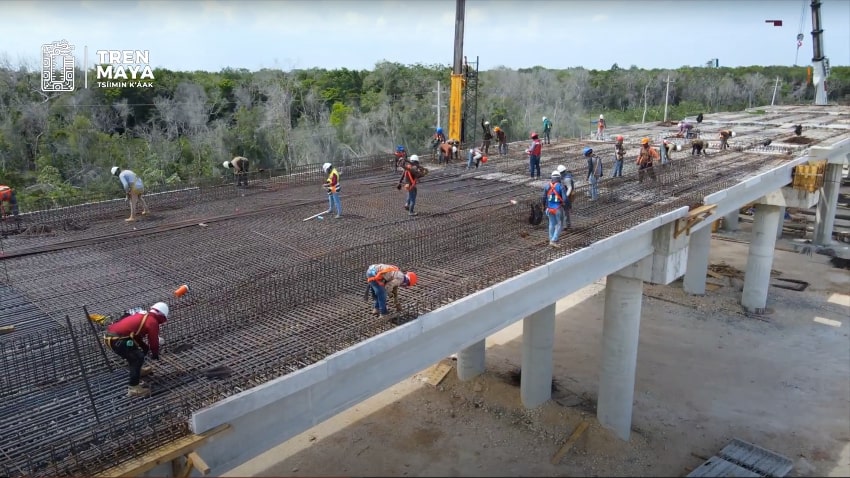
The project has been highly controversial from the beginning, and has faced numerous legal injunctions from environmental and social activists, as well as frequent technical setbacks.

Despite doubts surrounding the construction of the train line, AMLO announced last week that Sections 1, 2, 3 and 4 were 90% complete and on track to open in December. Javier May Rodríguez, general director of the National Fund for Tourism Development (Fonatur), confirmed that Section 2 is 95.7% complete, with only 10 km of track still to lay. The section from Escárcega to Chiná is 98% complete. Hundreds of complementary works, including drainage works, underpasses, bridges and viaducts are already finished.
The project is projected to run 132% over budget by the end of this year without accounting for sections 5 and 7, at a total cost of 362 billion pesos (US $21.2 billion).
With reports from La Jornada Maya, El Financiero and Forbes