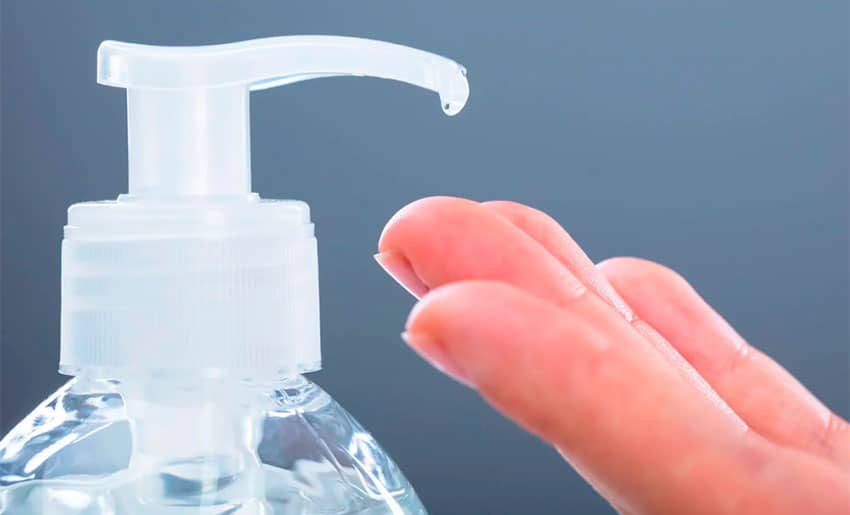
Hand sanitizers that were banned in the United States because they were found to contain methanol are still available for purchase in Mexico, prompting concerns that people using the gel could be slowly poisoning themselves.
The news agency Bloomberg reported that four people in the United States died and three others partially lost their sight after drinking hand sanitizers this year.
The incidents prompted the U.S. Food and Drug Administration (FDA) to conduct a testing campaign that found methanol in anti-bacterial gel that was made in Mexico.
A total of 37 Mexican companies were prohibited from exporting their hand sanitizers north of the border and almost half that number voluntarily recalled their products. However, at least some are still selling their potentially toxic sanitizers in Mexico.
Bloomberg said it recently saw at least five sanitizers for sale in a Mexico City pharmacy that were banned by the FDA because they contained or were suspected to contain methanol, a toxic alcohol used to make some fuels, solvents and antifreeze. It also said that Amazon is selling six hand gels made by one black-listed company.
According to the Methanol Institute, a global trade association for the methanol industry, the alcohol can “can cause serious damage to organs in the body if a person swallows it, breathes it in or gets it on their skin.”
Despite the dangers, the Federal Commission for Protection Against Health Risks (Cofepris) has not moved to ban tainted sanitizers even though the use of hand gel has skyrocketed due to the risk of coronavirus infection. It did, however, issue a public health alert that warned people to be careful with sanitizers from unknown sources.

Xavier Tello, a health policy analyst at Strategic Consulting in Mexico City, told Bloomberg that Cofepris doesn’t have sufficient personnel or budget to test hygiene products such as sanitizers.
“It’s not a minor issue,” he said. “How much gel are people pouring on their hands on a daily basis?”
Bloomberg said that it is unknown if anyone in Mexico has become sick or died from drinking sanitizer containing methanol or using it on their skin. But at least 42 people died in Jalisco earlier this year after consuming an artisanal alcoholic beverage containing high levels of methanol.
Thirty-three of 137 hand sanitizers banned by the FDA were produced by a México state-based company called 4E Global. The FDA found methanol in two of its anti-bacterial gels but banned all of its sanitizers because they were likely made at the same facility as the contaminated ones.
“Some of our series of Blumen Hand sanitizers were found to contain methanol,” 4E Global says on its United States website.
“Out of an abundance of caution, we decided to recall all lots due to potential contamination.”
The company’s Spanish language website doesn’t mention methanol or any product recalls, Bloomberg said.
Among the other brands that were found to contain methanol were Jaloma, V-KLEAN, Herbacil Hand Sanitizer and Saniderm.
A full list of the hand sanitizers the FDA is urging people not to use is published on the agency’s website.
Source: Bloomberg (sp), El Heraldo de México (sp)