A new exhibition showcasing archaeological relics of the Aztec (or Mexica) capital of Tenochtilán and Spanish colonial times opened in Mexico City this week.
Called Pabellón de Ventanas Arqueológicas (Pavilion of Archeological Windows), the exhibition is spread across several streets and 16 buildings in the historic center of the capital. It is part of a program of events to celebrate the history of Tenochtitlán on the 500th anniversary of its fall and also commemorates the 30th anniversary of the federally-run Urban Archaeology Program.
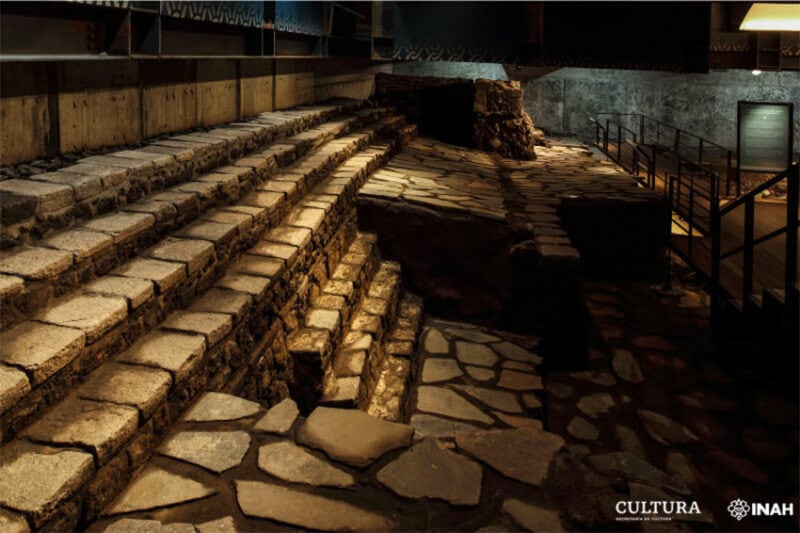
Through 42 “archaeological windows,” visitors can admire the remains of Mexica palaces and temples, ancestral homes of Spanish conquistadores, churches, residences occupied by officials of the Viceroyalty of New Spain and relics of the 19th century, according to the National Institute of Anthropology and History (INAH), which organized the exhibition in conjunction with the Museum of the Templo Mayor.
The main exhibition venue is the Palace of the Marqués del Apartado, a colonial era residence that now houses INAH headquarters.
Five large Mexica sculptures and two skulls from the Huei Tzompantli – a pre-Hispanic skull tower dedicated to the war, sun and human sacrifice deity Huitzilopochtli – are also part of the exhibition, which is complemented by videos and scale models of Tenochtitlán.
At the inauguration of the exhibition on Monday, federal Culture Minister Alejandra Frausto Guerrero said the pavilion pays homage to the men and women who have dedicated their lives to archaeology in Mexico City and uncovered many of the relics on display.
Jesús Ramírez, President López Obrador’s communications coordinator and spokesman, said the archaeological windows shed light on “the antiquity of this city,” which was founded by the Mexica people as Tenochtitlán in 1325 and conquered by the Spanish in 1521.

The exhibition is now open to the public on Tuesdays, Wednesdays, Fridays and Saturday between the hours of 10:00 a.m. and 3:00 p.m. Tickets must be purchased at the Templo Mayor Museum, located behind the northeastern corner of the Metropolitan Cathedral in downtown Mexico City.
Mexico News Daily