Four months after the start of a ban on junk food at schools across the country, an ongoing Mexican government health study revealed that more than one-third of the nation’s school-age children are overweight.
Mexican Social Security Institute (IMSS) director Zoé Robledo presented the preliminary results during President Claudia Sheinbaum’s daily press conference on Monday.
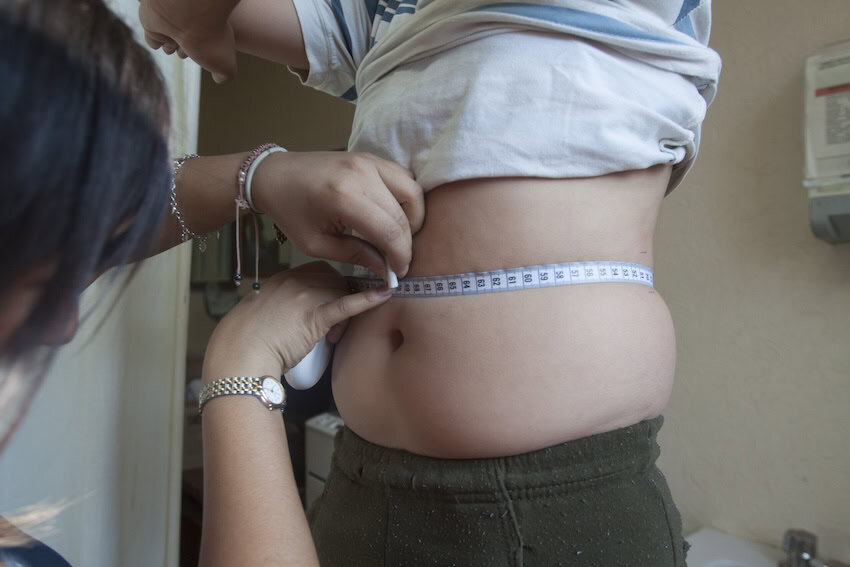
“Of the 4 million public school children who have undergone [the screenings], 18 percent are obese,” President Claudia Sheinbaum said on Monday. “And if we consider both overweight and obesity, the number rises to nearly 37 percent.”
Robledo said that 1,986,117 of the children screened between March and July as part of the government’s Healthy Living (Vida Saludable) program have received referrals for free medical attention.
The study found that more than half of the school-age children in three states — Campeche (56%), Quintana Roo (52%) and Tabasco (51%) — were either overweight or obese.
The study also found that the problem increased with age. While 33% of first-graders were assessed as overweight, the prevalence for sixth-graders was found to be 45%.
Additional results showed that 55% of the children screened had cavities and 35% had impaired vision.

The objective of the government’s program, Sheinbaum said, is to assess students’ health, offer referrals to clinics for checkups as needed and to promote a healthy lifestyle, featuring a nutritious diet and exercise.
“The program is very important because, in the end, it’s not just about providing healthcare when someone gets sick, but about prevention, about being able to build a healthy life,” she said.
The program is being managed by IMSS and the Education Ministry.
Four million schoolchildren underwent health screenings in the final months of the school year that ended in July. The screenings will continue during the upcoming school year until 12 million children have been evaluated.
“Our goal is to help families and teachers demonstrate how to eat right, how to exercise properly in order to lead a healthy life,” the president said, adding that the nationwide ban on junk food at public and private schools is a key part of this strategy.
The junk food ban, approved last year, went into effect on March 31.
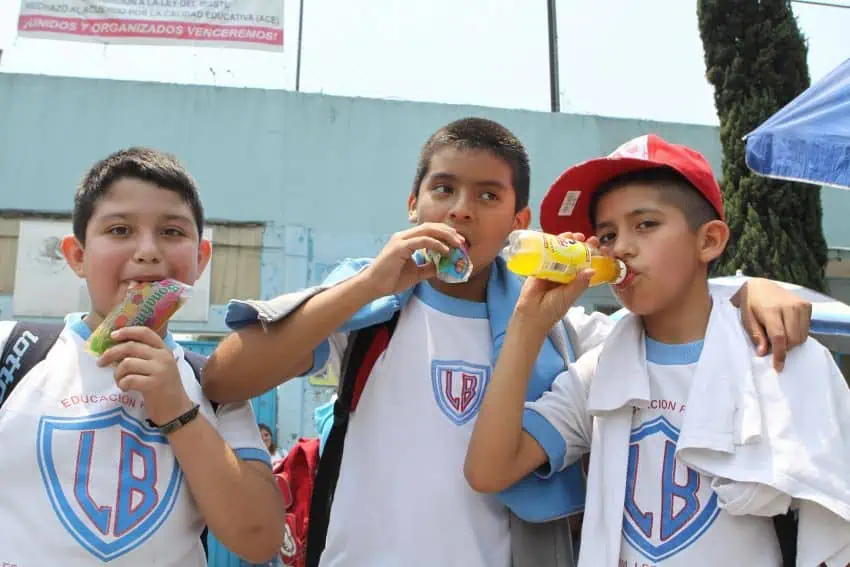
Schools were required to phase out food and beverages displaying one or more black warning logos identifying the product as high in salt, sugar, calories or fat. These banned items include donuts, carbonated drinks, French fries, chips and snacks, candy, ice cream and flavored milk.
School administrators who violate the ban risk fines of up to 5,450 pesos (US $290).
With reports from La Jornada Maya, Excelsior and El Universal