The emergence of the omicron variant of the coronavirus hasn’t caused a spike in reported case numbers in Mexico, as has occurred in numerous other countries.
The Health Ministry reported 52,528 confirmed cases in the first 22 days of December for a daily average of 2,387. That’s an 11% decline compared to the daily average in November.
Mexico’s first case of the highly contagious omicron strain was detected in early December, but only 22 other cases have since been identified. The low number is likely due to scant genomic sequencing of the virus in Mexico.
In addition, COVID-19 testing rates in Mexico are much lower than in many other countries, meaning that many coronavirus cases, especially mild ones, have gone undetected during the pandemic. Teams of scientists in South Africa, England and Scotland have concluded that omicron infections tend to cause more mild disease than earlier variants.
Meanwhile, Mexico’s official COVID-19 death toll is approaching 300,000. The Health Ministry reported 198 additional fatalities on Wednesday, lifting the accumulated total to 298,359. There are currently just under 2,300 patients in hospital COVID wards across the country, federal data shows.
The accumulated case tally stands at 3.94 million after 3,319 cases were reported Thursday. Mexico’s seven-day case average is currently about 2,200 whereas it’s above 168,000 in the United States, where omicron is now the dominant strain.
There are just under 18,000 active cases in Mexico, according to Health Ministry estimates, with the highest numbers in Mexico City, Baja California, Guanajuato and Chihuahua.

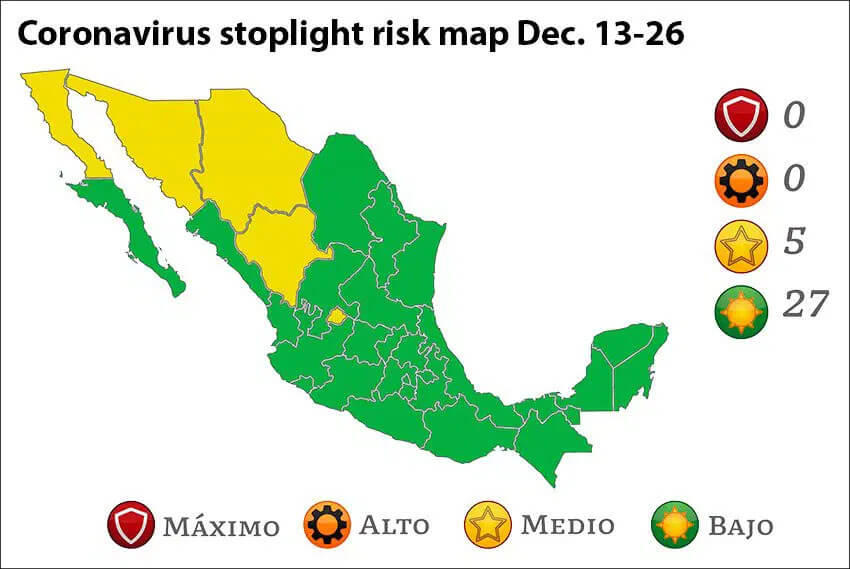
All but five of Mexico’s 32 states are currently low risk green on the federal government’s coronavirus stoplight map, while Durango, Aguascalientes, Baja California, Sonora and Chihuahua are medium risk yellow. The current map will remain in effect through Sunday.
Mexico News Daily